
Operational Failures of US Secret Service Exposed in Trump Assassination Attempt Report

Serious Security Lapses Uncovered
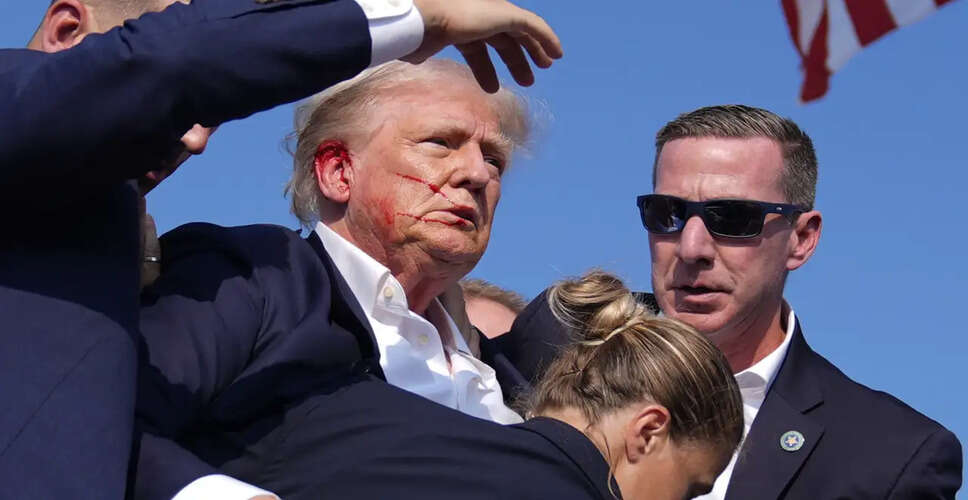
A recent report from a government watchdog has revealed that the US Secret Service overlooked over a hundred local police radio communications regarding the gunman who tried to assassinate Donald Trump during a rally in Butler, Pennsylvania. This report, released by the Department of Homeland Security's Office of Inspector General, highlights significant operational failures leading up to a major security breach involving a presidential candidate.
On July 13, 2024, the Secret Service failed to receive 102 radio updates because it did not set up a joint communications center with local law enforcement, which was crucial for securing the event. These missed transmissions included vital information from officers who were searching for the suspect, later identified as Thomas Matthew Crooks, a 20-year-old who opened fire from a rooftop while Trump was addressing his supporters. Instead of receiving ongoing updates via police radio, the Secret Service only got five phone calls and three text messages about Crooks, severely limiting their ability to respond to the emerging threat.
The report indicates that this communication breakdown had serious operational implications. It stated, "As a result, Secret Service members did not alert President Trump's protective detail about concerns of a suspicious person."
Lack of Real-Time Intelligence Compromised Security
Communications Breakdown Left Security Teams Without Real-Time Intelligence
The Inspector General noted that the lack of an integrated command-and-control system hindered the sharing of intelligence between federal and local officers as they searched for Crooks near the rally site. The report suggests enhancing inter-agency information sharing for future protective operations, including establishing mandatory joint communication centers and better procedures for identifying potential threats from elevated positions.
Investigators also pointed out that the planning for the event did not adequately address vulnerabilities, particularly concerning rooftop positions. Crooks managed to reach a rooftop overlooking the stage and fired multiple shots while Trump was speaking, resulting in one death and several injuries, including a graze wound to Trump’s ear before law enforcement fatally shot the assailant.
These findings contribute to ongoing investigations by congressional committees and independent watchdogs that have highlighted weaknesses in the security measures surrounding the Butler rally.
Counter-Drone System Ineffectiveness
Counter-Drone System Also Failed Before Attack
The Inspector General's investigation also revealed failures in the Secret Service's counter-drone capabilities. The report indicated that Crooks flew a drone over the rally site for nearly nine minutes prior to the shooting, which went unnoticed due to the counter-drone system being non-operational at that time.
It was found that the equipment was managed by a single operator who was under-trained and had not tested the system before the event. When technical difficulties arose, the operator spent several hours trying to fix the issues, leaving the airspace around the venue without effective surveillance during a critical time.
This counter-drone failure is identified as another missed chance to detect suspicious activities that could have led to increased scrutiny of the gunman before he reached his firing position. In response to the findings, the Secret Service acknowledged the Inspector General's recommendations and stated that many of the suggested reforms were already being implemented as part of their ongoing restructuring efforts.
"Many of these recommendations were already identified... and have since been implemented as part of our ongoing reform efforts," a spokesperson for the Secret Service commented.
This latest review is likely to heighten scrutiny of the agency's protective measures as it continues to revise security protocols following the assassination attempt that significantly impacted the 2024 presidential campaign and initiated a comprehensive review of Secret Service operations.