
Ongoing Military Tensions Between India and Pakistan Amidst Ceasefire
Despite a ceasefire between India and Pakistan following military clashes in May, both nations continue to engage in military exercises, signaling ongoing tensions. India is set to conduct significant aerial drills near the Pakistan border, while Pakistan has also announced military activities. This shadow war reflects a complex interplay of military readiness and strategic messaging, as both countries assert their capabilities amidst a backdrop of regional instability. The situation remains delicate, with potential implications for future military actions and diplomatic relations.
| Jul 22, 2025, 11:48 IST
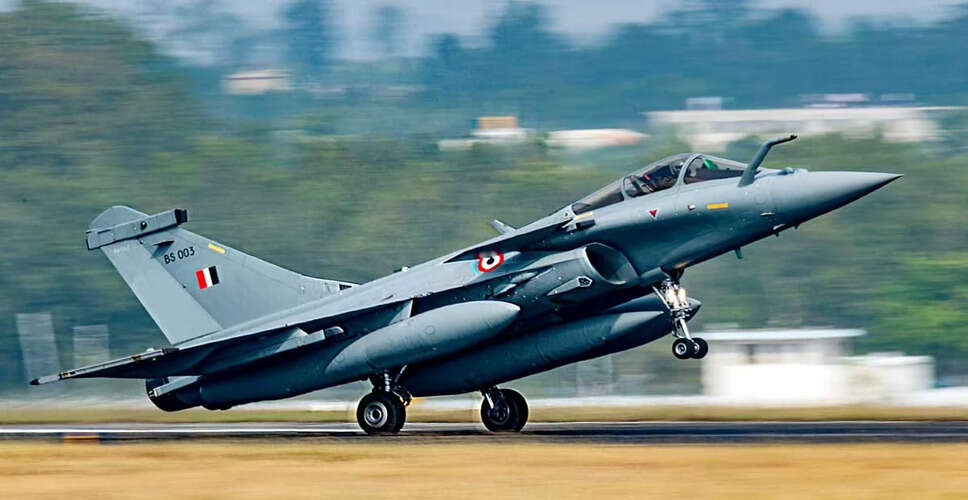
Military Standoff Continues Despite Ceasefire
Although a ceasefire was established between India and Pakistan following military clashes from May 7 to May 10, the two nations are still engaged in what can be termed as 'shadow boxing.' Recent developments indicate this ongoing tension, as both countries have announced measures to secure their respective airspaces for military exercises. Each nation has issued its own NOTAM (Notice to Airmen), signaling that military readiness remains a priority.
The Indian Air Force's South Western Air Command is set to conduct a significant aerial exercise in the border areas of Rajasthan and Gujarat from July 23 to July 25. This region is adjacent to the international border with Pakistan, and the exercise clearly communicates India's commitment to being fully prepared for any eventuality.
In response, Pakistan has also issued a NOTAM for its central and southern regions for July 22-23, indicating that it does not intend to lag in military activities and preparations. The atmosphere of military tension between the two countries continues to be marked by vigilance and displays of strength.
It is important to recall that on May 7, India executed 'Operation Sindoor,' targeting nine terrorist bases in Pakistan and Pakistan-occupied Kashmir with precise airstrikes. This operation was aimed solely at dismantling terrorist infrastructure, not at infringing upon Pakistan's sovereignty.
However, Pakistan perceived this as an act of aggression and retaliated by targeting Indian airbases, military installations, and civilian areas using drones and missiles. In retaliation, the Indian Air Force successfully targeted at least nine Pakistani airbases and three radar sites, some of which were near nuclear facilities and command and control structures.
India employed advanced fighter jets such as the Su-30MKI, Rafale, and Mirage-2000, along with modern missiles like BrahMos, Crystal Maze-2, Rampage, and Scalp during these strikes. Each attack was characterized by precision, targeting, and careful planning.
Moreover, the military exercises being conducted by both nations indicate that the situation remains tense even after the May conflict. While India is clearly showcasing its military preparedness and aggressive capabilities, Pakistan is also keen to demonstrate its military activity.
This shadow war extends beyond mere military strategy. Through these exercises, India is sending a clear message to Pakistan and the international community that it will not hesitate to undertake similar military actions if concrete steps against terrorism are not taken. Meanwhile, despite its internal instability and economic challenges, Pakistan aims to project that it is not militarily weak.
Ultimately, this shadow war between India and Pakistan illustrates that while guns may be silent at the border for a time, diplomatic and military tensions persist. India is resolutely reaffirming its anti-terrorism stance and military superiority. In the coming days, this display of power between the two nations is expected to continue, with both diplomacy and military strategy playing crucial roles.