
One Year Later: Unraveling the Mystery of the Air India Flight AI171 Crash
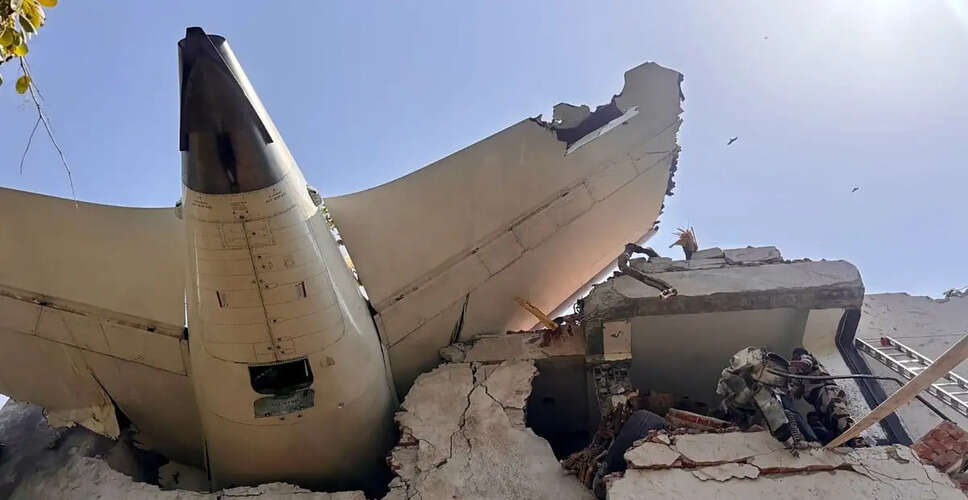

A Year Since the Tragic Air India Flight AI171 Incident
Today marks the one-year anniversary of the Air India flight disaster, one of the deadliest aviation accidents in India's history, claiming the lives of 260 individuals. The ill-fated AI171 flight took off from Ahmedabad Airport on June 12, 2025, but tragically crashed shortly after departure.
The Boeing 787 Dreamliner, bound for London’s Gatwick Airport, went down just 32 seconds after takeoff. Out of the 242 passengers on board, 241 lost their lives, along with 19 individuals on the ground.
Investigators, aviation experts, and the families of the victims continue to seek answers to a critical question: What was the true cause of one of India's most catastrophic aviation disasters?
Ongoing Investigations and Unanswered Questions
While investigators have pieced together the sequence of events in the cockpit leading up to the crash, the actual cause remains a topic of debate. The final investigation report is still pending, leaving many questions unresolved: Was it pilot error, a deliberate act, a technical malfunction, or a failure of the aircraft systems?
So far, authorities have not provided any concrete evidence or information regarding the cause of the crash. Delays in the final report are attributed to the ongoing examination of the GE Aerospace engine from the unfortunate flight.
The Timeline of the Fateful Night
The Boeing 787 Dreamliner took off from Ahmedabad's runway, but within just 32 seconds, everything came to a catastrophic end. According to the preliminary report from India’s Aircraft Accident Investigation Bureau (AAIB) released in July 2025:
32-Second Timeline: Immediately after takeoff, both fuel control switches in the cockpit unexpectedly shifted from "RUN" to "CUTOFF."
Engine Failure: This movement caused an immediate cut in fuel supply to the engines, leading to a rapid decrease in thrust.
Crash: Although the pilots attempted to switch the controls back to "RUN" mode to restart the engines, there was neither sufficient altitude nor time to recover. The aircraft crashed directly onto the hostel complex of BJ Medical College in Ahmedabad.
The Chilling Truth from the Cockpit Voice Recorder
The investigation took a significant turn when the cockpit voice recording from the black box was retrieved. Just before the crash, the last conversation between the two pilots was alarming:
First Pilot: "Why did you cut the fuel?"
Second Pilot: "I didn’t do that!"
Moments later, a loud explosion was heard, and the audio ceased. This exchange has left investigators puzzled. If neither pilot turned off the switch, how did it end up in the "CUTOFF" position?
The Biggest Unanswered Question: How Did the Fuel Supply Cut Off?
Aviation experts assert that the fuel control switches on the Boeing 787 Dreamliner are designed with a robust locking mechanism, preventing accidental shutdown during flight. It requires deliberate force to move both switches simultaneously.
Based on this theory, suspicions of 'pilot error' or 'suicidal action' were raised, but the AAIB dismissed such speculations in February 2026. The agency stated that a thorough investigation of the aircraft's GE Aerospace engine and its complex electronic systems is ongoing, which is taking time. Until the final report is released, no one can be held accountable.
Highly Experienced Pilots
The investigation also revealed that both pilots were highly skilled and experienced, casting further doubt on the theory of human error:
Captain Sumit Sabharwal (56 years): One of Air India’s most senior pilots, he had amassed over 15,600 flight hours, with 8,500 hours specifically on the Boeing 787 Dreamliner.
First Officer Clive Kunder (32 years): Associated with Air India since 2017, Kunder boasted a flawless flying record with over 3,400 hours of experience.
A year later, the families of the victims and the entire aviation sector await the final investigation report to clarify the true cause behind the loss of 260 innocent lives that night.