
One Year After the Pahalgam Terror Attack: A Strong Message from Indian Armed Forces
One year after the devastating Pahalgam terror attack, the Indian Army has reiterated its commitment to justice and national security. The attack, which claimed 26 innocent lives, prompted a decisive military response through Operation Sindoor, targeting terrorist camps in Pakistan. This article explores the coordinated efforts of the Indian armed forces and the broader implications of the attack on India's approach to terrorism. With a focus on unity and resilience, India stands firm against threats to its sovereignty and citizens.
| Apr 21, 2026, 13:32 IST

Remembering the Pahalgam Attack
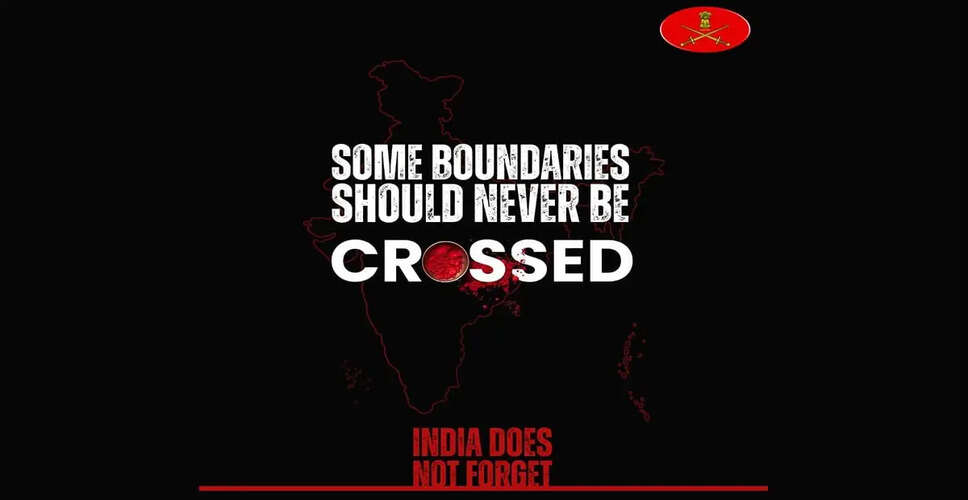
On April 22 last year, a terrorist attack in Pahalgam, Jammu and Kashmir, sent shockwaves across the nation. Renowned for its natural beauty and tourism, Pahalgam was stained with blood that day as Pakistani terrorists brutally murdered 26 innocent individuals. As the first anniversary of this tragic event approaches, the Indian Army has issued a stern warning to terrorists, reminding them that crossing the boundaries of humanity will lead to decisive consequences, and that India never forgets.
A Unified Response to Terrorism
The Army's Public Relations Department conveyed a clear message: when humanity is violated, justice is pursued, and the entire nation stands united. It is important to note that one of the most horrifying aspects of the Pahalgam attack was that the terrorists asked victims about their religion before executing them, making this incident even more inhumane.
Operation Sindoor: A Strong Military Response
In response to this attack, India took significant military action. Operation Sindoor, launched on May 7, 2025, saw the Indian Armed Forces destroy nine major terrorist camps located in Pakistan and Pakistan-occupied Jammu and Kashmir. These camps were associated with groups like Lashkar-e-Taiba, Jaish-e-Mohammed, and Hizbul Mujahideen, resulting in the elimination of over 100 terrorists. Following this, incidents of drone attacks and shelling from Pakistan escalated, leading to four days of heightened tensions between the two nations. India retaliated firmly by destroying radar installations near Lahore and Gujranwala. After suffering heavy losses, Pakistan's Director General of Military Operations reached out to India, resulting in a ceasefire agreement on May 10.
Operation Mahadev and Diplomatic Measures
Additionally, Operation Mahadev marked another significant success, where security forces tracked down and killed three terrorists involved in the Pahalgam attack. On the diplomatic front, India suspended the Indus Water Treaty and all bilateral trade relations with Pakistan. Following the Pahalgam attack, Pakistani nationals residing in India were ordered to leave the country immediately. At that time, Prime Minister Narendra Modi made it clear that India would respond decisively to any terrorist attack, emphasizing that there would be no distinction between the government supporting terrorism and its operatives. Defense Minister Rajnath Singh reiterated that Operation Sindoor was not over and would continue if necessary.
Coordinated Military Efforts
Furthermore, Army Chief General Upendra Dwivedi highlighted this operation as an exemplary coordination among the three armed forces. He noted that the campaign's success was due to clear political directives and complete operational freedom. Air Chief Marshal Amar Preet Singh described it as a decisive moment that showcased the Air Force's precision, strength, and unity. Meanwhile, Navy Chief Admiral Dinesh K. Tripathi stated that the naval task force deployed in the Northern Arabian Sea had effectively limited Pakistan's naval activities.
A Broader Perspective on the Attack
Ultimately, the Pahalgam attack was not merely a terrorist incident; it was an assault on humanity. In response, India's military, diplomatic, and strategic actions have made it clear that the nation is prepared to take every possible measure to ensure the safety and security of its citizens.