
Omar Abdullah Visits Statue of Unity: A Symbol of Unity and Political Dialogue
Omar Abdullah's recent visit to the Statue of Unity in Gujarat marks a significant moment in Indian politics, symbolizing unity and dialogue amidst existing tensions. This historic trip, the first by a prominent opposition leader, highlights the importance of respecting national symbols despite ideological differences. Prime Minister Modi praised Abdullah's journey, suggesting it could inspire fellow Indians to explore the country. Abdullah's reflections on the statue and his experiences at the Sabarmati Riverfront further emphasize the need for political maturity and collective respect. This visit not only enhances the statue's status as a national heritage but also opens avenues for future political discussions.
| Aug 1, 2025, 16:32 IST
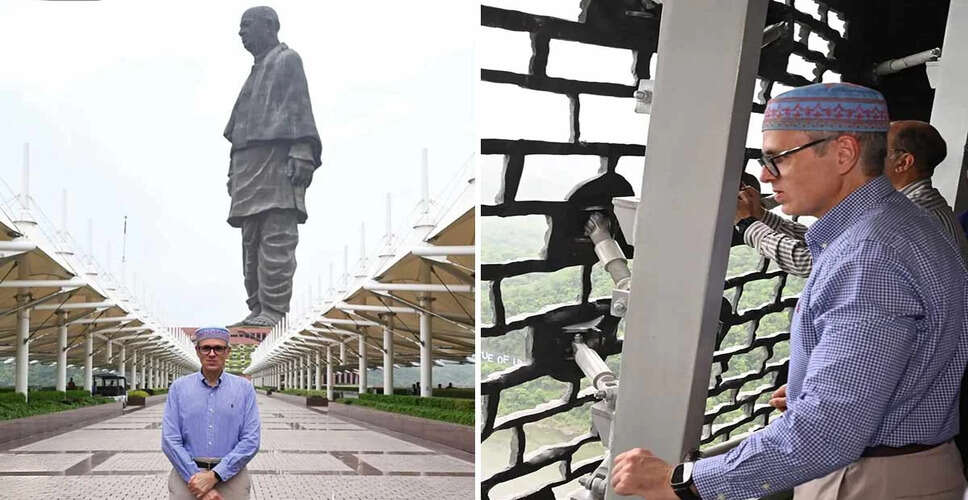
Significance of the Statue of Unity
The Statue of Unity, located in Kevadia, Gujarat, stands as the tallest statue in the world and symbolizes national unity as well as the contributions of Sardar Vallabhbhai Patel. The foundation for this monumental project was laid by Prime Minister Narendra Modi during his tenure as Chief Minister of Gujarat, and it was inaugurated on October 31, 2018. Since then, this site has transformed into a hub for tourism and a representation of national pride.
Omar Abdullah's Historic Visit
On Thursday, Jammu and Kashmir's Chief Minister and senior leader of the National Conference, Omar Abdullah, visited the Statue of Unity. This visit is significant as it marks the first time a prominent opposition leader has toured this monument. Prime Minister Modi praised this initiative, stating that it reflects respect for Sardar Patel's ideals and his contributions to nation-building. Modi highlighted that Abdullah's visit could pave the way for dialogue and mutual respect, showcasing political maturity.
A Step Towards Political Dialogue
Despite long-standing ideological differences between the BJP and the National Conference, this visit could serve as an opportunity to bridge those gaps. Modi expressed his happiness regarding Abdullah's trip to Gujarat, stating that the visit to the Statue of Unity would inspire all Indians to explore different parts of the country. On social media platform X, he remarked, 'It was delightful to see Omar Abdullah enjoying the run at the Sabarmati Riverfront and visiting the Statue of Unity. His journey sends a vital message of unity and encourages fellow Indians to travel across India.'
Exploring the Sabarmati Riverfront
Prior to visiting the statue, Abdullah shared images of his morning run at the renowned Sabarmati Riverfront, calling it one of the most beautiful places he has run. He expressed joy in sharing this experience with numerous other pedestrians and runners, mentioning that he also passed by the remarkable Atal Foot Bridge. Additionally, Abdullah visited the Sabarmati Ashram, where he operated Mahatma Gandhi's spinning wheel and paid tribute to the Father of the Nation.
A Symbol of Unity Amidst Political Tensions
Abdullah's visit should not be viewed merely as a tourism trip. In the current political climate, where tensions exist between the ruling party and the opposition, this visit serves as a positive sign. It illustrates that despite ideological differences, there can be a collective respect for national symbols. After viewing the Statue of Unity, Abdullah remarked to the media that it truly represents New India.
Investment in Global Tourism
The Gujarat government has made significant investments to establish the Statue of Unity as a global tourist destination. The presence of senior leaders like Omar Abdullah can further enhance the monument's popularity. This visit sends a national message that the statue is not merely a project of one political party but a heritage of the entire country.
Conclusion: A Call for Political Maturity
Omar Abdullah's trip to Kevadia transcends a typical visit. It symbolizes national unity, the need for dialogue, and political maturity. Visiting Sardar Patel's statue is not just about honoring the past; it also signifies that today's leaders should draw inspiration from his vision for nation-building. The Prime Minister's commendation suggests that there is hope for expanding the dialogue between the ruling party and the opposition in the future.