
Omar Abdullah Urges Central Government to Restore Jammu and Kashmir's Statehood

Demand for Statehood Restoration
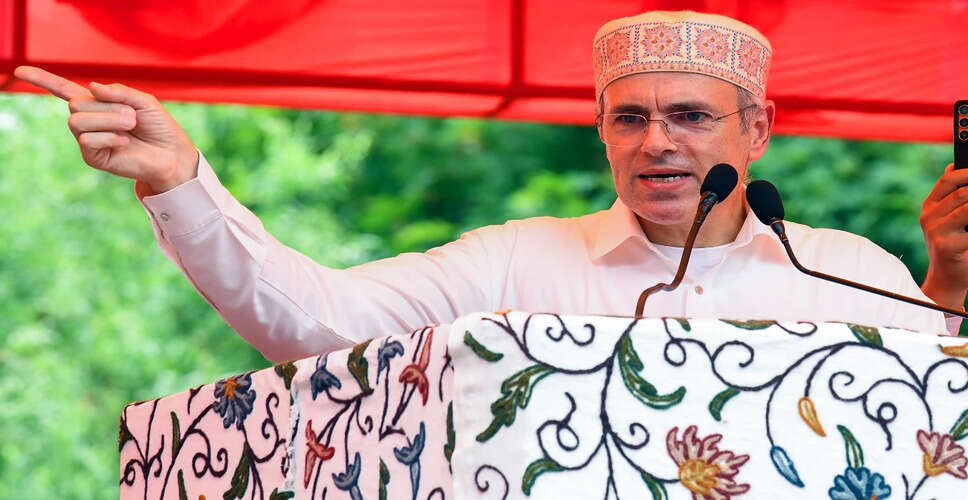
On Saturday, Chief Minister Omar Abdullah reiterated his call for the restoration of Jammu and Kashmir's statehood, excluding the Union Territory of Ladakh. He urged the central government not to misinterpret their patience as weakness and requested a clear timeline for this demand. Abdullah questioned why, after more than a year and a half in power, the ruling party in J&K, the National Conference, is contemplating protests at Delhi's Jantar Mantar.
Questions on Central Government's Approach
During a party conference held at Hazratbal to commemorate the 26th death anniversary of his grandmother, Akbar Jahan, Abdullah posed a critical question: if the central government is willing to discuss statehood demands from the people of Ladakh, why not from the people of Jammu and Kashmir? The central government had revoked the special status of Jammu and Kashmir under Article 370 in August 2019, which included Ladakh at that time, stripping it of its statehood. Although Parliament approved the reorganization of the state in August 2019, the legal implementation occurred in October when the region was divided into two Union Territories: Jammu and Kashmir and Ladakh.
Accusations Against the Central Government
Abdullah accused the BJP-led central government of controlling Jammu and Kashmir's administration through the Lieutenant Governor. He expressed frustration, stating that if the intention was to harass the populace through the Raj Bhavan, dismiss employees, and use bulldozers, then why was their party allowed to take the lead? He remarked that the victory of his party in the Union Territory elections has become a punishment for the people of Jammu and Kashmir. Abdullah questioned the rationale behind allowing them to form a government if they were not permitted to function effectively.
A Call for Patience and Dialogue
Reflecting on his late grandmother, Abdullah emphasized the need for patience, as she had demonstrated. However, he clarified that patience should not be mistaken for weakness. He recounted how he chose the path of dialogue, risking his political future and reputation by stating that they preferred to secure their rights through conversation rather than violence, fully aware of the political risks involved. Abdullah challenged the central government, asking if they intended to provoke unrest by mocking their patience, decorum, and silence.