
Oman's Proposal for Navigational Fees in the Strait of Hormuz Amid US-Iran Tensions
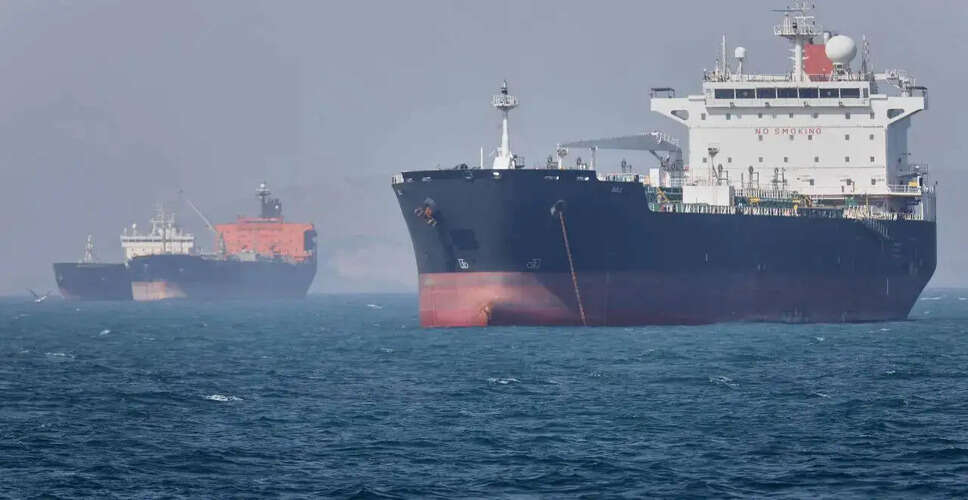

Oman's New Framework for Maritime Navigation
Following the recent tensions between the US and Iran, Oman has put forth a proposal suggesting that commercial vessels navigating the crucial Strait of Hormuz should pay fees for navigation services. This initiative could signify a significant change in the management of one of the busiest maritime routes globally. Reports indicate that Oman has formally presented this plan to the United States and several Western nations, proposing that shipping companies incur service-related charges while traversing the strait. This development follows months of increased tensions, during which Iran temporarily hindered traffic in the waterway during the conflict.
The Strait of Hormuz, located between Iran and Oman, is the main passage for oil and natural gas exports from the Persian Gulf to international markets. Prior to the conflict, vessels could navigate this international waterway without incurring any transit fees.
Proposal Emerges After Increased Tensions
During the US-Iran conflict, Iran effectively blocked sections of the Strait of Hormuz, leading to a surge in global energy prices and disrupting maritime trade. In the aftermath, Iranian officials have suggested that Tehran plans to implement a system to generate revenue from vessels using the strait. Under Oman's proposal, shipping companies would be required to pay fees for services related to safe navigation and maritime security. However, there is a divergence of opinion among officials regarding whether these payments would be voluntary or mandatory.
A regional diplomat familiar with the proposal noted that it is inspired by the systems in place in the Straits of Malacca and Singapore, where a private foundation collects voluntary contributions from shipping companies to enhance navigational safety. A source acquainted with the US stance mentioned that American officials have acknowledged the proposal and plan to address concerns with Omani representatives. This proposal characterizes the payments as voluntary contributions rather than obligatory tolls, although an Iranian official has asserted that Tehran considers these payments to be mandatory.
Iran's Intentions and US Opposition
Iranian Deputy Foreign Minister Kazem Gharibabadi stated that Tehran's priority is to establish an agreement with Oman regarding the management of the strait. He cautioned that if a joint framework is not achieved, Iran may proceed independently. Iranian Foreign Minister Abbas Araghchi has also indicated that the operational model of the Strait of Hormuz will not revert to its pre-war state, where commercial passage was free. Mehdi Mohammadi, a senior advisor to Iran's chief negotiator with the US, emphasized that the terminology surrounding the proposal is inconsequential, arguing that there is no free service in the world.
The United States has publicly opposed any attempts to monetize transit through the Strait of Hormuz. Secretary of State Marco Rubio, speaking in Bahrain, stated that Washington would reject any arrangement that requires ships to pay for using this strategic waterway. He emphasized the need to restore the strait to its previous conditions before the conflict, asserting that it does not matter whether the payments are labeled as fees, tolls, or voluntary donations.
Ongoing Discussions on Shipping Routes
Recently, Oman and the International Maritime Organization (IMO) established a new safe navigation corridor entirely within Omani territorial waters to mitigate security risks. Shortly thereafter, Iran reportedly attacked a cargo vessel in the strait, leading the IMO to halt an operation aimed at assisting numerous commercial ships stranded in the region. This incident highlighted the precarious security situation in one of the world's most strategically significant maritime corridors. Iranian officials have indicated that Tehran and Muscat are expected to commence formal discussions soon regarding the future management of the Strait of Hormuz, including shipping routes and potential service fees. While Oman has not publicly supported charging vessels merely for transiting the strait, Foreign Minister Badr al-Busaidi has differentiated between illegal transit tolls and fees for maritime services provided by coastal states, leaving the door open for a service-based payment system.