
OECD's Economic Outlook: Rising Inflation and Slowing Growth Ahead
OECD's Latest Economic Forecast
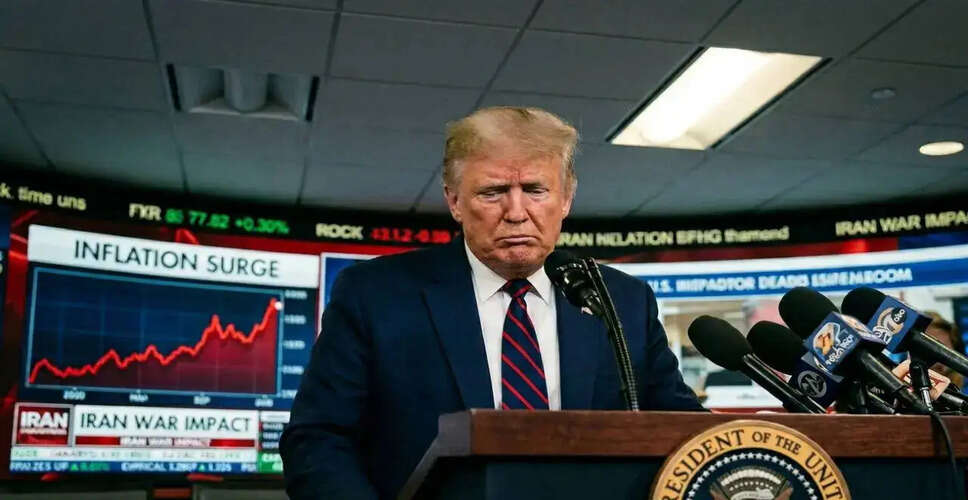
The Organisation for Economic Co-operation and Development (OECD), a research and policy organization based in Paris, unveiled its latest economic forecast on Thursday, revealing troubling trends for central banks and governments globally. The ongoing conflict in the Middle East has triggered an energy price shock that has disrupted what could have been a gradual improvement in global economic growth. Consequently, the OECD is now warning of rising inflation, decreased demand, and a more complex landscape for policymakers.
Key Economic Indicators
What the Numbers Reveal
For the United States, the OECD has revised its inflation forecast to 4.2% for this year, which is a significant increase of 1.2 percentage points from its previous estimate in December, as reported by the Financial Times. This notable rise reflects the rapid impact of energy prices on the economic outlook. However, there is a glimmer of hope, as the OECD anticipates that inflation will ease over time, projecting a decline to 1.6% by the end of 2027, which is 0.7 percentage points lower than earlier long-term forecasts.
Similar trends are observed across the G20 nations, where inflation is now expected to reach 4% this year, also up by 1.2 percentage points from December's predictions. However, global inflation is expected to remain more persistent than in the U.S., stabilizing around 2.7% by next year, slightly above previous estimates.
Current Growth Projections
Growth Trends
The global economy is projected to grow by 2.9% this year, consistent with December's forecast but a decline from the 3.3% growth rate recorded in 2025. The U.S. economy is faring relatively better, with the OECD raising its growth forecast to 2%, an increase of approximately 0.3 percentage points from earlier estimates, marking the largest upward revision among tracked economies. This positive outlook is attributed to strong momentum leading into 2026.
Nonetheless, the OECD cautions that this optimistic figure should not overshadow the anticipated slowdown as the year progresses, primarily due to a decrease in consumer spending. The organization identifies three main factors contributing to this trend: diminishing purchasing power, a slowdown in labor force growth, and households depleting their savings. By 2027, U.S. growth is expected to decline to 1.7%, which is 0.2 percentage points lower than previous forecasts.
Challenges for Central Banks
The Central Bank Dilemma
This situation presents a significant challenge for central banks. Typically, high inflation prompts an increase in interest rates or a halt in rate cuts. However, managing this while economic growth is already slowing creates a precarious balancing act, risking further economic weakness while attempting to control inflation.
Governments are also grappling with similar challenges, as many are burdened with substantial debt. The need to increase spending to protect households from rising energy and food prices adds to their financial strain.
Potential Risks Ahead
The Biggest Risk on the Horizon
The OECD's forecasts are predicated on the assumption that energy prices will begin to stabilize around mid-year, aligning with current financial market expectations. However, the organization warns of significant risks that could disrupt this outlook. Persistent disruptions to Middle Eastern exports could lead to even higher energy prices, exacerbating shortages of essential commodities, which would further inflate prices and hinder growth.
In summary, if the conflict continues and energy markets remain volatile for an extended period, the economic outlook could deteriorate significantly.