
Odisha's Child Protection Initiatives: A Comprehensive Review and Future Plans
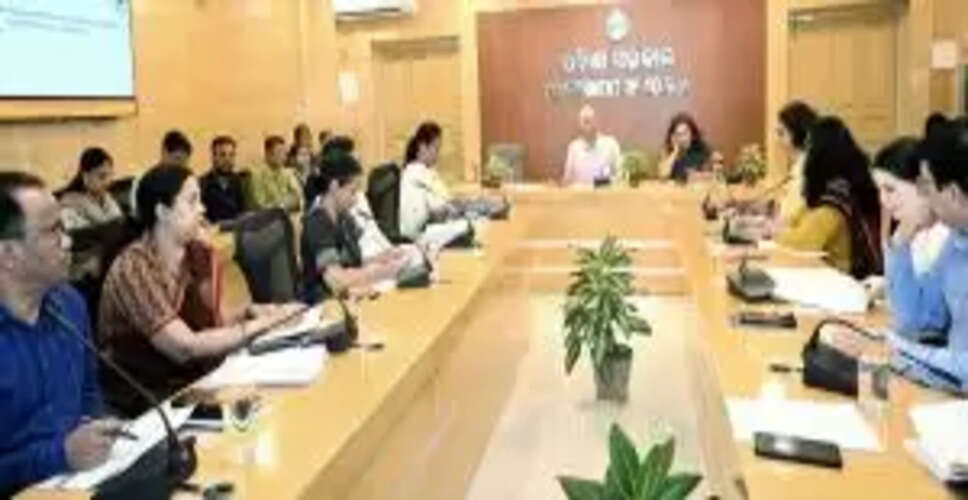
State-Level Meeting on Child Welfare
Bhubaneswar: On Thursday, a meeting of the state-level child protection welfare monitoring and review committee convened at Lok Seva Bhawan, led by Chief Secretary Manoj Ahuja. During this session, officials from various departments deliberated on establishing Child Help Centres at railway stations and bus terminals throughout the state. Ahuja highlighted the importance of collaborative efforts among departments such as Women and Child Development (WCD), School and Mass Education, Higher Education, Health and Family Welfare, Panchayati Raj and Drinking Water, Home, and Skill Development and Technical Education to enhance child protection and care.
The meeting participants thoroughly examined ongoing initiatives, government frameworks, and the roles of NGOs and institutions dedicated to child protection. A significant focus was placed on the successful execution of ‘Mission Vatsalya’ within the state. WCD director Monisha Banerjee delivered an extensive presentation detailing various institutional and non-institutional child protection arrangements in Odisha. Key national and state bodies, including the Mission Vatsalya Approval Board, Mission Vatsalya Central Project Monitoring Unit, State Child Protection Society, State Adoption Resource Agency (SARA), and the three-tier Child Welfare and Protection Committees at state, district, and gram panchayat levels, are actively engaged in these efforts.
Currently, Odisha is home to 30 District Child Protection Units (DCPUs), 31 Child Welfare Committees (CWCs), 34 Juvenile Justice Boards (JJBs), 36 specialized Juvenile Police Units, and 220 Child Care Institutions (CCIs). Approximately 8,150 children are receiving institutional care, while 6,317 are under non-institutional care. The trend of adoption in Odisha has been steadily increasing over the last three years, with a notable rise in in-country adoptions, particularly of girl children, surpassing those of boys annually. The state boasts 160 children’s homes, 33 specialized adoption agencies, 12 open shelters, 7 observation homes, and 7 special homes. Out of the 8,150 children in CCIs, 98 percent have been registered for Aadhaar.
At present, 672 children are engaged in vocational education, and 8,130 individuals have completed training through 264 diverse programs. Among them, 211 children have found employment, while 79 have started their own businesses. The state also offers marriage assistance for children transitioning out of institutional care. Currently, 41 Child Help Units and the State Control Room are operational, providing essential support to children in need. Financial aid under the ‘Ashirbad Yojana’ is available for eligible children. Other critical areas of focus discussed included mental health support and counseling for traumatized children, smart education initiatives through e-learning, video conferencing for juvenile case hearings, and monthly financial assistance for ongoing education under the ‘Ashirbad Yojana’.