
Observing Black Day: Commemorating 200 Years Since the Yandabo Treaty
Marking a Significant Historical Event
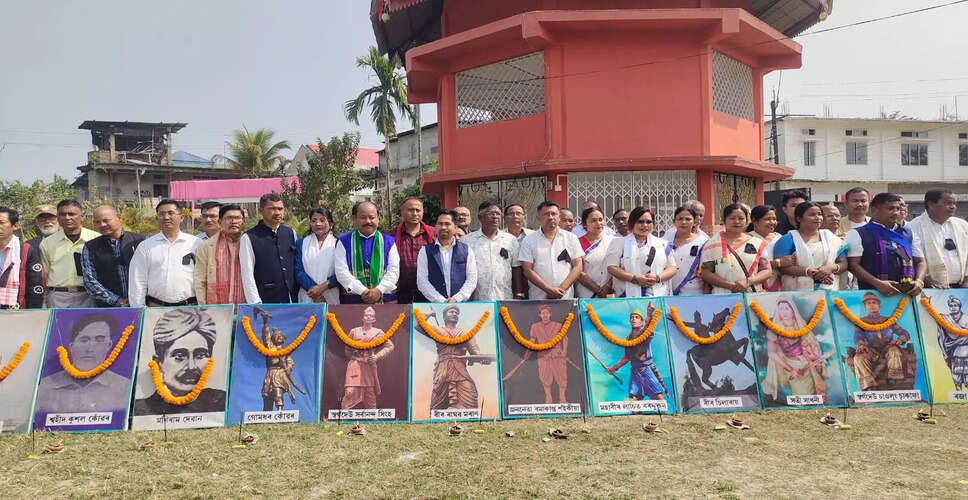
Dibrugarh, Feb 25: In remembrance of the 200th anniversary of the Yandabo Treaty, various indigenous and social organizations gathered today to observe what they termed ‘Black Day,’ viewing the treaty as a pivotal moment that led to the loss of Assam's autonomy.
The Yandabo Treaty, which was signed on February 24, 1826, concluded the first Anglo-Burmese war and resulted in Assam being ceded to the British East India Company.
Participants donned black badges throughout the day-long event, asserting that the treaty initiated significant political, demographic, socio-economic, and cultural shifts that they believe diminished the rights and status of the indigenous populations in the state.
This gathering took place at the Tai Educational and Cultural Centre in Boiragimoth and was organized collaboratively by several groups, including Khilonjia Mancha, Indigenous Peoples of Mong-Dun-Chun-Kham Assam, All Assam Ahom Sabha, All Assam Matak Sanmilan, Assam Moran Sabha, All Assam Chutia Jati Sanmilan, All Assam Koch Rajbongshi Sanmilan, and the North-East Indigenous Peoples’ Forum.
The program commenced with the raising of organizational flags, followed by the lighting of traditional earthen lamps and incense sticks in front of portraits of notable historical figures and freedom fighters.
Among those honored were King Badosa, Sukapha, Sati Sadhani, Bir Chilarai, Lachit Borphukan, Romakanta Saikia, Sarbananda Singha, Gomdhar Konwar, Maniram Dewan, Kushal Konwar, Kanaklata Barua, and Raghav Moran.
Two panel discussions were conducted during the event. The first addressed the implications of the Yandabo Treaty, while the second focused on defining ‘Khilonjia’ (the indigenous people of Assam) and the importance of protecting their future.
The panel featured speakers such as advocate Ramesh Barpatra Gohain, writer and researcher Pallav Barpatra Gohain, educationist Dr. Jibeshwar Mohan, writer Phatik Chandra Neog, Karbi youth leader Litton Rongphar, and noted author Dr. Atul Borgohain.
Shashanka Neog, president of the All Assam Ahom Sabha, noted that the discussions primarily revolved around strategies to safeguard the rights and entitlements of indigenous communities, stressing the necessity of securing a better future for upcoming generations across various sectors.
Nagaon also commemorated the 200th anniversary of the Yandabo Treaty with an event today.
Dr. Indrajit Bezbaruah, principal of Samaguri College, remarked that the treaty marked a crucial turning point in Assam’s historical narrative.
This event was organized by the Sangrami Satirtha Assam Movement in Nagaon and saw participation from several notable citizens, including Dr. Durlav Chamua, Kshitish Das, and Dipak Saikia. The speakers highlighted the significance of reflecting on history to learn from it rather than merely lamenting it.
The Yandabo Treaty is often regarded as a somber chapter in Assam’s history, symbolizing the loss of independence and the onset of colonial governance. Nevertheless, it also ignited a wave of resistance and nationalism within the state, which played a role in India’s eventual fight for independence.
The event concluded with a call to honor the sacrifices made by the people of Assam in their quest for freedom and to strive towards fostering a united state.