
Nusrat Bharucha's Spiritual Journey Sparks Controversy in Ujjain
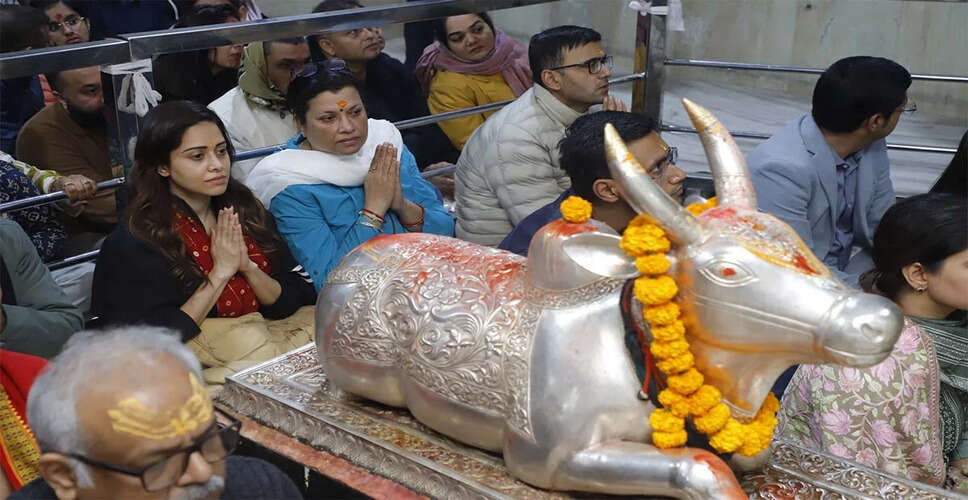
Controversy Surrounds Actress's Temple Visit
The renowned Mahakaleshwar Jyotirlinga in Ujjain became the center of a political-religious debate following Bollywood actress Nusrat Bharucha's spiritual visit. On Tuesday, she participated in the Bhasma Aarti at the Mahakal temple, where she offered prayers and received blessings after presenting a cloth at the sanctum sanctorum. This marked her second visit, which she described as a beautiful experience. Videos and photos shared on social media depicted her immersed in devotion, applying tilak, performing water offerings, and engaging in the Aarti.
In a video message, Nusrat expressed her appreciation for the arrangements made by the temple management for devotees and mentioned her intention to visit Mahakal every year. Before the New Year, she shared an Instagram story amidst a crowd of devotees at the temple, proclaiming 'Jai Mahakal.' However, this moment of faith was overshadowed by controversy when Maulana Mufti Shahabuddin Razvi Bareilvi, the national president of the All India Muslim Jamaat, issued a fatwa against her participation in Hindu rituals.
The fatwa stated that a Muslim woman engaging in idol worship and participating in rituals of another religion is against Sharia law and falls under the category of 'Gunaah-e-Azeem' (grave sin). Maulana Razvi criticized her actions, claiming that applying tilak, participating in the Bhasma Aarti, and offering water transcends Islamic principles. He clarified that while he has no legal authority to take action, he can provide religious guidance, urging Nusrat to repent and seek forgiveness through the Kalma.
This fatwa has ignited a heated debate on social media, with some viewing it as an intrusion into personal faith, while others label it as an example of extremism. In response to criticism, Razvi stated that hateful messages do not disturb him, emphasizing his consistent opposition to violence against Hindus in Bangladesh, Kashmir, and Pakistan. He remarked that if Nusrat is a 'good Muslim,' she should heed his advice; otherwise, she may disregard the fatwa.
This controversy extends beyond the actress's temple visit; it reflects a mindset that seeks to control individual faith. The issue is not about religious identity but whether anyone has the right to impose their beliefs on another's spiritual experience. The Indian Constitution grants citizens the freedom to believe in or reject religion and to experience spirituality in their own way. Nusrat Bharucha did not disrespect any religion or harm anyone's beliefs; she merely expressed her devotion by visiting a temple. Yet, when such expressions of faith deviate from established norms, fatwas emerge.
The most alarming aspect of the fatwa is not its legal standing but its psychological pressure. It conveys the message that deviating from their interpretation makes one 'bad.' This mindset fractures society rather than unites it. Ironically, from platforms that advocate coexistence and brotherhood, such declarations emerge, raising barriers higher. Religious leaders should not instill fear but guide humanity. If every spiritual experience is confined to rigid scriptural lines, what remains of spiritual freedom?
Nusrat Bharucha's declaration of 'Jai Mahakal' is not an assault on anyone's faith. It represents a voice from India, where people worship out of reverence, not fear. The question remains: will we choose that India, or the narrow-minded thinking that demands proof at every step?