
Notorious Naxalite Commander Surrenders with Weapons in Chhattisgarh
Naxalite Leader's Surrender
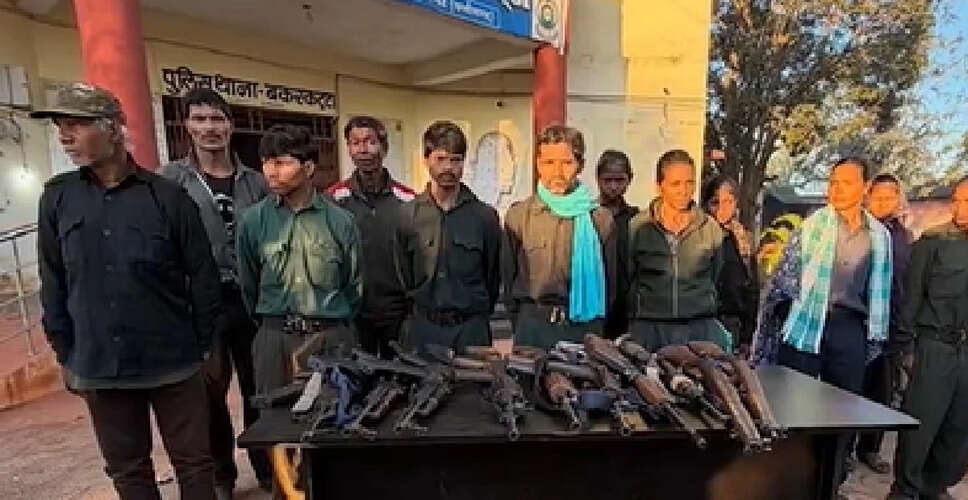
On Monday, Ramdhar Majji, a notorious Naxalite commander and member of the Central Committee, surrendered to the police along with his group. He was considered to be on par with Hidma and had a bounty of one crore rupees on his head.
Majji surrendered at the Bakra Katta police station in Chhattisgarh. As an active member of the Central Committee in the MMC zone, he arrived with his divisional committee members and handed over an AK-47 rifle along with other weapons. Accompanying him were ACM Ram Singh Dada and ACM Sukesh Pottam, who also surrendered their arms.
Weapons Recovered
The police confirmed the recovery of a significant cache of weapons, including an AK-47, INSAS rifles, SLRs, .303 rifles, and .30 carbines. Among those who surrendered were six female activists, highlighting the deep involvement of women in the Maoist movement.
The list of surrendering individuals included Lakshmi, Sheila, Yogita, Kavita, and Sagar, along with DVCM Lalita and DVCM Janki. Other notable names included DVCM Chandu Usendi and DVCM Prem.
Impact on Maoist Network
Officials indicated that their surrender dealt a significant blow to the Maoist network in the region. Police sources revealed that this group was active in the Maharashtra-Madhya Pradesh-Chhattisgarh special regional committee area, where they conducted their operations and posed a continuous threat to law enforcement agencies.