
Northeast India Faces Potential El Niño Impact This Year
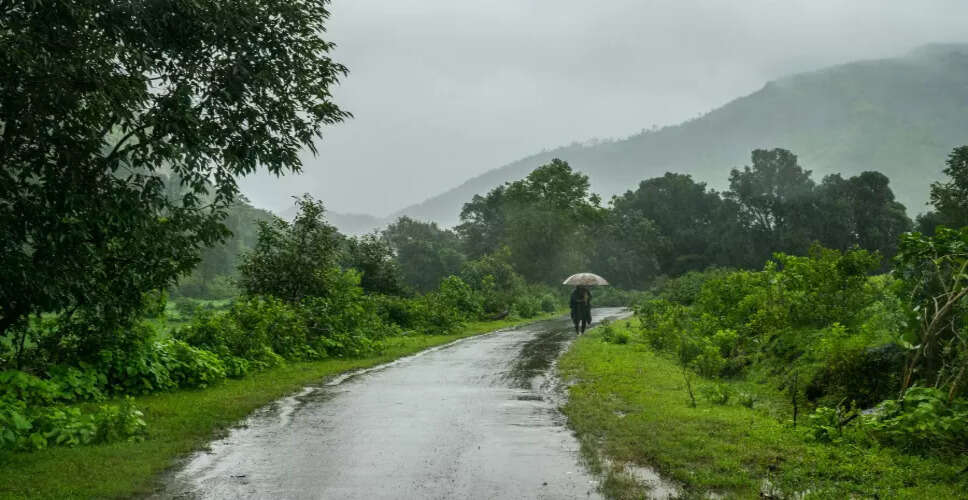
Concerns Over Monsoon Rainfall in Northeast India
Guwahati, March 19: Forecasters worldwide are warning of a possible El Niño event this year, which could lead to another summer of below-average monsoon rainfall and elevated temperatures in Northeast India.
The region has already experienced five consecutive years of subpar monsoon rainfall. In fact, last year marked the second-lowest recorded rainfall for East and Northeast India in the past 125 years, totaling just 1089.9 mm, following the record low of 1065.7 mm in 2013.
According to the latest forecast from the US NOAA Climate Prediction Centre, there is a 62% likelihood that El Niño will develop between June and August 2026 and may continue at least until the end of that year.
The World Meteorological Organization has also indicated that the recent weak La Niña phenomenon is expected to transition into ENSO-neutral conditions, which could shift towards a warming El Niño later this year.
El Niño is characterized by a significant rise in ocean surface temperatures in the central and eastern equatorial Pacific, along with alterations in tropical atmospheric circulation, including shifts in winds, pressure, and rainfall patterns. This phenomenon typically has effects that are opposite to those of La Niña.
In correspondence with a media outlet, Dr. Akshay Deoras, a Research Scientist at the National Centre for Atmospheric Science & Department of Meteorology at the University of Reading in the UK, noted that a robust El Niño usually diminishes the seasonal rainfall of the southwest monsoon across India, often resulting in a warmer monsoon season.
“Some climate models are already hinting at this possibility. A common occurrence during El Niño years is an increased chance of monsoon breaks, which can significantly affect rainfall distribution throughout the season. This trend is particularly worrying for Northeast India, which has already been experiencing a decline in seasonal rainfall,” Deoras explained.
El Niño, which translates to 'little boy' in Spanish, is a natural climate phenomenon that typically occurs every 2-7 years, marked by warmer-than-average sea surface temperatures in the central and eastern Pacific Ocean near the equator. Depending on its intensity, El Niño can lead to various impacts, including heightened risks of heavy rainfall and drought in different parts of the globe.
While there is a notable correlation between ENSO (El Niño-Southern Oscillation) events and monsoon patterns, this relationship is not always consistent. Out of the 18 drought years in India over the last century, 13 have coincided with El Niño occurrences.
The Indian Meteorological Department (IMD) acknowledges that while there is a statistically significant link between ENSO and Southwest Monsoon rainfall, it is not the sole determinant of monsoon behavior in India. Other factors, such as the Indian Ocean Dipole (IOD), Eurasian snow cover, and various regional and global atmospheric patterns, also play crucial roles.
In light of these forecasts, the State Bank of India has issued a report warning that the recent predictions for global weather patterns suggest a potential El Niño buildup in 2026. “Current trends in the Nino 3.4 SST Index indicate that ENSO is presently in a neutral phase but may shift to a positive state either in 2026 or later that year. Given that the Indian monsoon is influenced by global weather patterns, this, combined with ongoing geopolitical crises affecting fertilizer, natural gas, and Brent crude prices, is likely to impact inflation in 2026,” the report stated.
More definitive signals are expected to emerge by the end of May.