
Northeast Frontier Railway Enhances Safety with New Weather Stations

Introduction of Automatic Weather Stations
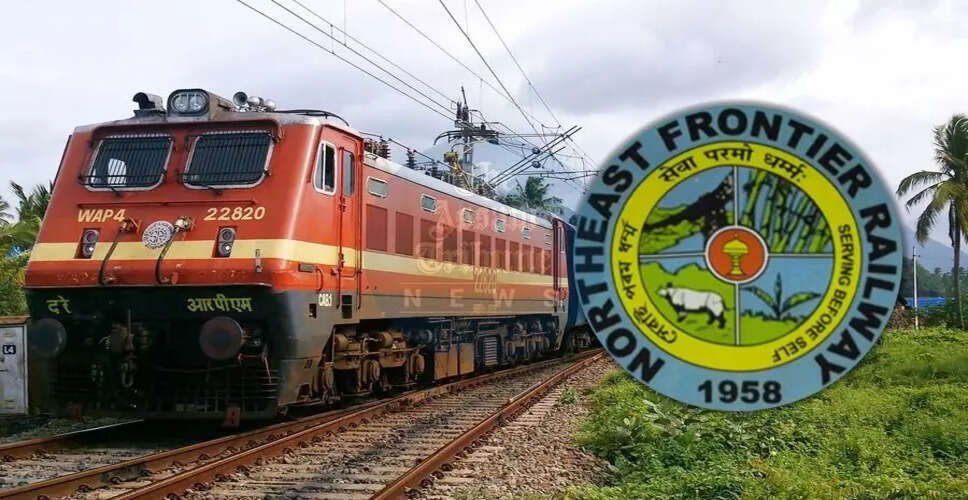
Representational Image
Guwahati, May 15: The Northeast Frontier Railway (NFR) has announced the installation of automatic weather stations (AWS) at critical points throughout its network to enhance safety and disaster readiness during the monsoon season.
Purpose and Locations of Installation
This initiative is designed to provide accurate and timely weather forecasts, allowing for proactive measures to be taken in response to floods, landslides, and severe weather conditions.
So far, three AWS have been successfully set up, with an additional six currently being installed at key vulnerable sites within the NFR area, according to an official statement.
These sites include the Lumding-Badarpur section in Assam, the Katakhal Sairang section linking Mizoram, and the Jiribam-Khongsang route in Manipur.
Importance of Continuous Monitoring
These regions are particularly susceptible to heavy rainfall, flooding, and landslides during the monsoon, making ongoing weather monitoring crucial for safe train operations.
The completion of the six additional AWS is anticipated by the end of May.
Collaboration with Meteorological Authorities
The installation process is being conducted in collaboration with the India Meteorological Department (IMD).
This network of AWS will deliver precise, location-specific weather information, enabling railway officials to make timely and informed decisions during emergencies and adverse weather events.
Advanced Technology for Enhanced Safety
This initiative is expected to greatly enhance preparedness and response strategies, especially in areas prone to floods and landslides.
The weather stations are outfitted with sophisticated sensors that can monitor various weather parameters with high precision.
For instance, rain gauge sensors can measure precipitation intensity up to 900 mm per hour, while temperature sensors can operate within a range of minus 40 to plus 75 degrees Celsius.
Wind monitoring devices can track speeds of up to 80 meters per second, and humidity sensors can measure levels from 0 to 100 percent, along with atmospheric pressure sensors capable of measuring up to 1200 hPa.
Commitment to Safety and Technology
According to the statement, "The deployment of these advanced weather monitoring systems reflects NFR's ongoing commitment to enhancing operational safety, embracing modern technology, and ensuring uninterrupted rail connectivity in challenging geographical areas during the monsoon season."