
North Korea's Kim Jong Un Celebrates New Engine Test: A Step Towards Enhanced Military Power
Kim Jong Un's Military Advancements
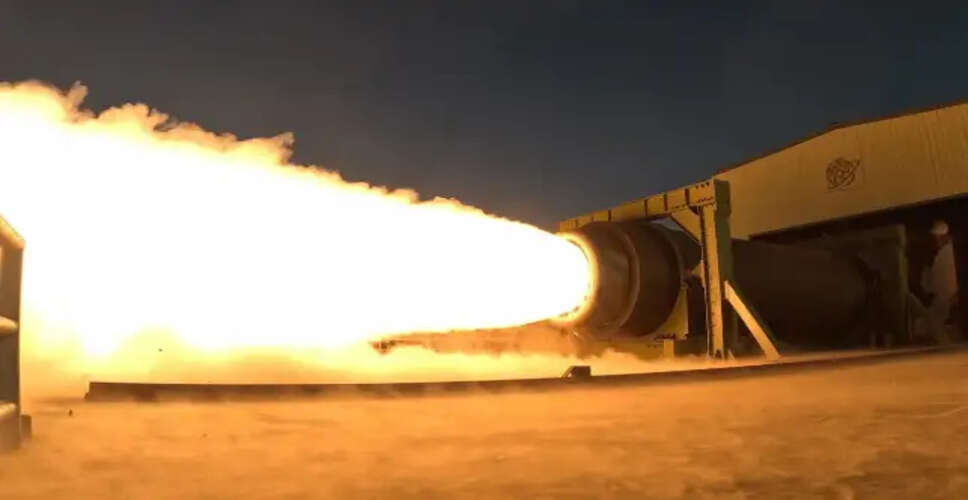
Seoul: North Korean leader Kim Jong Un has recently overseen a test of a high-thrust solid-fuel engine, which he praised as a significant enhancement to the nation's military capabilities, according to state media reports on Sunday.
This test suggests Kim's determination to expand and modernize a missile arsenal that could potentially target the United States.
The Korean Central News Agency (KCNA) reported this development shortly after Kim's address to North Korea's Parliament, where he vowed to solidify the country's nuclear status and accused the US of engaging in global "state terrorism and aggression," likely referencing ongoing conflicts in the Middle East.
During the ground jet test of the newly enhanced engine, which utilizes composite carbon fiber materials, Kim noted that the engine's maximum thrust has increased to 2,500 kilotons, a rise from the approximately 1,971 kilotons recorded in a previous solid-fuel engine test conducted in September.
Experts believe this increase in engine power is part of efforts to enable multiple warheads to be deployed on a single missile, thereby improving the likelihood of overcoming US defense systems.
The KCNA did not specify the exact timing or location of the test.
This test is part of North Korea's five-year military escalation strategy, which aims to enhance its "strategic strike capabilities," as reported by KCNA.
This term is interpreted to refer to nuclear-capable intercontinental ballistic missiles aimed at the continental United States.
Kim emphasized that the recent engine test holds "great significance in elevating the country's strategic military strength to the highest level," according to KCNA.
In recent years, North Korea has successfully launched various ICBMs, demonstrating their potential to reach the US mainland, including missiles equipped with solid propellants that complicate pre-launch detection.
In contrast, the older liquid-fuel missiles require fueling before launch and have limited operational longevity.
Some international analysts argue that North Korea still encounters technological challenges in developing a reliable ICBM, particularly in ensuring that warheads can withstand the extreme conditions of atmospheric reentry.
However, others contest this view, considering the extensive time North Korea has invested in its nuclear and missile initiatives.
Since the breakdown of high-stakes negotiations with former President Donald Trump in 2019, North Korea has aggressively pursued the expansion of its nuclear arsenal.
In a recent congress of the ruling Workers' Party in February, Kim indicated a willingness to engage in dialogue with Trump but insisted that the US must abandon its demands for North Korea's nuclear disarmament as a prerequisite for discussions.