
Nitin Gadkari Defends Ethanol-Blended Fuel Amid Criticism
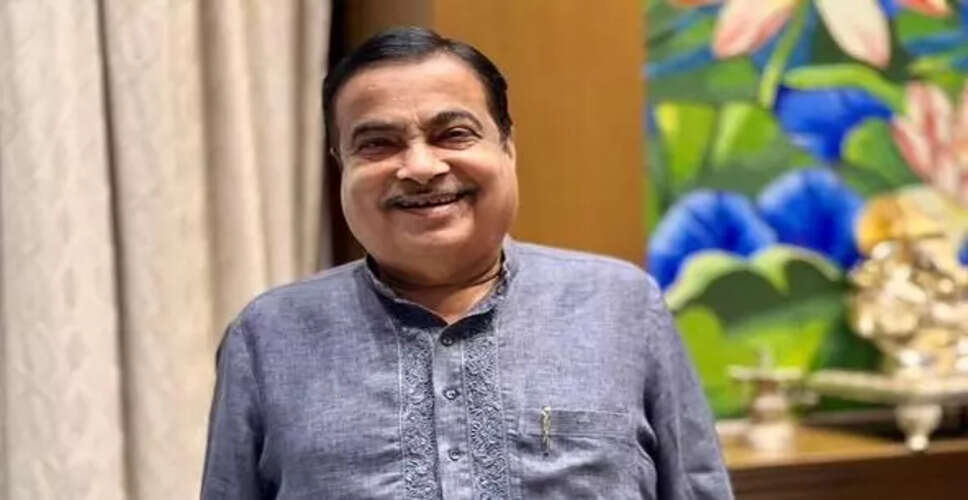

Union Minister Addresses Ethanol Fuel Concerns
New Delhi, Oct 27: On Tuesday, Nitin Gadkari, the Union Minister for Road Transport and Highways, labeled the backlash against petrol mixed with 20% ethanol (E20) as a “paid campaign.”
Speaking at an event hosted by the Confederation of Indian Industry (CII), he noted that over 20 million two-wheelers and more than three million petrol cars have been using ethanol-blended fuel for the last three years, without any substantiated claims of significant engine failures or vehicle malfunctions linked to this fuel type.
“Three months ago, there was a lot of uproar regarding E20 fuel; now the anger has subsided... It was a paid campaign,” he stated.
This statement followed the government's recent amendments to the Central Motor Vehicles Rules, 1989, which now permit flex-fuel vehicles that can operate on fuel with up to 100% ethanol (E100).
The introduction of E20 petrol, which consists of 80% petrol and 20% ethanol, has faced opposition from various political parties and consumer advocacy groups, who are concerned about its effects on older vehicles not designed for such fuel blends.
India's Ethanol Blended Petrol (EBP) initiative began with a pilot in 2001, and E5 petrol was launched in 2006.
While the ethanol blending rate was approximately 1.53% until 2013-14, it has steadily increased due to advancements in production capabilities, infrastructure, and regulatory measures.
Regarding highway infrastructure, Gadkari mentioned that he had recently assessed 700-800 projects after receiving feedback on social media about the poor conditions of certain highway segments.
“I will not compromise on highway quality,” he assured, promising that road users would not experience any inconvenience in the next two years.
Emphasizing the economic advantages of infrastructure investment, Gadkari referred to infrastructure development as the backbone of India's economy.
“For every Rs 100 spent on infrastructure, the economic impact is Rs 325. This will boost GDP,” he explained.
He also highlighted that the national highways network has grown 1.6 times, increasing from 91,287 km in 2014 to 146,000 km by 2026.
Additionally, the network of four-lane and wider national highways has expanded 2.6 times, from 18,278 km in 2014 to 49,160 km in 2026. The high-speed corridor network has seen a twelvefold increase to 6,788 km during the same period.
Furthermore, the minister announced plans to implement a truck body code following the recent tightening of the bus body code, aimed at enhancing vehicle body standards.