
Nicolás Maduro Claims Innocence Amidst Controversial US Charges
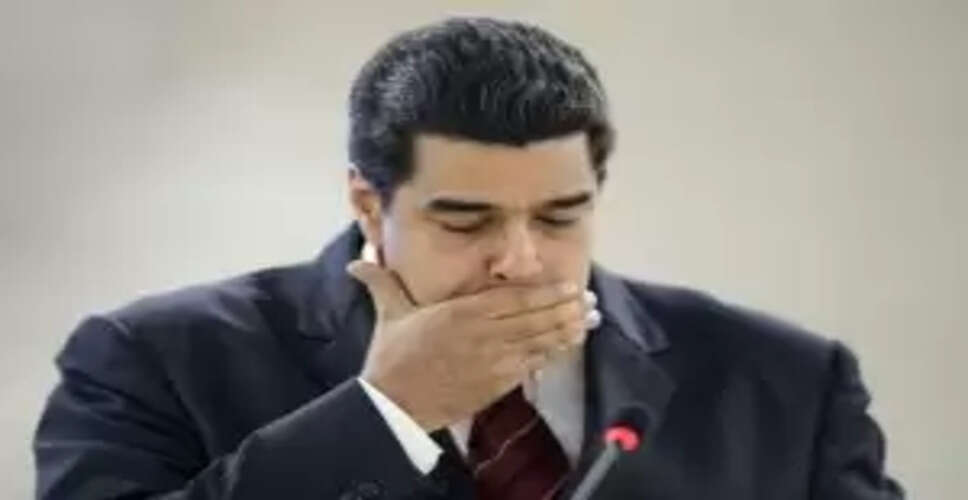
Maduro's Defiant Court Appearance
In a bold statement, Nicolás Maduro proclaimed himself "the president of my country" during a court hearing where he faced federal drug trafficking charges. This legal battle stems from actions taken by the Trump administration to justify his ousting from power in Venezuela.
Maduro expressed his innocence in Spanish, asserting, "I am not guilty. I am a decent man, the president of my country." This marked his first courtroom appearance since he and his wife were taken from their home in a dramatic military operation.
The case, taking place in Manhattan, represents a significant legal challenge against a foreign leader, set against the backdrop of a US-led regime change initiative that Trump claims will allow his administration to control Venezuela.
Accompanied by his wife, Maduro arrived at the courthouse under heavy security, having been transported from a Brooklyn detention facility.
Legal Proceedings Commence
As a defendant in the US judicial system, Maduro is entitled to the same rights as any accused individual, including a jury trial. However, his situation is notably unique.
Throughout the proceedings, Maduro took extensive notes and greeted reporters with New Year wishes, insisting he had been unlawfully taken. "I am here kidnapped," he stated, referring to his capture in Caracas.
Judge Alvin Hellerstein, aged 92, interrupted Maduro to clarify procedural matters, stating that his attorney could address those issues later.
Maduro's legal team is expected to challenge the validity of his arrest, claiming he is protected from prosecution due to his status as a head of state. Barry Pollack, a well-known attorney, emphasized that Maduro is the leader of a sovereign nation and entitled to certain privileges.
The defense will also question the legality of his military capture. Historically, similar defenses have been attempted, such as by Manuel Noriega in 1990, but the US does not recognize Maduro as Venezuela's legitimate leader following a disputed election.
Maduro's wife, Cilia Flores, also entered a not guilty plea and was seen with visible injuries from her capture.
The indictment alleges that Maduro and others collaborated with drug cartels to transport vast quantities of cocaine into the US, with potential life sentences if convicted.
The charges include ordering kidnappings and murders related to drug debts, including the assassination of a local drug lord.
Outside the courthouse, tensions flared between opposing protest groups, while inside, a man confronted Maduro, labeling him an "illegitimate" president. Maduro responded, asserting his status as a "kidnapped president" and a "prisoner of war."
Calls for Maduro's Return
The US military operation that captured Maduro and his wife occurred early Saturday at their residence on a military base. Trump stated that the US would temporarily oversee Venezuela, reiterating that "we're in charge" and would "fix it."
Secretary of State Marco Rubio adopted a more cautious stance, clarifying that the US would not manage Venezuela's daily affairs, aside from enforcing an oil quarantine.
Prior to his capture, Maduro and his supporters claimed that US aggression was driven by a desire for Venezuela's abundant oil and mineral resources.
While Trump suggested that Maduro's removal could lead to increased oil exports, oil prices saw a slight rise in trading.
Concerns linger regarding the pace of oil production recovery in Venezuela, alongside governance and oversight issues.
Delcy Rodríguez, Venezuela's interim leader, has demanded the return of Maduro, who previously denied any drug trafficking involvement. However, she later expressed a willingness to collaborate with Trump for "respectful relations".
Rodríguez was sworn in by her brother, National Assembly leader Jorge Rodríguez, expressing sorrow for the suffering caused by what she termed an "illegitimate military aggression".
Nicolás Maduro Guerra, Maduro's son and a congressman, warned that his father's capture could set a dangerous global precedent, asserting that normalizing the abduction of a head of state threatens international political stability.
On the same day, the United Nations Security Council convened an emergency meeting, with officials cautioning that the US may have breached international law through its unilateral actions.