
NIA Files Charges Against Senior Separatist Leaders in Long-Standing Case
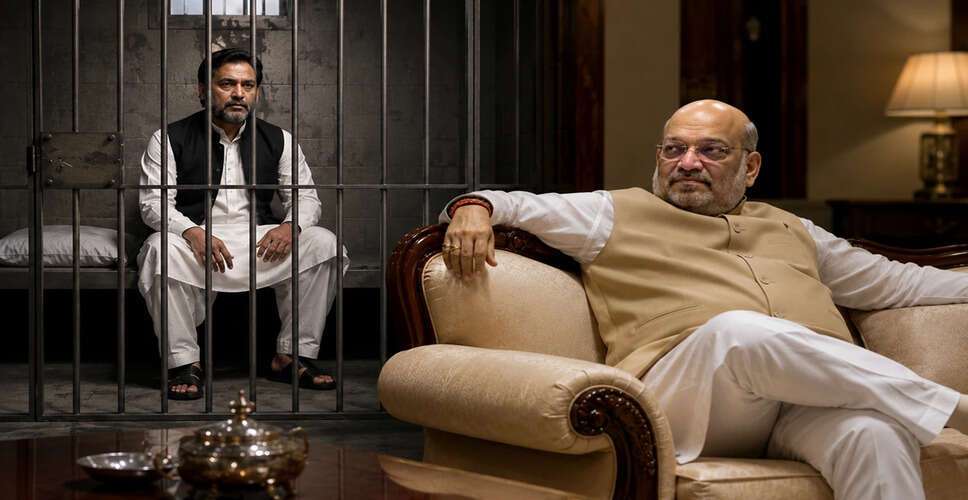

Charges Filed in a Notorious Case
The National Investigation Agency (NIA) has submitted a charge sheet against six prominent leaders of the separatist group, Hurriyat Conference, in a case that dates back nearly thirty years. This case is linked to the violence that erupted during the funeral of a slain terrorist in Srinagar on July 17, 1996, which involved attacks on police, damage to government property, and anti-India activities. According to the NIA, this was not a spontaneous mob reaction but a premeditated conspiracy aimed at inciting separatist sentiments, creating an anti-government atmosphere, and demonstrating control in Jammu and Kashmir.
Details of the Charge Sheet
The charge sheet filed in a special court in Jammu includes names such as Shabbir Ahmed Shah, Syed Ali Shah Geelani, Abdul Gani Lone, Mohammad Yaqub Waqil, Javid Ahmed Mir, and Shakeel Ahmed Bakshi. However, since Syed Ali Shah Geelani, Abdul Gani Lone, and Mohammad Yaqub Waqil have passed away during the trial, legal proceedings against them have been terminated. Nevertheless, the investigating agency has detailed their alleged roles and involvement in the conspiracy within the charge sheet.
Sequence of Events
The NIA states that the entire incident began when the funeral procession of the deceased terrorist, Hilal Ahmed Beg, passed through the Naz Chowk in Srinagar. It is alleged that armed terrorists mingled with the crowd and opened fire indiscriminately at police personnel, injuring several officers. Additionally, there was significant stone-pelting, causing extensive damage to government vehicles. The investigation revealed that the violence was deliberately incited to disrupt law and order.
Incitement and Propaganda
According to the charge sheet, the separatist leaders leading the procession raised slogans promoting anti-India sentiments, supporting Pakistan, and advocating divisive ideologies. They also encouraged armed resistance and violent conflict in their speeches. The NIA asserts that these speeches and slogans aimed to incite the public, create hostility against security forces, and garner support for separatist ideologies.
Exploitation of Sensitive Events
The investigation further revealed that the sensitive occasion of a funeral was exploited not merely for mourning but to incite the crowd and spread violence. The NIA claims that this entire plan was part of a calculated strategy by the separatist leadership, intended to stir public sentiment against the central government, create public disorder, incite attacks on law enforcement agencies, and showcase the influence of Hurriyat Conference in Jammu and Kashmir.
Legal Proceedings and Implications
All accused individuals face charges of criminal conspiracy, attempted murder, rioting, assaulting public servants, and violations under the Unlawful Activities (Prevention) Act. Initially, the case was registered at the Sherghari police station in Srinagar on the day of the incident. However, in April of this year, the investigation was transferred from the Jammu and Kashmir police to the NIA under the direction of the Ministry of Home Affairs. Following this, a thorough re-investigation was conducted, leading to the preparation of the charge sheet. Recently, a court in Jammu also rejected Shabbir Ahmed Shah's bail application and extended his judicial custody.
A Reflection on Terrorism and Separatism
This incident underscores the reality that terrorism and separatism are not solely propagated through armed conflict but also through inciting crowds, manipulating emotions, and spreading false propaganda. Using a terrorist's funeral as a platform for violence, attacks on police, and anti-India campaigns constitutes a serious offense against both democratic systems and society. Nonetheless, the advancement of legal proceedings based on evidence, even after three decades, sends a clear message that justice, albeit delayed, will eventually reach the guilty. There is no place for separatist ideologies, violence, and anti-national activities in democratic India, and those challenging the unity, integrity, and constitutional order of the nation will ultimately face justice.