
NGT Takes Action Against Illegal Groundwater Extraction in Guwahati
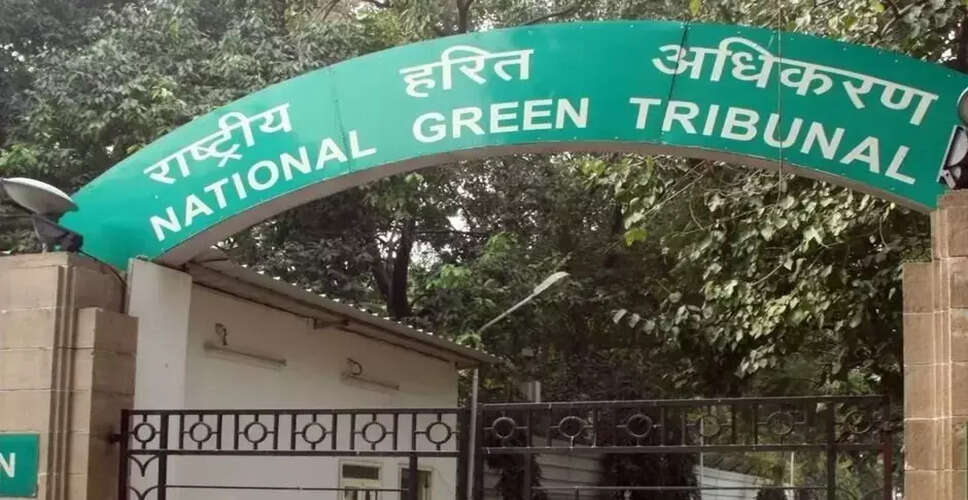
NGT Issues Notice to Assam Government Over Groundwater Concerns
Guwahati, March 28: The National Green Tribunal (NGT) has formally notified the Assam government and several state agencies regarding allegations of unlawful groundwater extraction in certain areas of Guwahati.
The Eastern Zone Bench of the NGT accepted a petition that raised significant issues about unauthorized groundwater extraction in the Barsapara locality, submitted by Milan Kanti Das and others.
This Bench, which includes Justice Dinesh Kumar Singh and Expert Member Ishwar Singh, has instructed all parties involved to provide their responses within a four-week timeframe.
The Tribunal has scheduled the next hearing for May 8.
The Assam government is named as a respondent in this case, represented by the Special Chief Secretary (PHED), along with the Executive Engineer (PHED), the District Commissioner of Kamrup Metropolitan, the Central Ground Water Board, and the Water Supply Management Committee of Barsapara No 1.
During the proceedings, the petitioners indicated that information obtained through the Right to Information Act from the Central Ground Water Board (CGWB) revealed that no No Objection Certificate (NOC) has been granted for groundwater extraction in the Barsapara area.
It has been claimed that the Barsapara No. 1 Water Supply Scheme Management Committee is operating several borewells without proper authorization and is extracting groundwater for prolonged periods each day.
This region has been classified as a semi-critical groundwater zone, and such excessive extraction has reportedly resulted in a significant drop in groundwater levels, leading to water shortages for local inhabitants, according to the petition.
The petitioners further alleged that groundwater is being sold commercially, contrary to its intended use for drinking purposes, and that no substantial regulatory measures have been implemented to address this issue.
Recognizing the seriousness of these claims, the Tribunal noted that the case raises important environmental questions and accepted the application.