
New Tariffs Announced by Trump Administration Amid Trade Policy Changes

Overview of New Tariffs
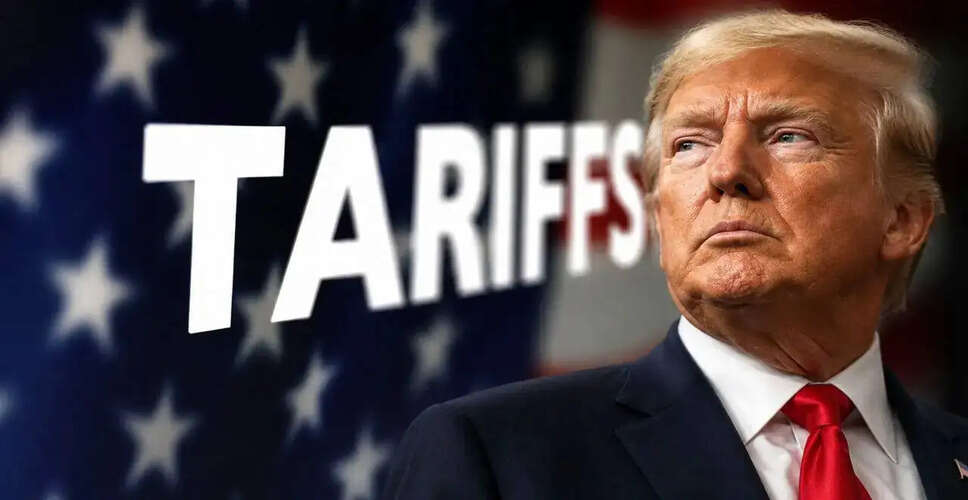
On Thursday, the administration of President Donald Trump revealed new tariffs on imports from numerous trading partners, including India, China, and various European nations. This announcement follows a Supreme Court decision that blocked a broader tariff strategy earlier this year. The new tariffs, which will be implemented at 12:01 am on Friday, will range from 10% to 12.5%, as stated by the Office of the US Trade Representative (USTR). These tariffs will affect goods from 60 trading partners, representing 99.4% of US imports.
The timing of this rollout coincides with the expiration of a 10% universal tariff that was previously imposed by Trump under emergency powers, a policy that was later overturned by the Supreme Court. Senior officials from the White House emphasized their commitment to the president's trade agenda, asserting that the court's ruling would not deter their objectives. They stated, "The president will not allow his trade policy to be compromised due to limitations imposed by a court or other factors," during a briefing on Thursday.
The new tariffs stem from a lengthy investigation by the USTR into the alleged use of forced labor in goods imported into the United States, highlighting the failure of several countries to adequately address this issue. These tariffs will apply to imports from nations supplying nearly all foreign goods purchased by the US. However, certain products, such as oil and gas, along with items that cannot be sourced domestically, will be exempt from these tariffs.
Officials explained that the introduction of these new tariffs, coinciding with the expiration of the previous 10% duty, was designed to simplify the tariff structure and avoid complications from overlapping regimes. They noted that businesses have expressed a desire for more clarity regarding tariff rates amidst fluctuating US trade policies. One official remarked, "We have clearly heard that people want to know what tariff rate they will face."
While some countries qualified for the lower 10% tariff after making efforts to address forced labor issues, officials indicated skepticism about the effectiveness of these measures, suggesting that the higher 12.5% tariffs might remain in effect. The administration believes that these new tariffs are unlikely to lead to immediate price increases for most US consumers, as importers have already been paying similar duties. However, they acknowledged that this situation could change in the near future.
Additionally, the White House is conducting several other investigations under Section 301 of the Trade Act of 1974, including one that examines whether major trading partners like China, Mexico, and the European Union contribute to global manufacturing overcapacity. Trade experts consider Section 301 tariffs to be more legally robust, as they have withstood previous court challenges, unlike the emergency powers used for Trump's earlier tariff initiatives. The administration is also looking into other methods to raise border taxes, including a recently announced plan to impose a 50% tariff on specific Canadian goods starting next month, utilizing a previously unused provision of the Smoot-Hawley Trade Act.