
New Species of Reed Snake Discovered in Mizoram
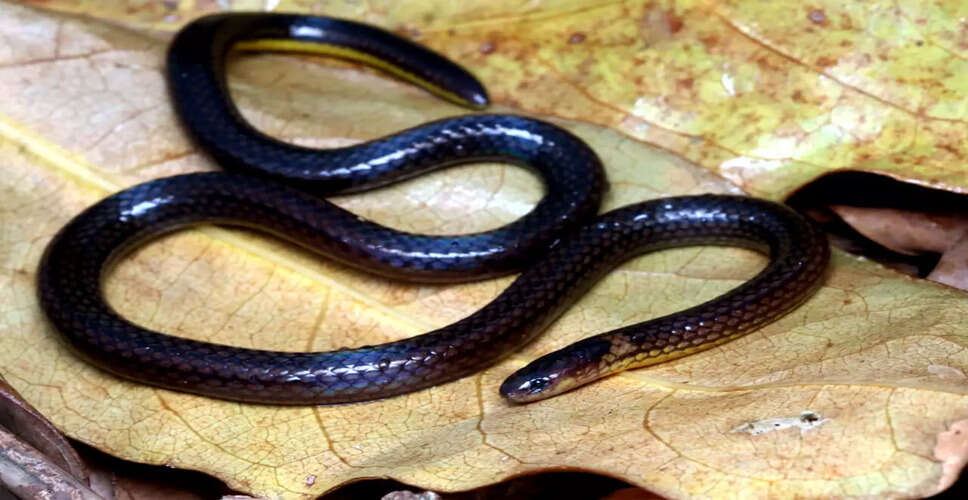
Discovery of a New Snake Species
Aizawl, Jan 6: A collaborative effort by scientists from Mizoram and international researchers from Russia, Germany, and Vietnam has led to the identification of a new species of reed snake in the state. This discovery corrects a long-standing taxonomic error and introduces a previously unrecognized species to India's reptile diversity.
The newly identified species has been designated as Calamaria mizoramensis, named after its place of origin, as stated by HT Lalremsanga, a professor at Mizoram University's Zoology Department and the study's lead author.
The research findings, published in the scientific journal Zootaxa, are based on comprehensive morphological assessments and DNA sequencing. Lalremsanga noted that the snake specimens were initially collected in Mizoram back in 2008 but were previously misclassified as part of a widely distributed Southeast Asian species.
"This new research confirms that the population in Mizoram represents a unique evolutionary lineage specific to the region," he explained.
The research team examined specimens gathered over more than ten years from forested regions around Aizawl, Reiek, Sihphir, and Sawlêng, as well as parts of Mamit and Kolasib districts. Genetic analysis indicated that the Mizoram reed snake is over 15 percent genetically distinct from its nearest relatives, a divergence significant enough to classify it as a new species.
Currently, this species has only been confirmed in Mizoram, although its potential presence in nearby areas cannot be dismissed. "While its existence in other Indian states remains unverified, it is plausible that it could be found in neighboring states like Manipur, Nagaland, and Assam. There is also a possibility of its occurrence in the Chittagong region of Bangladesh, which requires further investigation," the study highlighted.
The genus Calamaria comprises 69 recognized species worldwide. The newly discovered snake is non-venomous, nocturnal, and semi-fossorial, typically found in humid forested hills at elevations ranging from 670 to 1,295 meters, including areas near human habitats like the Mizoram University campus.
Based on the current findings, the researchers have provisionally classified the species as 'Least Concern' according to IUCN Red List criteria. The study also provides an updated checklist of Mizoram's herpetofauna, documenting a total of 169 species, and emphasizes the necessity for ongoing biological surveys in Northeast India.