
New Security Guidelines for Renewable Energy Projects Near Borders

Stringent Security Measures for Renewable Energy Initiatives
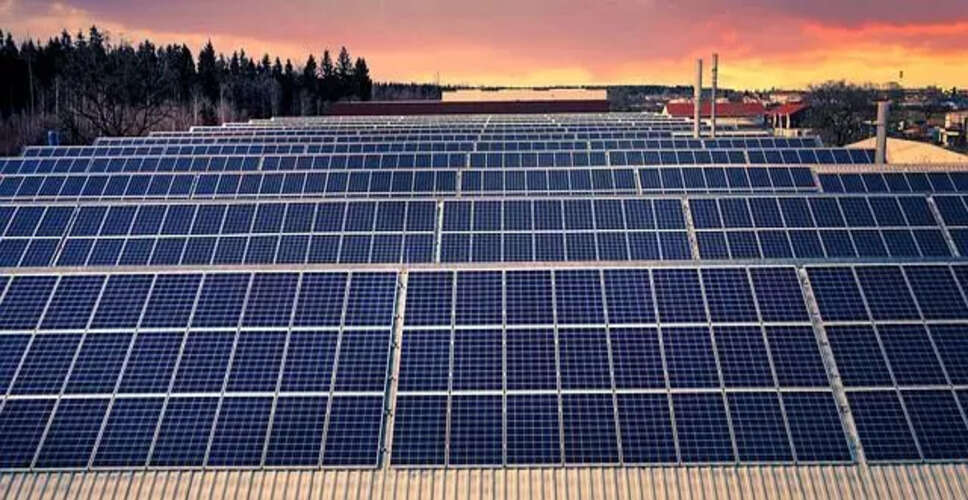
Representational Image
New Delhi, Aug 9: The Ministry of Home Affairs (MHA) has announced new security protocols that ban the establishment of solar, wind, and hybrid renewable energy projects within a 1 km radius of the Line of Control (LoC), Line of Actual Control (LAC), and the International Border.
These security measures also impose restrictions on employing engineers, staff, and laborers from neighboring countries, specifically Bangladesh, China, and Pakistan, without prior approval from the Central government.
Under the revised guidelines, any renewable energy projects planned within 50 km of the LoC, LAC, or International Border must obtain security clearance from the MHA.
Areas within 1 km of these borders are strictly off-limits for any project activities.
For projects situated between 1 km and 50 km from the border, security clearance will be evaluated by the MHA. Additionally, projects within 20 km of the international border must secure a No Objection Certificate (NOC) from the Ministry of Defence.
As per the guidelines, which are in possession of a news media outlet, project applicants are prohibited from hiring engineers, staff, and labor from countries sharing land borders with India, particularly Pakistan, Bangladesh, and China, without the Central Government's consent.
The government has also mandated extra precautions for construction and installation processes. A dedicated police post should be established or an existing one should be utilized to monitor construction workers at the project site. The movement of foreign nationals in these areas will also be subject to scrutiny.
“The Ministry of New and Renewable Energy (MNRE) has been inundated with applications regarding the feasibility of various solar, wind, and hybrid energy projects in border regions, which could pose national security risks,” the guidelines noted.
“Thus, considering national security concerns while also facilitating business operations in collaboration with all stakeholders, a uniform and transparent set of guidelines for national security clearance is being implemented for renewable energy projects in border areas,” it added.
According to the guidelines, applications for such projects must be submitted solely to the MNRE. The ministry will then forward these proposals, along with the State government's preliminary approval for land allocation and the project's exact geographical coordinates, to the MHA and Defence Ministry for security evaluation.
The MNRE is responsible for ensuring that land is allocated in a way that prevents project construction from extending excessively parallel to the international border.
Applicants will not be allowed to transfer land to foreign entities without prior approval from the Central government, including security clearance from the MHA.
“Projects involving foreign investment will also necessitate a separate application to the Department for Promotion of Industry and Internal Trade under the government's Foreign Direct Investment policy,” the guidelines specified.
Furthermore, the government has instructed that project designs must include sufficiently wide roads for use by the Border Security Force and armed forces during emergencies.
The guidelines also set different parameters for projects based on their proximity to sensitive border areas, including restrictions on the height of structures. Projects located between 1 and 8 km from the LoC/LAC are limited to a height of 3 meters, while those between 8 and 20 km can have structures up to 5 meters. Projects situated between 20 and 50 km from the international border may have structures up to 15 meters tall.
The MHA aims to process security-clearance applications within 60 days whenever possible. Projects that had previously received security clearance from the MHA before these guidelines were issued will not need to reapply. Similarly, projects that have already obtained an NOC from the Defence Ministry will not be required to seek new approval.