
New Research Project Explores Climate Impact on Maritime Trade Near Elephanta Island

Joint Research Initiative Launched
Photo: @ians_india/X
Kolkata, Sep 2: A collaborative research project has been initiated by IIT Kharagpur, the Mumbai Port Authority (MbPA), and the Archaeological Survey of India (ASI) to examine the influence of historical climate variations and sea-level changes on maritime trade and human activities surrounding Elephanta Island and the western coastline of India.
The project, as detailed in a statement from IIT Kharagpur, aims to integrate advanced earth-science methodologies with archaeological findings to reconstruct historical sea levels, climate conditions, and maritime activities from the Early Historic to the Medieval period. The Mumbai Port Authority has pledged Rs 1 crore to support this endeavor.
This interdisciplinary effort is anticipated to yield fresh scientific insights into how environmental changes, coastal geography, ancient settlements, and maritime networks interacted, according to the institute's announcement.
The Intergovernmental Panel on Climate Change forecasts a global sea level rise of 0.4 to 0.8 meters by 2100. For India's western coast, this increase could reach up to 1 meter, potentially inundating low-lying regions of Mumbai and impacting areas around Elephanta Island, which is home to the 1500-year-old rock-cut caves of Lord Shiva, recognized as a UNESCO heritage site.
The research will focus on the implications of climate change and sea-level rise on maritime trade activities from the Early Historic to the Medieval period, specifically from 1500 to 1000 years ago, and will provide crucial insights into future sea-level impacts due to climate change.
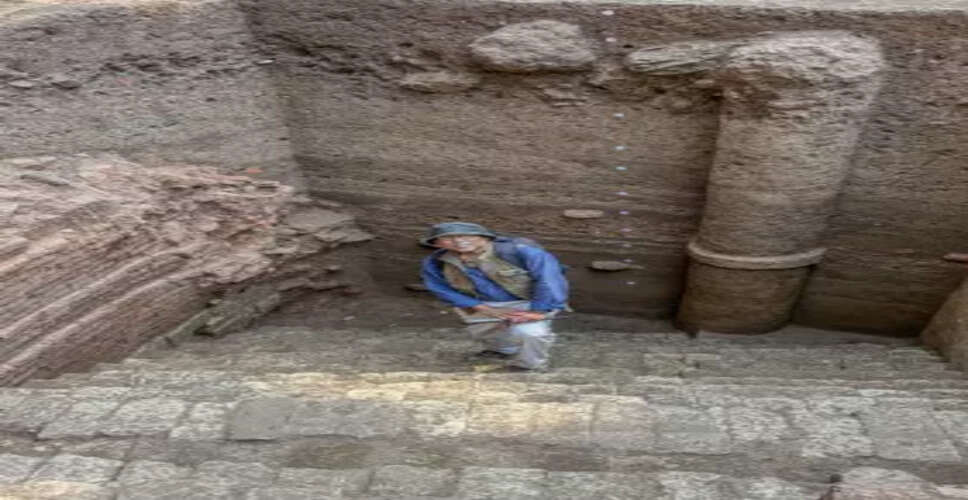
Recent excavations led by ASI's Abhijit Ambekar have revealed that Elephanta Island was a significant hub of human activity approximately 1,500 years ago. Archaeologists discovered a large 165-square-meter, eight-meter-deep rectangular reservoir linked to a stepped junction, indicating advanced freshwater storage systems on the island.
The excavation also uncovered large storage jars, fragments of Indo-Mediterranean amphorae, turquoise glazed pottery, and Mesopotamian torpedo jars, suggesting extensive maritime connections. Evidence of submerged wharf structures, remains of intertidal habitation, and various watermarks on port installations indicate that Elephanta was part of broader maritime trade networks rather than merely a religious site.
Prof. Melinda Bera from the Department of Geology & Geophysics at IIT Kharagpur and Principal Investigator of the project stated, "We aim to reconstruct past climate and sea levels using cutting-edge scientific tools available at IIT Kharagpur. The island's modern landscape, characterized by two hills separated by a tidal valley and bordered by low-gradient, mangrove-fringed shores, makes it particularly sensitive to even slight sea-level changes. We plan to drill multiple cores around Elephanta and other areas along the west coast to analyze sediments for radiocarbon dating, sediment sources, and isotopes of oxygen, carbon, and nitrogen to reconstruct historical climate and sea levels."
Co-investigator Prof. V. Ravikant, an expert in radiogenic isotope studies, added, "We will also examine archaeological potsherds and jars for their strontium and neodymium isotopes, which can help identify the precise locations of the soils used in their production."
Ajay Yadav, a research scientist specializing in ancient trade and currently working abroad, remarked, "Elephanta presents a new opportunity for scientifically investigating India's ancient maritime trade."