
New Non-Permanent Members Elected to UN Security Council
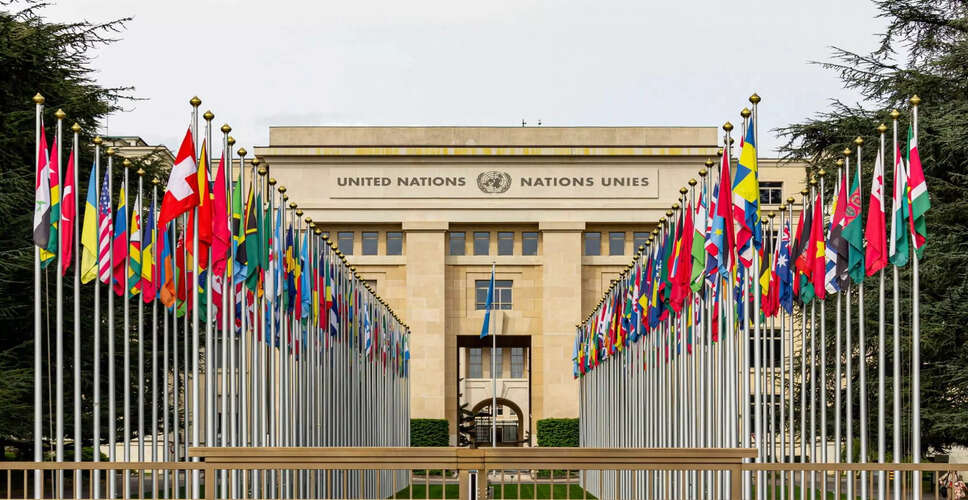

UN Security Council Welcomes New Members
Photo: @saif_aldareei/X
United Nations, June 4: On Wednesday, Austria, Kyrgyzstan, Portugal, Trinidad and Tobago, and Zimbabwe were elected as non-permanent members of the UN Security Council for a two-year term.
This election marks the inaugural term for Kyrgyzstan on the Security Council.
The newly elected members will take over from the outgoing non-permanent members—Denmark, Greece, Pakistan, Panama, and Somalia—starting January 1, 2027, and will serve until December 31, 2028.
To secure a non-permanent seat on the Security Council, a candidate must receive the backing of two-thirds of the UN member states present and voting during the General Assembly session. This means a minimum of 129 affirmative votes is necessary if all 193 member states participate in the voting process. States that abstain are not counted as votes.
This year, there were seven candidates vying for the five available seats. Austria, Portugal, Trinidad and Tobago, and Zimbabwe were elected in the initial round of voting, according to reports.
Following three additional rounds of voting, Kyrgyzstan emerged victorious against the Philippines in a competitive race.
The Security Council consists of 15 members, five of which are permanent: Britain, China, France, Russia, and the United States. The council's ten non-permanent seats are distributed by geographic region, with five seats up for election each year.
The newly elected nations represent various groups, including African, Asia-Pacific, Latin American and Caribbean, and Western European and Other groups. The Eastern European group is not participating this year, as its seat, currently held by Latvia, will be contested in the next election cycle.
The Security Council is regarded as the most influential entity within the United Nations, responsible for upholding international peace and security. It has the authority to make legally binding decisions, impose sanctions, and authorize military action.