
New Insights into Elephant Movement Patterns in Assam

Study Reveals Elephant Movement Insights
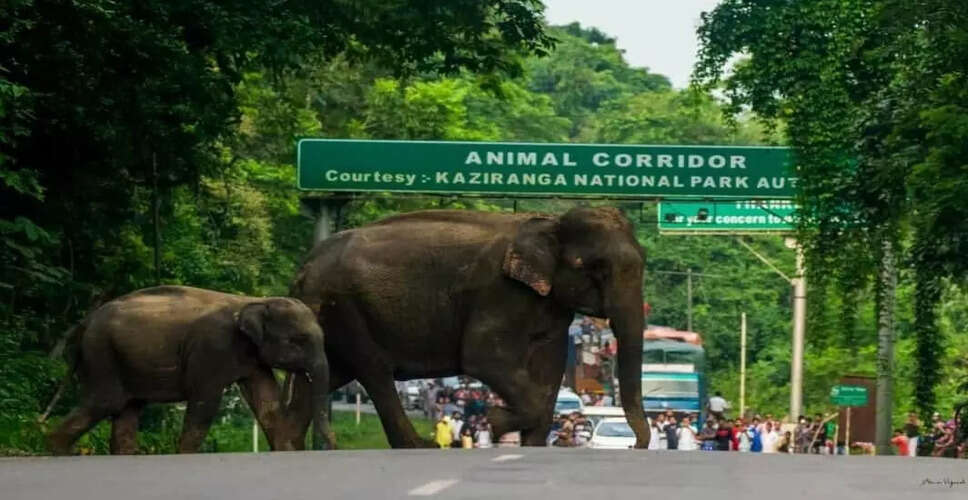
A file image of elephants crossing the road near Kaziranga. (Photo:X)
Guwahati, Oct 8: A comprehensive five-year GPS tracking initiative conducted by the Assam Forest Department in collaboration with WWF-India has unveiled significant findings regarding the movement of wild elephants across various terrains, including forests, tea estates, agricultural lands, and riverine ecosystems. This research has yielded vital data on the ranging behaviors and habitat preferences of these majestic animals.
From 2021 to 2026, the study involved the tracking of four herds led by females and one solitary male elephant in three districts prone to human-elephant conflicts: Udalguri, Sonitpur, and Biswanath. The research produced over 38,000 GPS data points, offering detailed insights into seasonal elephant movements within diverse landscapes.
The results were shared in a newly released report titled Tracking the Giants: Movement and Habitat-Use Patterns of GPS-Collared Elephants in Assam, unveiled by Forest Minister Jayanta Mallabaruah. Assam continues to be a crucial habitat for Asian elephants.
Despite this, ongoing issues such as habitat destruction and degradation have significantly impacted both elephant populations and local communities, leading to conflicts that often result in crop damage, property loss, and casualties among both humans and elephants.
“This report addresses a significant knowledge gap regarding elephant distribution and movement within the state. The insights from this extensive study are essential for understanding elephant ranging patterns, especially in areas where their habitats overlap with human activities,” stated Dr. Vinay Gupta, Principal Chief Conservator of Forests-Wildlife and Chief Wildlife Warden, Environment, Forest and Climate Change Department, Assam.
Aritra Kshettry, who leads the Elephant Conservation Programme at WWF-India, remarked, “The GPS telemetry study has pinpointed key natural and secondary habitats utilized by the collared elephants, revealing distinct seasonal movement patterns.”
“This data will be instrumental in managing human-elephant conflicts effectively, as it provides clarity on elephant movements, habitat usage, and seasonal variations,” he added.
Key habitats identified include Sonai Rupai Wildlife Sanctuary, Behali Wildlife Sanctuary, and Bornadi Wildlife Sanctuary, which are heavily frequented by the collared elephants. Additionally, tea plantations have been recognized as vital corridors for elephant movement, often bringing them into close contact with human populations.
Protected areas and reserve forests serve as critical habitats for elephants throughout much of the year, with the home ranges of female-led herds expanding during the paddy cropping season, a time associated with increased human-elephant conflicts.
Interestingly, the elephants were noted to utilize river channels for north-south movement between the Himalayan foothills and the Brahmaputra grasslands (chaporis), providing valuable insights into their migratory routes.
Several of these movement paths intersect with roads, railways, and human settlements, underscoring the urgent need for implementing protective measures to safeguard both human lives and elephant populations.
The study also highlighted transboundary elephant movements between Udalguri in Assam and the adjacent Jomotsangkha Wildlife Sanctuary in Bhutan during the dry season, emphasizing the necessity for enhanced cross-border cooperation to protect elephant and wildlife corridors.