
New Insights into Breast Cancer Risk Factors for Indian Women
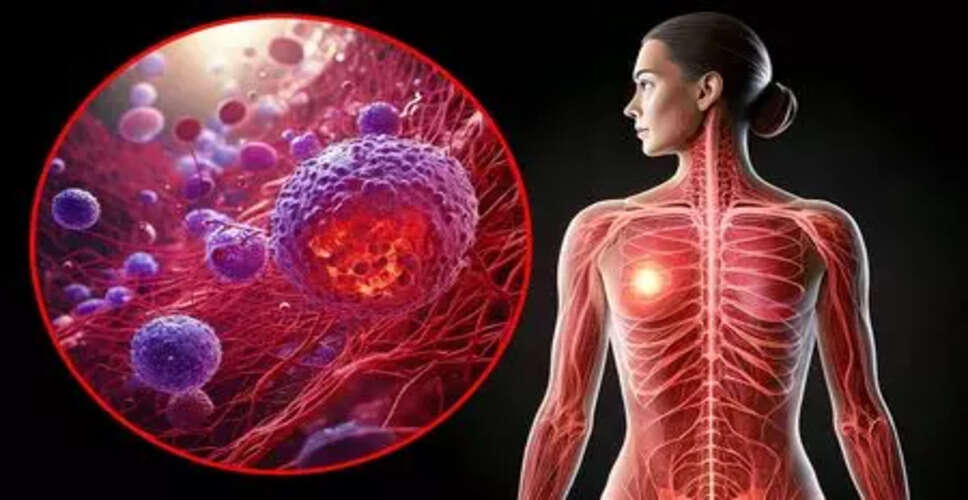
Understanding Breast Cancer Risks in India
New Delhi, Dec 20: A recent investigation by researchers at the Indian Council of Medical Research (ICMR) has identified key risk factors associated with breast cancer among women in India.
Breast cancer ranks among the top three cancers affecting women in the country, with projections indicating an annual increase of approximately 5.6%, leading to an estimated 0.05 million new cases each year.
The research team from ICMR’s National Centre for Disease Informatics and Research (NCDIR) in Bengaluru performed a systematic review and meta-analysis of 31 studies, encompassing 27,925 participants, of which 45% were diagnosed with breast cancer.
Published in the journal Cancer Epidemiology, the study revealed that factors such as reproductive timing, hormonal exposure, central obesity, and family history significantly impact breast cancer risk among Indian women.
According to the researchers, women experiencing menopause after the age of 50, those having their first pregnancy post-30, marrying later, undergoing multiple abortions, and exhibiting central obesity (waist-to-hip ratio exceeding 85 cm) are at heightened risk.
Additionally, lifestyle elements like poor sleep quality, irregular sleep patterns, sleeping in illuminated rooms, and high stress levels were linked to increased risk in various studies. Conversely, higher physical activity levels were associated with a reduced risk.
The analysis indicated that women over 50 years face a three-fold increased risk, while those aged 35-50 years have a 1.63-fold higher risk, underscoring the necessity for early screening for women in their forties.
However, differences in age classifications across studies may account for the observed variability. In wealthier nations, breast cancer rates significantly rise after 50, predominantly affecting postmenopausal women.
In contrast, India shows a relatively higher incidence of breast cancer among younger women, particularly in their 40s and 50s.
Researchers, led by Saravanan Vijayakumar from ICMR-NCDIR, noted that genetic predisposition, earlier reproductive changes, and unique lifestyle factors might explain this difference. They emphasized the critical need for early screening programs for women in this demographic to facilitate timely detection and intervention.
The study also highlighted the importance of considering low BMI as a potential risk factor influencing breast cancer prognosis and treatment outcomes.
Given the high prevalence of abdominal obesity in India, lifestyle modifications aimed at reducing waist circumference could be effective in breast cancer prevention.
Furthermore, the review pointed out the urgent requirement for extensive, population-based prospective cohort studies in India to refine breast cancer prevention and early detection strategies.