
New Initiatives to Address Human-Elephant Conflicts in Assam

Measures to Mitigate Human-Elephant Conflicts
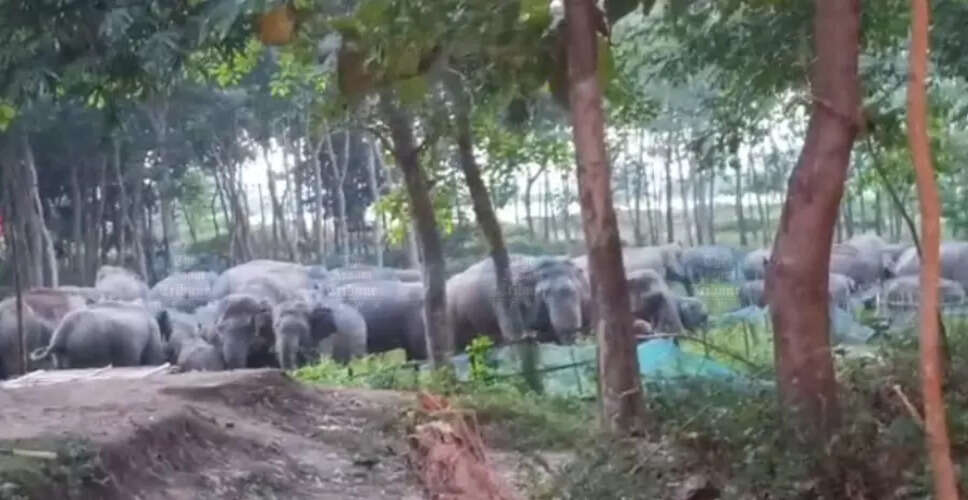
File image of elephants in Tamulpur
Guwahati, Nov 4: In a recent meeting with senior officials from the Forest Department and Divisional Forest Officers (DFOs), Forest Minister Jayanta Mallabaruah unveiled a comprehensive plan aimed at reducing human-elephant conflicts, regulating wood-based industries, enhancing forest revenue, and improving departmental management.
The Minister highlighted the decision to increase the number of Gajmitra teams from the current 81 to at least 150, with potential for further growth based on local needs. Each team will consist of 10 local residents and three Forest Department staff, creating a specialized unit of 13 members focused on conflict prevention, especially during the critical period from November to March.
The three departmental staff members assigned to each team will not have other duties and will collaborate closely with local volunteers. Each Gajmitra will receive a monthly stipend of Rs 1,000. The goal is to have these expanded teams operational by November 7 or 8, following necessary training and awareness initiatives.
Range-level committees, led by Range Officers and including five Forest Department personnel and 10 local residents, will oversee requirements and coordinate preventive strategies, such as solar fencing, lighting, watchtowers, and other essential equipment, according to a press release.
Public awareness campaigns will be organized with the participation of the Panchayat and Rural Development Department, Assam State Rural Livelihoods Mission, and other local organizations. Special operations for driving elephants will be conducted as needed, with support from police, district administration, and forest battalions.
Additionally, the Minister announced that District Commissioners (DCs) are now empowered to provide compensation for damages caused by human-elephant conflicts after joint evaluations by the district administration and Forest Department.
Central accounts have been set up in all 35 districts to expedite payments. Compensation of Rs 6 lakh for loss of human life will be processed within two days, while Rs 8,000 per bigha for crop damage will be disbursed within three to four days.
The Minister also introduced a four-month scientific census of monkeys in Kamrup Metropolitan, Goalpara, Darrang, and Dhemaji districts. This survey will utilize binoculars, mobile applications, and standard wildlife census techniques to evaluate monkey populations. The results will inform future strategies for population management, sterilization, and potential translocation based on habitat capacity and food resources.
Regarding wood-based industries, the Minister stated that the department will intensify its efforts against illegal sawmills and unauthorized timber operations while promoting the establishment of legitimate businesses. An online application system has been launched through wbi.gov.in for plywood industries, sawmills, and secondary wood-based industries, with a deadline for applications set for November 30.