
New Guidelines Unveiled to Enhance Livestock Support and Fodder Security in Rural India
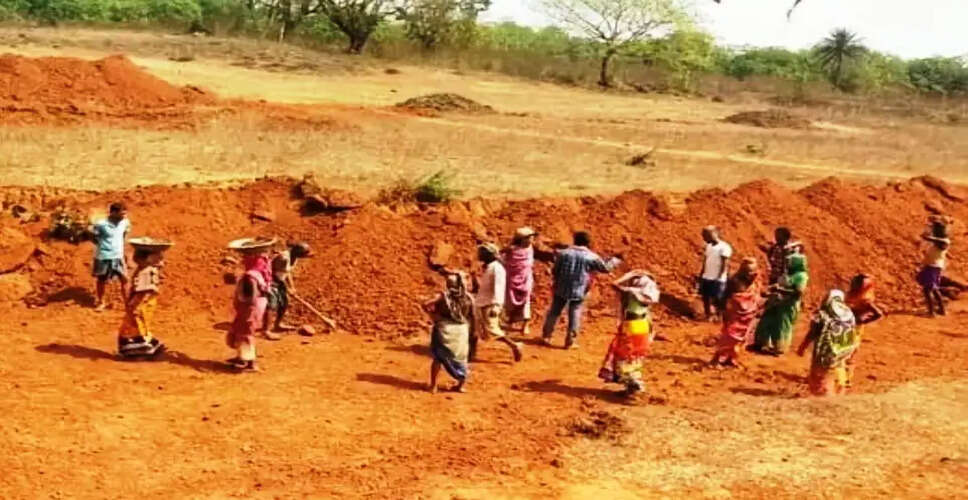

Strengthening Rural Livestock Infrastructure
New Delhi: The central government has released a comprehensive advisory aimed at all states and Union territories, outlining 22 approved activities under the VB-G RAM G Act. This initiative is designed to bolster fodder security, enhance pasture development, and improve livestock-supportive infrastructure in rural regions, as stated by the Ministry of Rural Development on Thursday.
The advisory was jointly issued by the Department of Rural Development and the Department of Animal Husbandry and Dairying, both under their respective ministries, to facilitate collaboration under the Viksit Bharat-Guarantee for Rozgar and Ajeevika Mission (Gramin) Act, 2025.
From a total of 375 permissible activities, the advisory highlights 22 key works that include fodder cultivation and storage, pasture enhancement, livestock housing, dairy facilities, and veterinary health services.
These initiatives encompass fodder cultivation for both individual households and community use, the development of communal fodder resources, pastures, grazing lands, silvipasture, fodder banks, and silage units.
Additional activities involve the construction, repair, and upkeep of livestock shelters, community milk collection points, veterinary centers, animal troughs, and Azolla tanks for individual beneficiaries.
The VB-G RAM G Act, effective from July 1, 2026, guarantees 125 days of wage employment for each rural household and emphasizes the creation of sustainable assets across four main areas, including infrastructure related to livelihoods and the mitigation of extreme weather impacts.
The advisory stresses the importance of decentralized, grassroots planning led by Panchayati Raj Institutions, integrating fodder development and livestock infrastructure into the Viksit Gram Panchayat plans, which should align with local development priorities approved by the gram sabha.
States and Union territories are urged to gradually increase their spending on fodder and livestock-supportive initiatives to at least 5% of their total program expenditure, based on local needs and approved plans.
Particular focus should be given to regions where over 30% of the population relies on livestock, as indicated in the advisory.
State-specific plans for fodder resource development, prepared by the ICAR-Indian Grassland and Fodder Research Institute, are recommended as guiding documents for district and block-level planning.
The advisory also calls for the formulation of comprehensive state action plans for fodder security and livestock infrastructure through collaboration among the departments of rural development, animal husbandry, agriculture, and other relevant sectors.
It promotes climate-resilient strategies, including the use of suitable fodder varieties, perennial grasses, and integrated crop-livestock systems, wherever applicable and included in the permissible works.
Reiterating the importance of statutory safeguards, the advisory emphasizes that all activities must comply with the provisions of the Act, including decentralized and PRI-led planning, mandatory social audits, a district-level cap of 40% on material costs, beneficiary selection according to Schedule I, weekly public disclosures, and grievance redressal mechanisms.