
New Employment Bill Introduced in Lok Sabha Amid Opposition Protests
Introduction of the Employment Bill
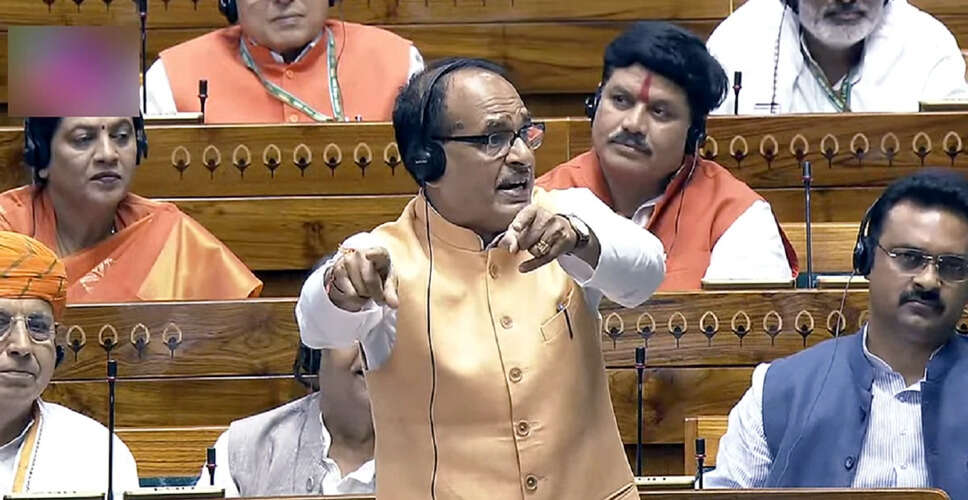
On Tuesday, Union Agriculture Minister Shivraj Singh Chouhan presented the Developed India-Employment and Livelihood Mission (Rural) Bill, 2025 in the Lok Sabha. This legislation aims to repeal the Mahatma Gandhi National Rural Employment Guarantee Act (MGNREGA) of 2005. Despite opposition from various members, the bill was introduced in the House.
Chouhan proposed the bill, named 'Developed India-Employment and Livelihood Guarantee Mission (Rural)', amidst significant uproar from opposition members, and it was subsequently approved by voice vote.
Opposition's Concerns
Opposition members expressed their discontent, arguing that removing Mahatma Gandhi's name from the legislation is disrespectful. They called for the bill to be withdrawn or referred to a parliamentary committee. Chouhan dismissed these allegations, asserting that Gandhi resides in the hearts of the people. He emphasized that the Modi government is implementing various schemes inspired by the thoughts of Mahatma Gandhi and Pandit Deendayal Upadhyay. He questioned whether changing the name of the Jawahar Employment Scheme by the Congress government was also an insult to Jawaharlal Nehru.
Government's Commitment to Employment
Chouhan highlighted that the government has invested ₹8.53 lakh crore in MGNREGA. He assured that the new bill guarantees 125 days of employment, backed by a provision of over ₹1.51 lakh crore. He noted that Mahatma Gandhi envisioned a Ram Rajya, and his last words were 'Hey Ram'. Chouhan stated that this bill would lead to comprehensive development in villages and questioned the opposition's discomfort with the mention of Ram.
Criticism from Congress
Congress MP Priyanka Gandhi Vadra opposed the introduction of the bill, claiming it undermines the legal right to employment. She pointed out that while MGNREGA previously received 90% of its funding from the center, the new bill reduces this to only 60% in most states, placing a significant burden on state economies already struggling with pending GST dues from the center. She accused the bill of increasing central control while diminishing accountability. The MP from Wayanad remarked that although the bill proposes to increase workdays from 100 to 125, it fails to address wage increases.