
New Developments in US-Iran Tensions: Identity Documents Found at Crash Site
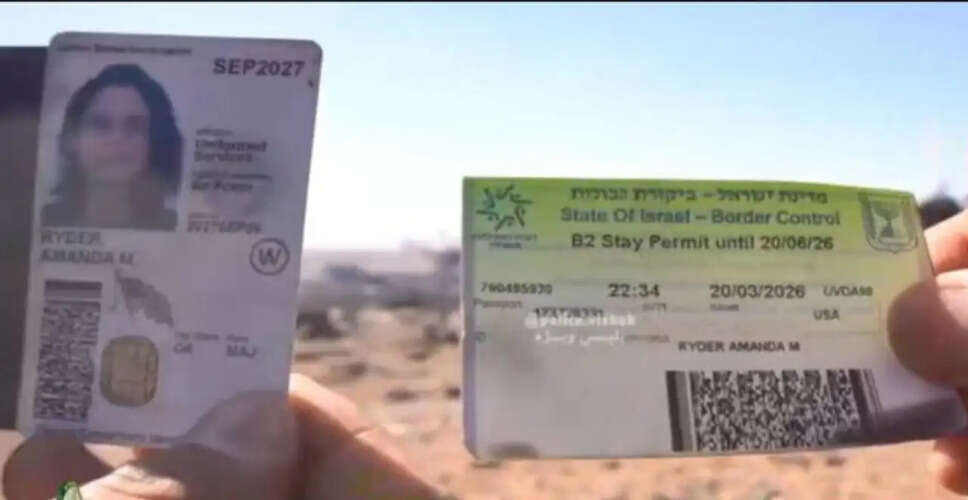
Identity Documents Discovered in Isfahan
Recent broadcasts by Iranian state media have unveiled images of identity documents purportedly retrieved from the wreckage of a downed US military aircraft in Isfahan. These reports indicate that the documents belong to an individual named “Amanda M. Ryder,” who is thought to hold the rank of Major in the US Air Force. The ID card was reportedly discovered at the crash site of a C-130 aircraft. Additionally, Iranian media showcased what seems to be a B2 stay permit issued by Israeli border control, which is set to expire on March 20, 2026. This permit, typically used for tourism or business travel, adds an intriguing element when found alongside a US military ID.
Photos showing documents, IDs, and personal belongings of the aircraft crew that crashed in Isfahan.https://t.co/tDWlWfwetn pic.twitter.com/sFq2DNu3c7
— Tehran Times (@TehranTimes79) April 6, 2026
It is important to note that the authenticity of these documents has not been independently verified. The US government has not yet confirmed the identities of those involved in the mission to recover the downed F-15 within Iranian territory. These revelations come amid rising tensions following reports of Iranian forces downing two US military aircraft recently: an F-15E Strike Eagle and an A-10 Warthog. While three pilots associated with these incidents were rescued, these events have cast doubt on US assertions regarding the weakening of Iran’s air defenses.
The sequence of events began overnight between April 3 and 4, when an F-15E Strike Eagle from the US Air Force’s 48th Fighter Wing was reportedly shot down, with images of the wreckage quickly circulating online. Concurrently, an A-10 aircraft was also struck by Iranian fire, although its pilot successfully reached Kuwaiti airspace before ejecting and being rescued.
A complex rescue operation ensued, with one crew member from the F-15E being recovered within seven hours, despite the rescue helicopter coming under fire and sustaining injuries among its crew. The second airman, who was seriously injured, remained on the ground near Isfahan, evading Iranian forces while hiding in the mountainous terrain. Armed only with a pistol, he reportedly maintained communication with US forces via an encrypted radio as drones targeted nearby Iranian units.
Reports indicate that the CIA employed deceptive tactics, disseminating false information suggesting that the airman had already been rescued. A subsequent rescue operation involved multiple transport aircraft, with two MC-130J planes landing near the airman. However, it was reported that two US transport aircraft were later destroyed due to technical failures and to prevent capture.
On April 5, President Donald Trump announced the successful rescue, describing it as one of the most audacious missions in US history. In contrast, Iran dismissed this narrative, asserting that the operation was “completely foiled” and that several US aircraft were destroyed. Amid these conflicting accounts, the emergence of documents linked to “Major Amanda M. Ryder” raises new questions that remain unanswered for the time being.