
New Developments in the 1990 Murder Case of Nurse Sarla Bhatt in Jammu and Kashmir
The long-standing case of nurse Sarla Bhatt's rape and murder in Jammu and Kashmir has seen new developments after over three decades. The State Investigation Agency has filed a charge sheet against Yasin Malik and others, reviving a case that had been dormant since the peak of militancy. This article delves into the details of the tragic incident, the stalled investigation, and the implications for justice in the region. Discover how this case reflects the broader issues faced by the Kashmiri Pandit community during a tumultuous period in history.
| Jun 29, 2026, 19:54 IST
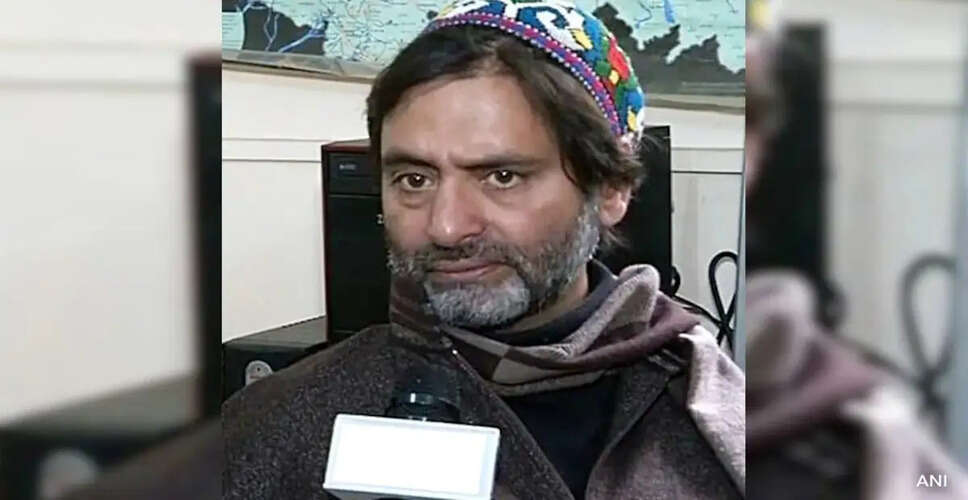

Overview of the Sarla Bhatt Case
In Jammu and Kashmir, the case involving the rape and murder of nurse Sarla Bhatt has remained unresolved for over three decades. The State Investigation Agency has filed a 737-page charge sheet against the banned JKLF leader Yasin Malik and four others. This document was submitted to a special court of the NIA, marking a significant development in a case that had been dormant during the peak of militancy in the region, now seeing action after 36 years.
Details of the Incident
Sarla Bhatt's Tragic Fate
Sarla Bhatt, a young nurse, was employed at the Sher-e-Kashmir Institute of Medical Sciences (SKIMS) in Srinagar. On the night of April 12, 1990, while returning to her hostel within the SKIMS campus, she was reportedly abducted by militants in a white Maruti car. Investigators state that she was held captive, physically assaulted, and raped before being shot. According to previous reports, her body was discovered days later, riddled with bullets and in a deplorable state on a street in Srinagar. A handwritten note found near her body claimed that the Jammu and Kashmir Liberation Front (JKLF) had killed her for allegedly being a 'mukhbir' (informant) for the CID. However, investigators found no evidence to support this claim. Her family reported that she had been tortured prior to her death, with visible burn marks on her wrist and neck, as noted in a report by 'The Print'. This incident contributed to the climate of fear among Kashmiri Pandits during the insurgency, leading many in the community to flee the valley.
Stalled Investigation
Why Did the Investigation Halt?
The FIR was registered in 1990 under provisions of murder, criminal conspiracy, and the Terrorist and Disruptive Activities (Prevention) Act (TADA). Due to the peak of militancy, the investigation made little progress. An SIA official noted that police officers were hesitant to probe terrorist cases due to security concerns, with many investigators themselves becoming victims of attacks. As the Kashmiri Pandit community began to leave the valley, numerous cases gradually fell into neglect. Later, investigators identified several shortcomings in the initial inquiry. For instance, ballistic tests were never conducted on weapons recovered from suspected militants. Additionally, the handwriting on the note found with Bhatt's body was never analyzed. Reports indicate that crucial interrogation records have also gone missing. After more than 30 years, witnesses have either died, disappeared, or become difficult to trace.