
New Damselfly Species Dysphaea assamensis Discovered in Assam
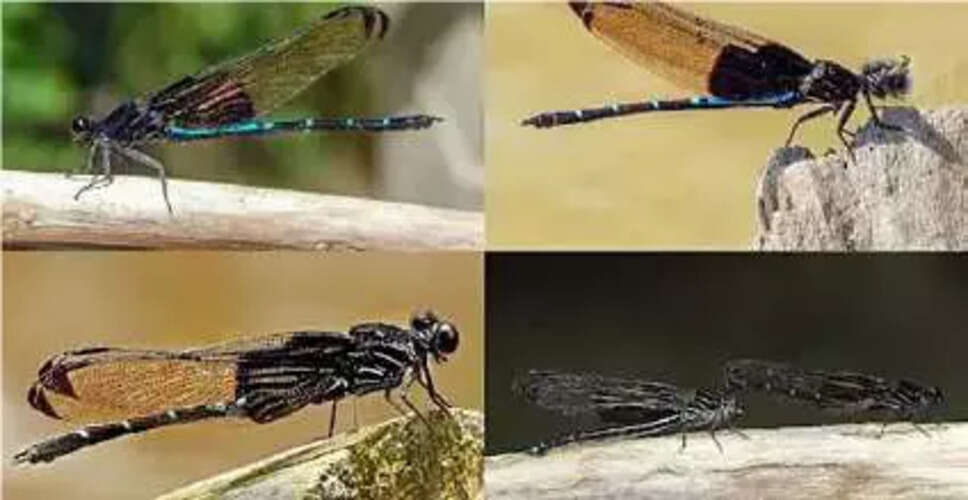

Significant Discovery in Biodiversity
DIPHU, Nov 2: A remarkable breakthrough in the field of regional taxonomy and biodiversity has occurred with the formal identification of a new damselfly species, Dysphaea assamensis. This formal description was published on October 13, 2026, in the esteemed journal Zootaxa.
The specimens that contributed to this formal identification were gathered during extensive field surveys conducted in May and June 2026 within the Karbi Anglong district of Assam.
This species was discovered near a partially shaded lowland forest stream located within the Nambor and Garampani wildlife sanctuaries, where researchers netted five male specimens for detailed morphological analysis. The males exhibited unique anatomical traits, including distinctive genital ligula and caudal appendages, which were essential for this taxonomic classification.
Interestingly, the female damselfly was characterized using high-resolution photographs taken by citizen scientists and enthusiasts, highlighting the growing significance of digital platforms and photography in taxonomy and conservation efforts.
The name assamensis reflects its geographic origin, recognizing Assam as the primary site of capture and suggesting its potential broader distribution throughout the region.
This finding also addresses a taxonomic puzzle that has lingered for almost a century; since 1927, damselfly populations in Northeast India and Bangladesh were incorrectly identified as Dysphaea walli, a species native to Myanmar.
Through meticulous morphological evaluations and taxonomic research, the team successfully classified these regional populations as a distinct species, establishing Dysphaea assamensis as a new species endemic to Northeast India and surrounding areas.
The research was led by a collaborative team including Rima Amsih from Dibrugarh University, Arajush Payra and Dr. Vishwanath Karad from MIT World Peace University, KA Subramanian from the Zoological Survey of India, and Samrat Sengupta from Debraj Roy College (Autonomous), Assam.
The team stated, “The formal identification of Dysphaea assamensis not only enhances India’s odonatological diversity but also corrects a long-standing taxonomic error that has existed since 1927, shedding light on the unique and often overlooked biodiversity hotspots in Northeast India.”