
New Ceasefire Agreement Between Israel and Lebanon: Key Developments
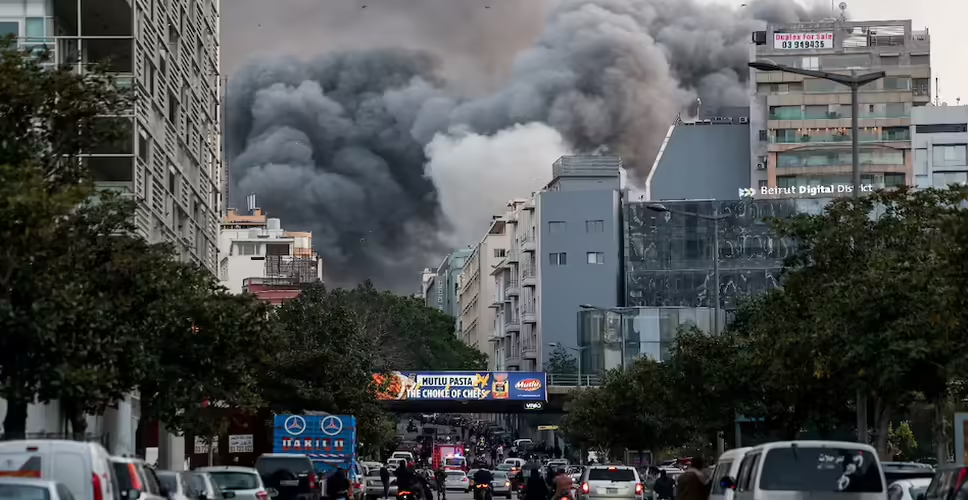

Ceasefire Agreement Reached
Jerusalem/Beirut. Amid ongoing tensions in the Middle East, a significant ceasefire agreement has been established between Israel and Lebanon. This new arrangement will see the creation of designated security zones in southern Lebanon, where Hezbollah's activities will be strictly curtailed. Israel has made it clear that the success of this ceasefire hinges on Hezbollah's withdrawal from these areas and full compliance with the terms of the agreement.
Objective of the Agreement
Facilitated by American mediation, this proposal aims to alleviate the escalating military tensions along the Israel-Lebanon border and take steps towards lasting peace between the two nations. According to the agreement, the Lebanese army and international peacekeeping forces will oversee security in the southern regions, while Hezbollah will be kept away from the border areas.
New Conditions Explained
Under the new ceasefire terms, certain sensitive areas in southern Lebanon will be developed into special security zones. The presence of any non-governmental armed groups will be prohibited in these regions. Israel asserts that despite previous agreements, Hezbollah has continued its activities near the border, raising security concerns. Consequently, monitoring and compliance measures have been tightened this time.
Increased Pressure on Hezbollah
Hezbollah has historically played a significant role in Lebanon's political and security landscape. However, Israel views it as one of its greatest security threats. Following this new arrangement, international pressure on the organization may intensify, as its military presence in the security zones will not be tolerated. Analysts believe this move could alter the balance of power in the region.
The Role of the United States
The United States has played a crucial role in finalizing the ceasefire agreement. Washington has long sought to reduce tensions between the two parties. American officials believe that if this arrangement proves successful, it could lead to a decrease in violent incidents along the border and reduce the risk of broader regional conflict.
Monitoring Iran's Influence
Hezbollah is considered a close ally of Iran. Therefore, this agreement is viewed not just as a bilateral initiative between Israel and Lebanon, but also as part of a broader regional strategy. Experts suggest that the impact of the agreement will depend on how Iran and its allied groups respond to this new arrangement.
Hope for Local Populations
The ongoing conflict and border tensions have affected thousands of people in both countries. Many families have been forced to leave their homes, impacting local businesses and economies. The implementation of the ceasefire is expected to bring relief to those living in border areas. Local authorities are now working on plans for the return of displaced citizens and the restoration of normal life.
What Lies Ahead?
While both parties have agreed to the ceasefire, its actual success will depend on adherence to the terms on the ground. If Hezbollah's activities in the security zones remain limited and the monitoring system proves effective, this agreement could be seen as a significant step towards stability in the Middle East. However, any violations could lead to a resurgence of tensions.
International Community's Focus
Currently, the international community is closely watching how Israel, Lebanon, Hezbollah, and regional powers implement this new arrangement and whether it can successfully maintain peace in the long term.