
New Catfish Species Discovered in Manipur: Exostoma nasibarbatum

Introduction to the Discovery
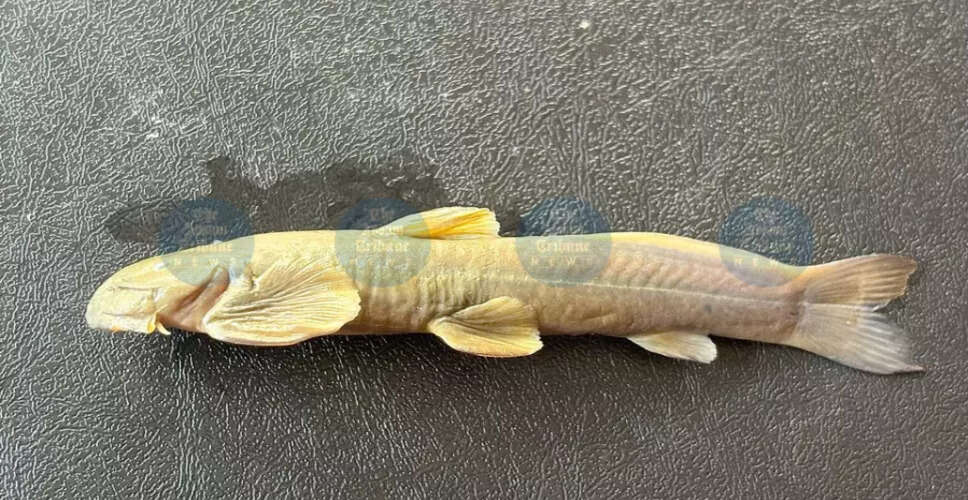
Exostoma nasibarbatum, the newly catfish discovered in Manipur (Image)
Imphal, Nov 1: A new species of rare glyptosternine catfish, named Exostoma nasibarbatum, has been identified in Manipur, as reported in a study published in the Journal of Natural History, which focuses on zoology and natural history.
Research Team and Discovery Location
The discovery was made by a research team led by Dr. Bungdown Shangningam, an assistant professor in the Department of Zoology at Dhanamanjuri University, during an ichthyological survey of the Bupal stream, a tributary of the Dujang River located near the Myanmar border.
Joining him in this research was Paya Torisha Anal, a PhD scholar from the same department.
Morphological Analysis and Habitat
During the survey, specimens from the glyptosternine genus Exostoma were collected, and a thorough morphological analysis confirmed that these specimens represented a previously unknown species.
This newly identified catfish can be differentiated from other members of its genus found in the Chindwin-Irrawaddy drainage due to its unique morphological characteristics and specific habitat preferences.
It thrives in fast-flowing, turbulent streams that are characterized by rocky substrates and boulders.
Unique Features and Naming
Dr. Shangningam noted that these small hill stream catfish species are quite rare and primarily found in the remote regions of the Dujang River. This marks the second fish species documented from the Chakpi area of Chandel district.
The species exhibits several morphological adaptations that allow it to survive in swift waters, including a flattened head and body, enlarged paired fins with adhesive striae, and flattened maxillary barbels that help it cling to rocky surfaces.
The name nasibarbatum was chosen due to its prominent nasal barbel, which extends beyond the back edge of the eye. The name is derived from the Latin words 'nasus' (nose) and 'barba' (beard), referring to the elongated sensory organ near the nostril.
Significance of the Discovery
The study highlights that there are currently 23 recognized species within the Exostoma genus, which are distributed across major river systems in Southeast Asia and the Indian subcontinent. Out of these, seven are valid species in the Chindwin-Irrawaddy drainage.
The finding of Exostoma nasibarbatum in the remote streams of Manipur's upper Chindwin basin suggests ongoing speciation over evolutionary time, according to the researchers.
Furthermore, the results emphasize the necessity for additional exploratory surveys in the region, especially in scientifically underexplored areas that may contain other undiscovered aquatic species.
Dr. Shangningam, who has previously worked with the Ministry of Environment, Forest and Climate Change and served as a postdoctoral fellow at the Zoological Survey of India, has identified 39 new fish species from India and Myanmar since 2012, primarily focusing on catfishes.