
Netanyahu's Visit to Jerusalem's Western Wall: A Prayer for Soldiers and Significance of the Sacred Site
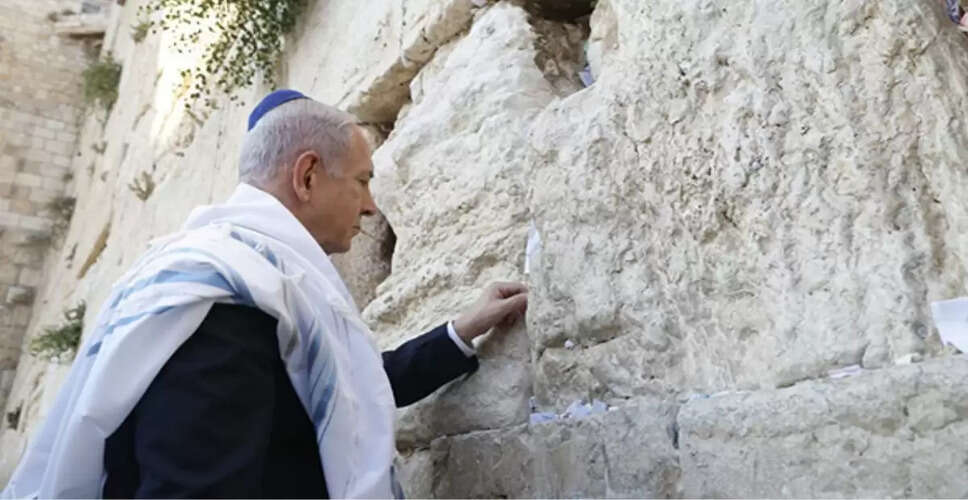
Prime Minister Netanyahu's Prayer at the Western Wall
On Sunday, Prime Minister Benjamin Netanyahu and his wife, Sara, paid a visit to the Western Wall in Jerusalem. During their visit, they recited a heartfelt prayer for the safety of Israel Defense Forces (IDF) personnel and security forces, as well as for the hostages held in Gaza. In a gesture of goodwill, Netanyahu also included a prayer for the well-being of U.S. President Donald Trump.
Following tradition, Netanyahu placed a note in the wall, inscribing, "A people has risen up as a lion Am Yisrael chai!" which translates to "Long Live the Nation of Israel." This phrase is deeply symbolic in Jewish culture, representing strength, courage, and resilience. He also shared a photo from his visit on social media.
The Importance of the Western Wall
This article explores the significance of the Western Wall in Jerusalem, particularly during a time when Israel is facing tensions with Iran.
Known as the Wailing Wall or Kotel, the Western Wall is a site of immense religious, historical, and cultural importance for the Jewish community. It is the last remaining structure of the Second Temple of Jerusalem, which was destroyed by the Romans in 70 CE. Constructed by Herod the Great around 19 BCE, the wall was part of an expansion of the Temple Mount, a site revered for millennia across Judaism, Christianity, and Islam.
Various texts suggest that this wall survived the destruction as a divine gift to the Jewish people.
Spiritual Significance of the Western Wall
Jews believe that the Divine Presence (Shechinah) has always remained at the Western Wall, making it the holiest site for Jewish prayer today. It serves as a place for deep spiritual connection, prayer, and reflection. The belief that "the divine Presence never departs from the Western Wall" is cherished among the Jewish faithful.
The wall measures approximately 50 meters in length and 20 meters in height. For generations, Jews have mourned the destruction of the temple and prayed for its restoration. It has become customary to insert slips of paper with prayers or wishes into the wall's crevices, symbolizing communal hope and the act of sending prayers directly to God.
Thus, the Western Wall holds profound significance for Israel, which has a predominantly Jewish population.