
Nepal Prepares for Indian Pilgrims with New Railway Link to Ayodhya

New Railway Service to Boost Tourism
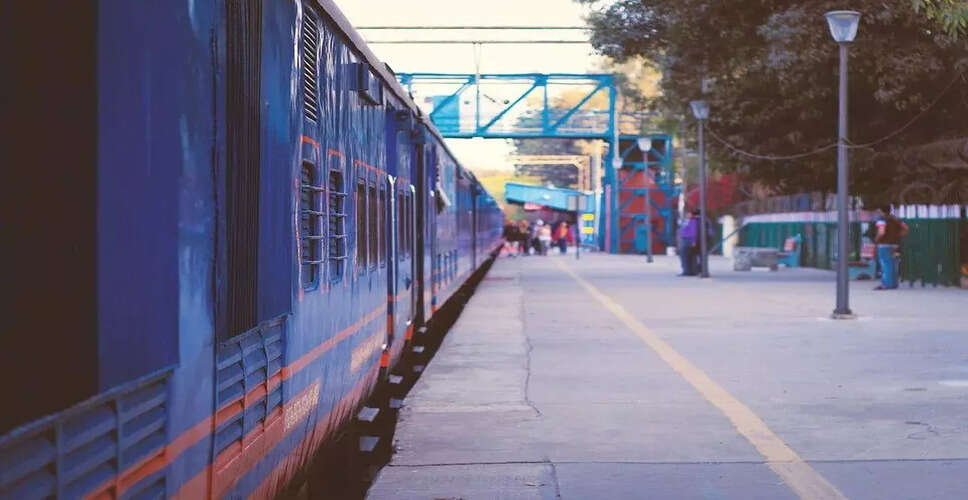
Representative image.
Kathmandu, Nov 21: Travel agencies in Janakpur, a city in southern Nepal, are gearing up to offer tour packages aimed at Indian tourists eager to visit Nepal via the upcoming Ayodhya-Janakpurdham railway service, set to launch next week.
Birendra Sah, a travel agency owner, mentioned that his company is developing packages specifically for Indian travelers arriving by train, as their current offerings mainly cater to those coming by road or air.
This initiative follows the approval of a new weekly train service by Indian Railways, linking Janakpurdham in Nepal with Ayodhya in Uttar Pradesh, India, which is expected to attract a large number of Indian religious pilgrims.
According to a recent announcement from India's Ministry of Railways, this new service will create a vital rail connection between two significant locations tied to the Ramayana—Janakpurdham, known as the birthplace of Goddess Sita, and Ayodhya, the birthplace of Lord Ram.
The inauguration of the railway service is scheduled to coincide with Prime Minister Balendra Shah's visit to New Delhi on November 22 and 23, as confirmed by both governments.
"This initiative will enhance access for travelers from both nations to these important religious and cultural sites, while also strengthening their shared heritage," stated India's Ministry of Railways.
The weekly service will span approximately 604 kilometers, connecting Janakpur Dham with Ayodhya Cantt and passing through key towns in Bihar and Uttar Pradesh.
"The train will stop at commercial stations including Jaynagar, Madhubani, Shisho, Sitamarhi, Raxaul, Narkatiaganj, Gorakhpur, Basti, Mankapur, and Ayodhya Dham, in addition to its terminal stations," the ministry added.
This service will operate weekly, departing from Janakpur Dham on Saturdays and from Ayodhya Cantt on Mondays.
The new railway link is anticipated to simplify cross-border travel for pilgrims, tourists, and other passengers, facilitating religious journeys between Janakpur and Ayodhya, promoting tourism circuits related to the Ramayana, and enhancing mobility for educational, business, and family-related travel.
Sah projected a significant increase in Indian visitors once the railway service commences, as trains can accommodate a larger number of passengers.
"Currently, we manage visits from 40-60 Indian tourists monthly through business contacts. However, we expect to cater to around 500 visitors monthly once the railway service is operational," he stated.
Despite this, Sah noted that many Indian visitors arrive in Janakpur independently rather than through travel agencies.
He emphasized the need for additional promotional efforts to raise awareness about the new railway connection between Ayodhya and Janakpurdham.
The Nepali government has not disclosed the current number of foreign tourists visiting Janaki Temple.
In 2025, Nepal welcomed 1,162,365 foreign tourists, with 167,380 visiting for religious purposes, making up 14.40 percent of total arrivals, as reported by the Ministry of Culture, Tourism and Civil Aviation. Religious tourism was the second-largest reason for foreign visits, following leisure travel, which accounted for 699,744 arrivals.
Rosan Das, a priest at Janaki Temple, mentioned that the number of pilgrims fluctuates with the seasons.
"In summer, many Indian visitors come to pray to Janaki Mata, while more Nepalis visit in winter," he explained. "The daily number of pilgrims can range from 1,000 to 5,000, including both domestic and foreign visitors, but I do not have precise figures."
He expressed optimism that the railway service could potentially double or triple visitor numbers, significantly benefiting the local tourism sector.
The railway link between Ayodhya and Janakpurdham is part of broader efforts to establish a cross-border Ramayana circuit between Nepal and India. Discussions are also ongoing regarding the development of tourism circuits focused on Ramayana and Buddhist sites that reflect their shared cultural and religious heritage.
While the railway service will connect Ayodhya with Janakpurdham, located near the Indian border, Nepali travel industry leaders believe that Indian visitors arriving in Janakpur could also be encouraged to explore other Hindu pilgrimage sites in Nepal, such as Pashupatinath Temple in Kathmandu and Muktinath Temple in Mustang.
Mohan Prasad Sharma, chairperson of the Travel and Air Transport Committee of the Federation of Nepalese Chambers of Commerce and Industry (Madhesh Province), noted that Indian tourists visiting Janaki Temple could be incentivized to discover other Hindu pilgrimage locations in Nepal through specially crafted tour packages.
He pointed out that Janaki Temple has yet to attract a significant number of Indian pilgrims visiting Ayodhya, despite the close connection between the two sites.
"If we can draw 2-5 percent of those pilgrims to Janaki Temple, it would greatly enhance local tourism," he remarked. "India has the largest population globally, with a majority being Hindus. There is immense potential to attract Indian pilgrims to Nepal through improved railway connectivity."
Enhanced rail access is also expected to positively impact local economies along the route, creating opportunities for tourism operators, hospitality businesses, local merchants, and traditional artisans.
"For communities in the border areas of Bihar and Nepal, this service will provide an additional transport option and strengthen economic and social ties," concluded India's Ministry of Railways.