
Nepal Floods: Families Struggle to Identify Missing Loved Ones Amid Ongoing Rescue Efforts

Severe Flooding and Landslides Devastate Nepal
Kathmandu: The catastrophic flooding and landslides in Nepal have caused widespread destruction. Even days after the disaster, rescue and relief operations are still underway, but thousands of families continue to face hardships. A significant number of individuals remain unaccounted for, and identifying the bodies recovered from various locations has become a daunting task for authorities.
Families Face Challenges in Identifying Missing Persons
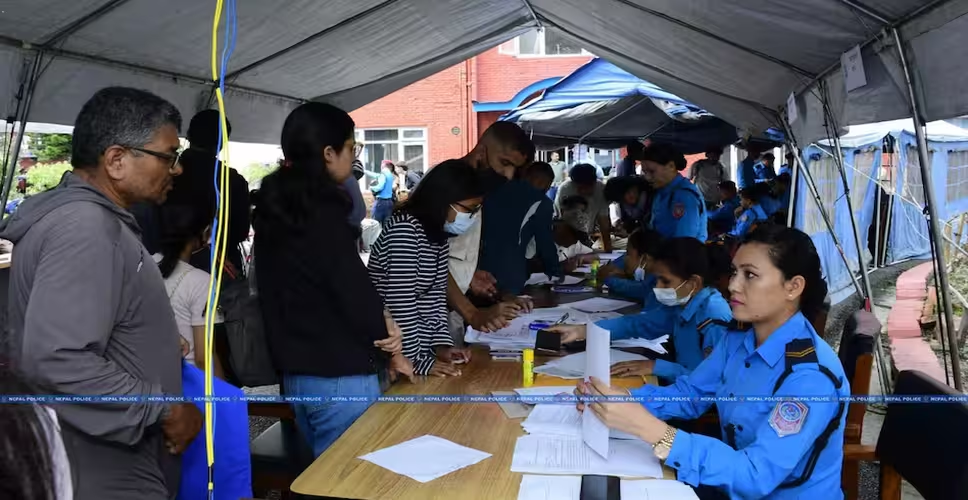
The most affected are families whose loved ones went missing due to the floods. Relatives are visiting hospitals, temporary morgues, and administrative camps in search of information. Many are carrying photographs of their missing relatives in hopes of recognition. In cases where identification is difficult, DNA testing has emerged as a crucial method.
Identification Challenges in Chitwan
Numerous bodies have washed ashore in Chitwan district from the flood-affected areas. This influx has put immense pressure on local hospitals and morgues, prompting the administration to implement alternative arrangements for body management. Officials have initiated the process of securing photographs and essential forensic samples of the deceased to ensure identification can be confirmed through DNA matching with families in the future.
Families' Ongoing Search for Their Loved Ones
In the aftermath of the disaster, many families are left wondering about the whereabouts of their loved ones. The floods have damaged roads, bridges, and communication systems, making access to affected areas challenging. People from neighboring districts are arriving in Chitwan to gather information about their missing relatives. Families are attempting to identify their loved ones using the photographs and records provided by the administration, but this process has proven to be extremely difficult in many cases.
How DNA Testing Aids in Identification
DNA serves as a unique biological identifier for individuals. When a DNA sample is collected from an unidentified body, it can later be matched with samples from potential relatives. This procedure is currently being adopted in Nepal, where officials and forensic experts are securing suitable samples from recovered bodies. These samples can then be compared with DNA from families of missing persons.
Temporary Burial of Bodies Due to Overwhelmed Facilities
The large number of bodies has strained the capacity of morgues in several areas. Consequently, arrangements have been made for the temporary burial of unidentified bodies in the Devghat region of Chitwan. Before burial, records related to identification and DNA samples are being secured to facilitate future identification processes if necessary.
Thousands Still Missing After the Disaster
The death toll in Nepal has surpassed one thousand, with reports of thousands more missing. Rescue teams are actively searching the affected regions, but the presence of debris and damaged infrastructure has made these operations extremely challenging. Authorities face the dual challenge of safely extracting survivors while also managing the identification and respectful handling of recovered bodies.
DNA Testing Offers Hope for Families
For families searching for their missing loved ones, DNA testing has become a vital source of hope. By preserving samples from unidentified bodies, there remains a possibility of providing families with definitive information about their relatives in the future. In this tragedy in Nepal, the identification of missing persons and providing answers to families is as crucial as the ongoing rescue and relief efforts.
Ongoing Relief and Search Operations
Currently, relief and search operations are still in progress in Nepal. Families are eagerly awaiting new information from the administration, hoping that the scientific identification process will clarify the status of more missing individuals.