
Neha Bora's T-Shirt Symbol Sparks Debate on Cultural Significance

Introduction to the Controversy
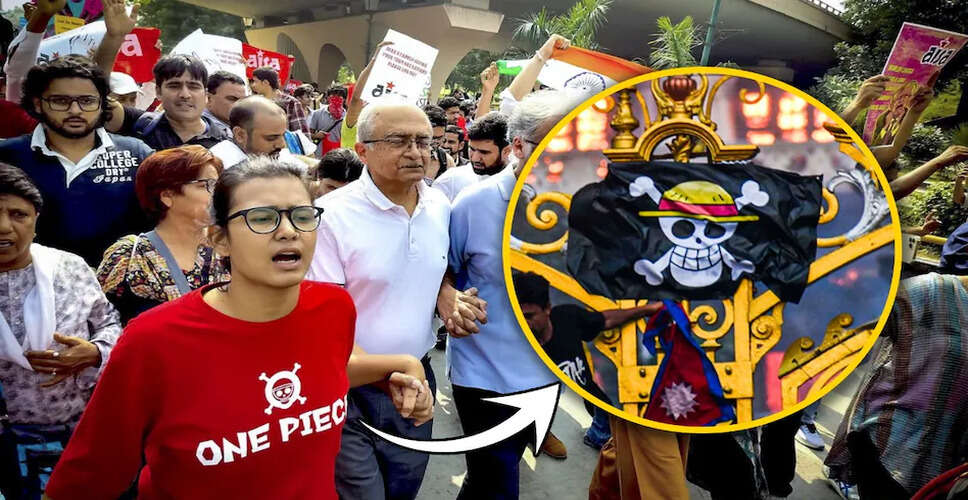
New Delhi: The skull emblem on Neha Bora's T-shirt has ignited discussions across political and social circles. This symbol has drawn comparisons to the iconic flag from the popular Japanese manga and anime series 'One Piece,' which was also seen during the Gen-Z protests in Nepal in 2025. At that time, the flag gained significant recognition among the youth. Following its appearance on Bora's T-shirt during a protest in India, many are eager to understand its meaning and the cultural context behind it.
What Made Neha Bora's T-Shirt Noteworthy?
Neha Bora serves as the national president of the All India Students' Association (AISA). During a protest against the Election Commission in Delhi in October 2026, she was spotted wearing a T-shirt featuring a design resembling a skull and hat. This design closely resembles the flag of the Straw Hat Pirates from the beloved anime series 'One Piece.' Following the release of images, discussions about the symbol erupted on social media.
Understanding the 'One Piece' Skull Flag
'One Piece' is a renowned manga and anime series created by Eiichiro Oda, centered around Monkey D. Luffy and his crew's adventures at sea. Their quest is to find the legendary treasure known as 'One Piece.' The series features a distinctive flag belonging to the Straw Hat Pirates, showcasing a skull and crossbones alongside Luffy's signature straw hat. While inspired by traditional pirate symbols, the flag also embodies themes of freedom, friendship, loyalty, and resilience in the face of adversity.
The Flag's Role in Nepal's Gen-Z Movement
During the Gen-Z protests in Nepal in 2025, the 'One Piece' Straw Hat Pirates flag made an appearance. These protests were driven by youth discontent regarding governance, corruption, and political accountability. The presence of this culturally significant flag during the protests garnered international attention, symbolizing the desire for unity and change among the youth. However, its meaning varied among protesters; for some, it represented a love for the anime, while others viewed it as a form of dissent against the establishment.
Why Are Pop Culture Symbols Popular in Youth Movements?
In today's digital age, the influence of anime, films, web series, and online communities among youth is profound. Symbols associated with these mediums are easily recognizable and spread rapidly on social media. Through familiar characters or flags, young people can express their views, regardless of their cultural or linguistic backgrounds. The themes of freedom, standing up for friends, and opposing injustice in 'One Piece' resonate with many youths, leading them to associate its symbols with their social and political beliefs. However, the interpretation of a symbol often depends on its context; one flag may signify entertainment for some, while for others, it represents protest or a call for change.
Connecting Neha Bora's T-Shirt to Nepal's Protests
The similarity between the emblem on Neha Bora's T-shirt and the flags seen during Nepal's Gen-Z protests has captured public interest. While both instances feature the 'One Piece' symbol, it would be premature to conclude that they share the same intent or are part of an organized movement. Understanding whether Bora intended to convey a specific political message through her T-shirt requires further insights from her statements and additional context surrounding the event. It is crucial to differentiate between the recognition of a symbol and its intended use.
Conclusion
In summary, the skull emblem on Neha Bora's T-shirt has reignited discussions about the 'One Piece' flag that was also present during Nepal's Gen-Z movement. This incident illustrates how symbols from popular culture are taking on new roles in contemporary youth culture. However, the meaning of these symbols can vary widely, and understanding the full context of their use is essential before drawing any conclusions.