
Neha Bora Stands Firm Against Police Notice: A Fight for Democratic Rights
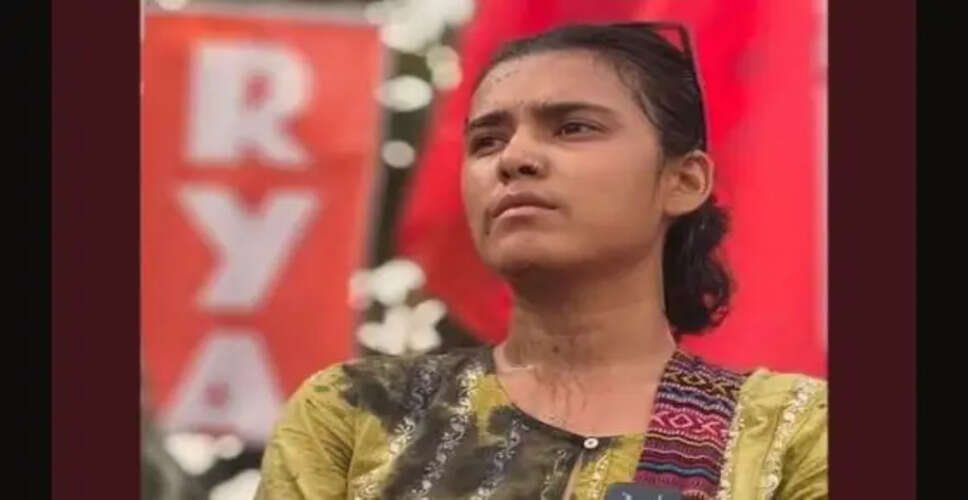

Neha Bora Refuses to Comply with Police Directive
New Delhi: Neha Bora, the president of the All India Students' Association, announced on Saturday that she will not agree to a peace bond as mandated by a special executive magistrate. This decision follows the Delhi High Court's rejection of her appeal against a police directive requiring her to submit a personal bond of Rs 10,000 along with a surety.
Bora expressed her confusion regarding the police notice, questioning, 'Whose peace am I being asked to maintain?'
The police notice, issued on October 17 under Section 126 of the BNSS, instructed her to appear before a special executive magistrate on October 19 to justify why she should not be required to execute a personal bond for maintaining peace during an inquiry.
Speaking to reporters at the CPI(ML) Liberation Parliamentary office, Bora emphasized that peacefully protesting is a fundamental democratic right. She challenged the notion that voicing concerns against the government could be seen as a threat to public order.
'If we don’t question the government, whose peace are we preserving?' she asked, highlighting that the ability to question authority and express dissent is essential in a democracy.
Bora also stated that the ongoing struggle against Chief Election Commissioner Gyanesh Kumar should not come at the expense of labeling dissent as a disturbance to peace.
The police notice was issued shortly after Bora was detained while participating in the 'Lehra Do Tiranga' march in Delhi, which was part of protests calling for Kumar's resignation due to alleged electoral roll irregularities.
In her challenge to the notice, Bora argued in the Delhi High Court that the preventive measures were an attempt to stifle peaceful dissent and claimed that the notice failed to demonstrate a genuine risk of public disorder.
She reiterated that peaceful protests and democratic opposition should not be viewed as threats to public order, asserting the need to safeguard the right to dissent.