
NEET Controversy: NTA's Defense Raises More Questions Amid Government Acknowledgment
The NEET controversy intensifies as the National Testing Agency (NTA) claims the 2026 exam paper was not leaked through its system, contradicting the government's acknowledgment of a breach. This raises significant questions about accountability and trust in examination processes. With a CBI investigation underway and arrests made, students and parents are left confused about the integrity of the system. The government's potential shift to a computer-based format further complicates the narrative. As public trust wanes, the implications for future examinations are profound. Read on to uncover the details of this unfolding situation.
| May 22, 2026, 11:46 IST
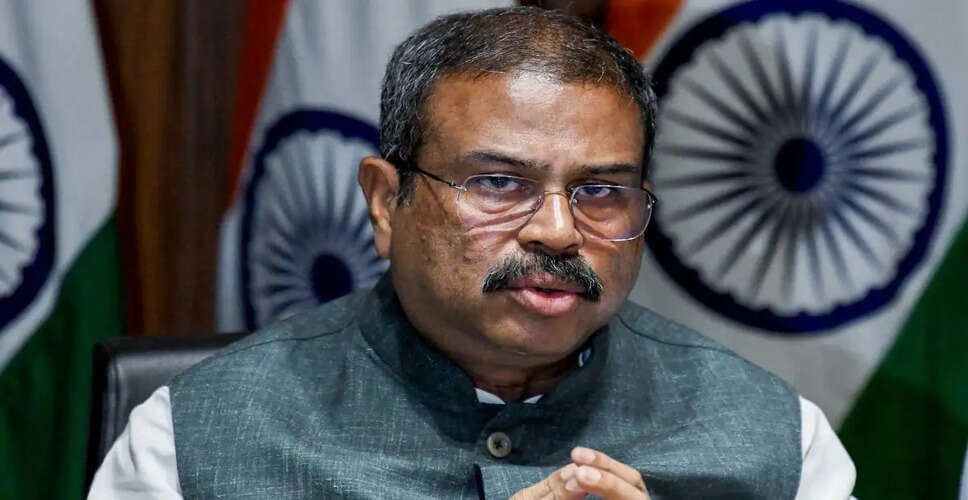

NTA's Statement on NEET Paper Leak
There is a statement that the National Testing Agency (NTA) would likely prefer to use as the official conclusion regarding the recent NEET controversy. During a parliamentary committee meeting on May 21, NTA's Director General, Abhishek Singh, reportedly asserted that the NEET-UG 2026 paper was "not leaked through the system." On the surface, this appears to be a strong defense. However, the issue lies in the stark contrast between this claim and the government's own narrative. Just days earlier, Union Education Minister Dharmendra Pradhan publicly acknowledged that there had been a breach in the "chain of command" regarding the NEET paper leak and stated that the government was taking responsibility for it. We reported on this here. This contradiction is impossible to overlook.
A Defense That Raises Bigger Questions
This is a straightforward argument. If there was a breach in the chain of command, what exactly is the NTA head trying to convey by insisting that the paper was "not leaked through the system"?
Confusion Among Students and Parents
For students and parents, this distinction seems more about careful wording than clarity. After all, the "system" is not merely a computer server located within an office building; it encompasses every level involved in conducting an exam of this scale. From printing, packaging, and transportation to security, monitoring, coordination, and oversight. If the paper leaked at any point in this chain, most would still consider it a failure of the system. And frankly, they wouldn't be wrong.
The Current Message on NEET is Confusing
This is what makes the current messaging around NEET so perplexing. On one hand, the central government has acknowledged a breach serious enough to incite national outrage, a CBI investigation, and arrests in several states. On the other hand, the agency responsible for conducting the exam seems more focused on proving that the leak did not originate from its internal digital infrastructure.
Lack of Public Trust
While this may be administratively helpful, it does little to restore public trust, as students are not debating technicalities. A teenager who spends two years preparing for NEET does not care whether the leak occurred during printing, transportation, or distribution. Parents who have emptied their savings accounts for coaching classes will not pause to say, "At least the breach didn’t come from the server."
Unanswered Questions Persist
Students are left confused. If the government has already admitted to a breach, why is the NTA still refusing to label it a 'leak'? How did the paper get out? Why is no one willing to take responsibility? Until these questions are answered, the damage has already been done.
CBI Investigation Complicates NTA's Position
The NTA head's defense is even more surprising given that the CBI investigation is proceeding based on the alleged paper leak. In fact, the agency has already arrested a chemistry lecturer, PV Kulkarni, just seven days ago, labeling him as the "mastermind" behind the NEET-UG 2026 paper leak. Reports indicate that the leaked chemistry questions were allegedly disseminated before the exam and sold across various states under a large racket currently under investigation.
Government's Response Tells a Different Story
What makes this situation even more shocking is the government's response following the controversy. The central government has already hinted that NEET may be transitioned to a computer-based format in the future. Such decisions are not made unless weaknesses or threats in the current process are evident. This is why the NTA's current defense seems somewhat incomplete.
Institutional Failure Acknowledged
The education minister's statement acknowledged institutional failure. In contrast, the NTA head's remarks appeared to be an attempt to downplay responsibility. These two perspectives are not the same.
Trust in Examination Institutions at Stake
In fact, the language used highlights the significant crisis surrounding India's largest entrance exam. The issue is no longer just whether the paper was leaked or not. The real question is whether students still trust the institutions conducting these exams—whether they are fully transparent about where the failure occurred.
System Reliability at Risk
Because students do not view the examination system in fragments. If any part of the chain fails, the credibility of the entire system is compromised. And right now, it seems that public trust is diminishing at a pace far quicker than explanations can be provided.