
NCERT Introduces Emergency in Class 9 Curriculum for the First Time
In a historic move, the NCERT has included a section on the Emergency in its Class 9 social science textbook, marking over fifty years since its declaration. This addition highlights the challenges faced by Indian democracy during that period, including the suspension of fundamental rights and the role of key figures like Jayaprakash Narayan in the resistance. The textbook aims to educate students on the importance of democratic processes and the implications of misinformation and social issues. This significant change comes as the nation reflects on the 50th anniversary of the Emergency declaration.
| Jun 25, 2026, 12:57 IST

Inclusion of Emergency in Educational Curriculum
For the first time in over fifty years since the Emergency was declared in India, the NCERT has incorporated this significant topic into the Class 9 textbook. It is presented as one of the major challenges faced during that period, when most fundamental rights were suspended. This information is found in the newly developed social science textbook titled 'Understanding Society: India and Beyond', which includes a chapter discussing the strengths and challenges of Indian democracy, highlighting the Emergency.
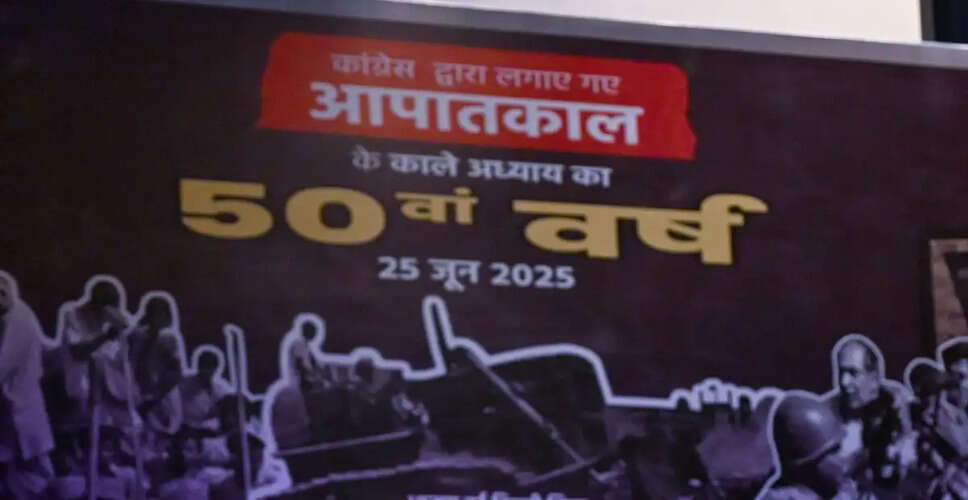
According to an NCERT official, this marks the first instance of a section on the Emergency being added to the Class 9 curriculum. Integrating this topic into school education is a crucial change, especially as the nation recently commemorated the 50th anniversary of the Emergency declaration in 1975. The textbook explains that a significant challenge to democracy in India arose during the Emergency from 1975 to 1977, amid growing public discontent towards the government led by Indira Gandhi, fueled by rising unemployment, inflation, and allegations of misgovernance.
The text further elaborates that in June 1975, the government declared a national emergency citing internal unrest. During this time, most fundamental rights were suspended, censorship was imposed on the press, and numerous political leaders and activists were arrested. Democratic institutions faced immense pressure, and citizens' freedoms were severely restricted. The book also highlights the role of Jayaprakash Narayan in the movement against the Emergency.
One excerpt from the book mentions that Jayaprakash Narayan, a political leader and socialist thinker known as 'Lok Nayak', led mass movements that mobilized students and citizens, particularly in Bihar and Gujarat. The Emergency was lifted in 1977, leading to general elections that allowed people to express their will through voting. The defeat of the ruling government showcased the strength of Indian democracy and underscored the importance of democratic processes.
The section on the Emergency is part of a broader discussion on the challenges faced by democratic systems. Besides the Emergency, the textbook addresses issues such as fake news, misinformation, damage to public property, violations of public norms, poverty, regionalism, social discrimination, and gender inequality as challenges to democratic functioning. A new section titled 'Democracy and You' has also been included, aimed at helping students connect what they learn in the classroom with their roles as participants in civic and democratic processes.