
Navigating Dual Nuclear Crises: U.S. Strategic Priorities in the Middle East and South Asia
Emerging Nuclear Crises
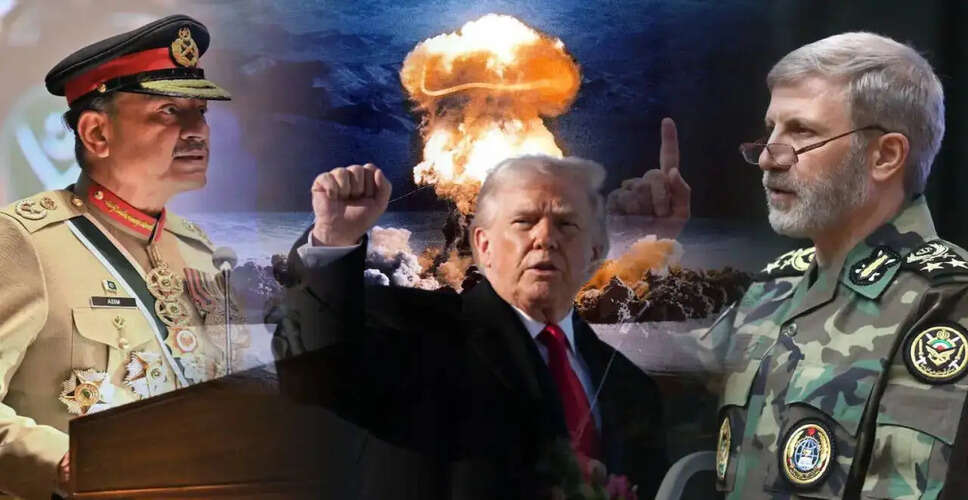
The prospect of facing two concurrent nuclear crises is becoming increasingly plausible. Recent months have seen significant conflicts involving nations with nuclear capabilities or those on the brink of acquiring them, particularly in the Middle East and South Asia. A pressing question now arises among strategists: if Pakistan were to escalate its nuclear stance against Afghanistan while Iran approached nuclear capability against Israel, which situation would demand immediate U.S. intervention? The answer is rooted in the historical context of U.S. alliances and military strategies.
The Role of Israel in U.S. Strategy
The Israel Factor In American Strategy
For over fifty years, Israel has been a pivotal element of U.S. security policy in the Middle East. The unwavering military, intelligence, and political backing from Washington has persisted through various administrations. Recently, this relationship has evolved into a more direct military collaboration. In early 2026, the U.S. and Israel initiated coordinated strikes against Iranian nuclear sites under Operation Midnight Hammer, aimed at crippling key enrichment facilities at Fordow, Natanz, and Isfahan. Reports from U.S. defense briefings and international media indicate that this operation was designed to mitigate Iran’s nuclear capabilities and avert what was termed an 'imminent nuclear breakout scenario'.
Escalation of Conflict
As the President stated, our objective is to defend the American people by eliminating imminent threats from the Iranian regime. The President ordered bold action. CENTCOM forces are delivering an overwhelming and unrelenting blow. pic.twitter.com/B0k5gV4YnU
— U.S. Central Command (@CENTCOM) February 28, 2026
The conflict escalated significantly on February 28 when U.S. and Israeli forces executed a comprehensive strike campaign against Iranian military assets. Iranian state media later confirmed that these strikes resulted in the deaths of Supreme Leader Ali Khamenei and several high-ranking officials. This operation was referred to as Operation Epic Fury.
Iran's Response
The Iranian regime was warned. CENTCOM is now delivering swift and decisive action as directed. pic.twitter.com/nNDoDexH6g
— U.S. Central Command (@CENTCOM) March 1, 2026
In retaliation, Iran launched missile and drone strikes across the region, targeting both Israel and U.S. facilities in Gulf nations such as Bahrain and Qatar. This marked one of the most significant military confrontations between Iran and the U.S. in decades.
U.S. Stakes in the Conflict
For the U.S., the implications of such a confrontation are critical for its ally. U.S. officials have consistently labeled a nuclear-capable Iran as an “existential threat” to Israel, marking a pivotal moment for security in the Middle East. The message is clear: should Israel face a nuclear attack from Iran, U.S. military involvement would likely be swift and substantial.
Nuclear Dynamics in South Asia
South Asia’s Nuclear Shadow
In contrast, the situation in South Asia presents a different calculus. Although Pakistan has a significant nuclear arsenal, the U.S. lacks a formal defense agreement with Islamabad. Relations have soured considerably since the conclusion of the U.S. military presence in Afghanistan, with American officials increasingly viewing the relationship as transactional rather than strategic.
Recent Clashes
Recent skirmishes between Pakistan and the Afghan Taliban highlight this shift. A ceasefire established in October 2025 collapsed after Pakistan conducted airstrikes against militant targets in Afghanistan’s Paktika and Nangarhar provinces.
Escalation of Border Clashes
Pakistan asserted that the strikes were aimed at Tehreek-e-Taliban Pakistan (TTP) militants responsible for attacks within its borders. The Taliban government in Kabul accused Pakistan of civilian casualties and breaching Afghan sovereignty. Following this, border clashes escalated, with Taliban forces claiming to have seized several Pakistani military posts along the Durand Line. Pakistan retaliated with air and artillery strikes against Taliban positions near Kabul and Kandahar. Despite the rising tensions, the U.S. response remained limited to diplomatic remarks.
U.S. Response to South Asia Conflict
The State Department publicly endorsed Pakistan’s “right to defend itself” against militant threats but refrained from offering military support. This cautious approach underscores Washington’s current strategy in South Asia: prioritizing containment over intervention. Even in nuclear scenarios, U.S. strategy has historically focused on securing Pakistan’s nuclear arsenal rather than providing direct support in conflicts. The goal has been to prevent Pakistani nuclear weapons from falling into extremist hands, a priority that differs significantly from the U.S. commitment to Israel.
Prioritizing U.S. Military Action
Strategic Priority In A Dual Nuclear Crisis
If both crises were to occur simultaneously, U.S. decision-makers would likely focus on the Middle East first. Several reasons contribute to this prioritization. Firstly, alliance commitments play a crucial role; Israel is regarded as Washington’s closest strategic ally in the region, bolstered by extensive intelligence sharing, missile defense collaboration, and joint military planning.
Military Presence and Escalation Risks
The second reason is the military presence; the U.S. maintains significant air and naval forces in the Middle East, including aircraft carrier strike groups and forward bases in the Gulf. Conversely, the U.S. military footprint in South Asia has diminished significantly since the withdrawal from Afghanistan in 2021. Lastly, the risk of escalation is a critical factor; a nuclear conflict involving Israel could lead to a broader regional war with multiple states and militant proxies. Iran’s network of allied groups, such as Hezbollah and Iraqi militias, could open additional fronts across Lebanon, Syria, and Iraq, posing an immediate threat to U.S. forces in the area.
Different Dynamics in South Asia
In South Asia, however, a conflict between Pakistan and Afghanistan, even if severe, would likely remain geographically contained unless India became involved. The U.S. would probably prioritize diplomatic mediation and crisis management over direct military engagement.
Conclusion: U.S. Strategic Choices
The Reality Behind Washington’s Choices
This comparison illustrates a long-standing hierarchy in U.S. strategic thought. Israel is viewed as a cornerstone of U.S. security in the Middle East, while Pakistan has transitioned from a Cold War ally to a complex regional partner. In a scenario where multiple nuclear flashpoints arise simultaneously, U.S. priorities are influenced more by alliance commitments than geographical considerations. Should the unthinkable occur—two nuclear crises erupting at once—the focus of U.S. military action would almost certainly remain in the Middle East, with South Asia being significant but secondary.