
Nationwide Protests Erupt in India Following Death of Iranian Leader Khamenei
Protests Across India
Demonstrations broke out in multiple Indian states in response to the assassination of Iranian Supreme Leader Ayatollah Ali Khamenei, who was killed during a coordinated military operation by the United States and Israel on Sunday.
In light of the protests, authorities in Jammu and Kashmir imposed restrictions on mobile internet speeds, as reported by local sources.
Khamenei, aged 86, had been the supreme leader of Iran since 1989, overseeing all government branches and military forces.
He was regarded as a pivotal figure within the Shia Muslim community.
His assassination occurred as Israel and the US initiated a military operation aimed at undermining the Iranian government. Iran responded by asserting that the US-Israeli operation commenced while nuclear negotiations were ongoing.
Following Khamenei's death, Iranian officials vowed to retaliate, launching missiles at Israel and other Gulf nations.
Protests were reported in various states, including Jammu and Kashmir, Maharashtra, Uttar Pradesh, Delhi, Rajasthan, and Karnataka, condemning the killing of the supreme leader.
Jammu and Kashmir Response
Jammu and Kashmir
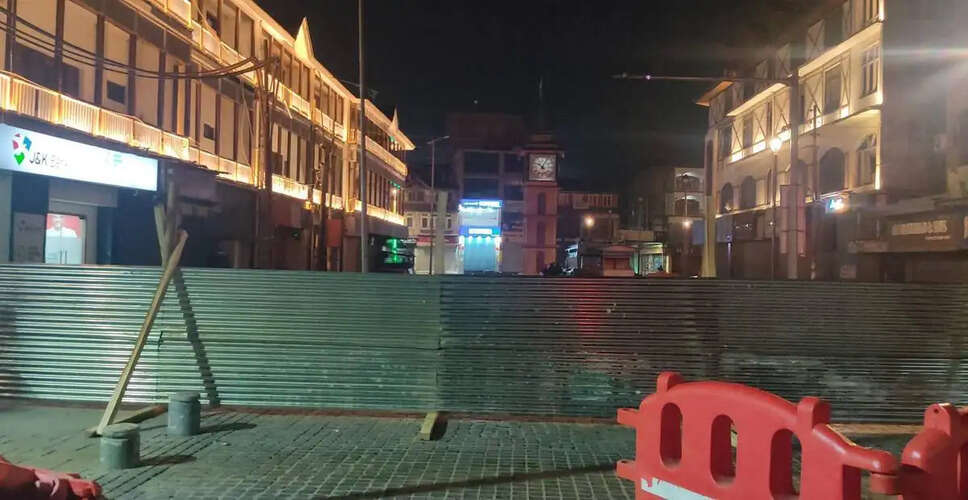
In Jammu and Kashmir, police sealed off Lal Chowk in Srinagar and restricted civilian movement on Monday after protests erupted the previous day against Khamenei's assassination, according to reports.
Protesters had occupied Lal Chowk throughout Sunday.
Officials indicated that the decision to impose restrictions followed a security meeting aimed at addressing the protests in Srinagar and surrounding areas.
Concerns were raised that the protests could escalate into law and order issues.
As part of the restrictions, inter-district movement was prohibited, and checkpoints were established to prevent gatherings.
While large assemblies were banned, residents were permitted to mourn Khamenei's death in Imam Baras, which are religious halls used for mourning rituals by Shia Muslims.
Additionally, high-speed mobile internet was throttled across all networks in the Kashmir valley.
Srinagar MP Aga Ruhullah Mehdi criticized the closure of Lal Chowk, calling it a “disgrace” and “shameful act.”
He expressed that the area is open for celebrations but not for mourning, emphasizing the peaceful nature of the demonstrations.
Ruhullah urged the administration not to dismiss the community's grief as a law and order issue.
Protests in Other States
Rajasthan
In Ajmer, Rajasthan, the Shia community declared a three-day mourning period for Khamenei, as announced by community leader Syed Asif Ali.
Condolence meetings were held at various religious sites.
Karnataka
In Alipur village, Karnataka, the Shia community organized a protest march and also announced three days of mourning. Residents recalled Khamenei's visit to inaugurate a community hospital in 1981.
In Bengaluru, hundreds gathered for a condolence meeting and solidarity march.
Delhi
At Delhi's Jantar Mantar, hundreds gathered to mourn Khamenei's death, organized by the All India Shia Council. Protesters chanted slogans against the US and Israeli leadership.
Maharashtra
In Mumbai, Shia Muslims took to the streets to express their outrage over Khamenei's killing.
Uttar Pradesh
In Lucknow, members of the Shia community protested near the Bara Imam Bara mosque, announcing plans to burn effigies of Trump and Netanyahu during future demonstrations.
Jharkhand
In Ranchi, various political groups condemned the US-Israeli attacks on Iran, labeling them as violations of international law.
Madhya Pradesh
In Bhopal, Shia Muslims held a condolence meeting and protest, emphasizing Khamenei's contributions to Islam.
Context of the Attacks
The Attacks
The military actions in Iran were part of ongoing tensions surrounding Tehran's nuclear ambitions.
Washington has positioned itself as a protector of Israel, which claims that Iran is nearing the capability to develop nuclear weapons.
Iran maintains that its nuclear program is intended for peaceful purposes.
In light of escalating fears of an attack, Tehran has resumed negotiations with Washington regarding its nuclear program.
On the day of Khamenei's death, several of his family members were also killed in the military operation.
Following this, Iranian cleric Alireza Arafi was appointed to the interim leadership council to oversee the transition until a new supreme leader is chosen.
India expressed its deep concern over the situation in Iran and the Gulf, urging all parties to exercise restraint and prioritize civilian safety.