
National Webinar Explores Education in Vedic Literature
A national webinar titled “Education in Vedic Literature” has commenced, featuring discussions among esteemed scholars on the philosophical and social dimensions of Indian educational traditions. The event emphasizes the importance of integrating India's educational heritage into modern systems. Keynote speeches highlight the relevance of Vedic principles in addressing contemporary educational challenges. The first day includes multiple sessions focusing on various aspects of Vedic education, with insights from prominent educators. The second day promises further exploration of Indian knowledge traditions and educational philosophy, making this event a significant platform for academic discourse.
| Jul 24, 2026, 18:33 IST
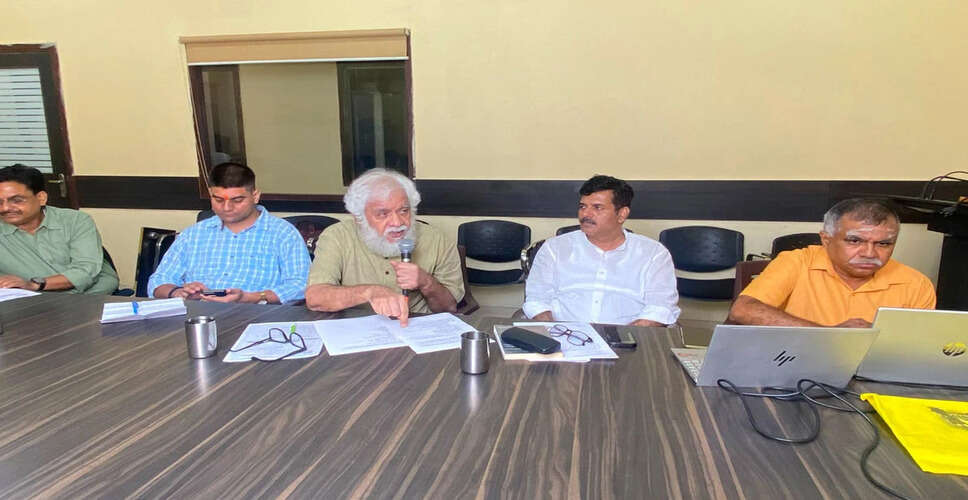

Inauguration of the National Webinar
A two-day national webinar titled “Education in Vedic Literature” commenced today, organized collaboratively by the Delhi Teacher University and the Samskrit Promotion Foundation. Esteemed scholars, educators, university vice-chancellors, researchers, and academic experts from across the country participated in discussions focusing on the philosophical, educational, and social dimensions of Indian educational traditions.
The inaugural session began with a Vedic Mangalacharan led by Mr. Sunil Kumar Sharma, which infused the event with a dignified and spiritual ambiance. The session was facilitated by Mr. Lakshminarasimhan, the executive officer of the Samskrit Promotion Foundation.
While welcoming the guests and participants, Dr. Sanjeev Rai, the registrar of Delhi Teacher University, emphasized the importance of recalling India’s educational heritage and integrating its enduring principles into the modern education system.
In her opening remarks, Prof. Anu Singh Lather, Vice-Chancellor of Delhi Teacher University, highlighted the significance of understanding the fundamental values of Indian education and their relevance in the effective implementation of the National Education Policy (NEP-2020).
Prof. Chand Kiran Saluja from the Samskrit Promotion Foundation presented a comprehensive discussion on the philosophical foundations of Indian education, emphasizing the importance of holistic development, character building, and value-based education within the Gurukul tradition.
The inaugural session was enriched by the address of Prof. Harikesh Singh, former Vice-Chancellor of Jai Prakash University, Chapra (Bihar), who underscored the relevance of ancient Indian educational principles in addressing contemporary social and educational challenges. He also highlighted the crucial role of maintaining the intellectual and cultural continuity of Indian knowledge traditions.
The session concluded with a vote of thanks presented by Dr. Ayush Nandan, a research assistant in the Sanskrit Department at Delhi University.
Academic Sessions
Following the inaugural session, six scholarly sessions were conducted on the first day, focusing on various aspects of Vedic and Indian educational thought.
In the first session, Dr. Neelabh Tiwari, Director of the Central Sanskrit University, Nashik campus, delivered a lecture on “Indian Educational Psychology.” He elaborated on the role of the fourteen Karanas (internal and external faculties) described in Indian tradition and their contribution to the process of knowledge acquisition, particularly clarifying the roles of intellect, mind, consciousness, and ego in gaining knowledge.
After the lunch break, the second session featured Prof. Srinivas Varkhedi, Vice-Chancellor of the Central Sanskrit University, who gave an inspiring talk on the central role of the Acharya in the Indian educational tradition. He stressed the need for the revival of indigenous teaching methods in contemporary educational discourse and shared personal experiences illustrating the importance of a teacher's emotional connection and ideal conduct in imparting knowledge and life values.
In the third session, Prof. Ramakant Pandey, Vice-Chancellor of Uttarakhand Sanskrit University, discussed various terms used for students in Vedic education, such as Antevasin, Chhatra, and Shishya. He also expressed views on “Vedic Education and Social Harmony,” highlighting the role of Vedic education in fostering social cohesion and inclusive development.
The fourth session featured Prof. Tulsidas Paroha, Head of the Sanskrit Literature Department at Maharishi Panini Sanskrit and Vedic University, Ujjain, who spoke on the relevance of traditional educational ideals in the 21st century.
In the fifth session, Prof. Anand Vardhan from the School of Heritage Research and Management at Dr. B.R. Ambedkar University, Delhi, analyzed the scientific concepts embedded in Vedic literature, asserting that the content and perspectives of Vedic texts are inherently scientific and contain numerous scientific elements.
The final session of the first day was led by Prof. C.B. Sharma, Vice-Chancellor of Vinoba Bhave University, Hazaribagh (Jharkhand), who delivered a lecture on “The Nature of the Upanishadic Acharya,” providing an in-depth analysis of the pedagogical and philosophical dimensions of the guru-disciple relationship as described in the Upanishads.
The first day concluded with a vote of thanks presented by Dr. Saroj Malik from Delhi Teacher University.
Conclusion
The first day of the seminar saw enthusiastic participation from scholars, professors, researchers, and students from various universities and institutions across the country. The discussions held in the various sessions reaffirmed that Vedic and Indian educational traditions remain highly relevant in addressing contemporary educational challenges and in constructing a value-based, holistic, and culturally enriched educational system.
The second day of the webinar will take place on July 25, Saturday, featuring various academic sessions and discussions on different aspects of Indian knowledge traditions and educational philosophy.