
NASA's Artemis II Mission Marks a New Era in Lunar Exploration
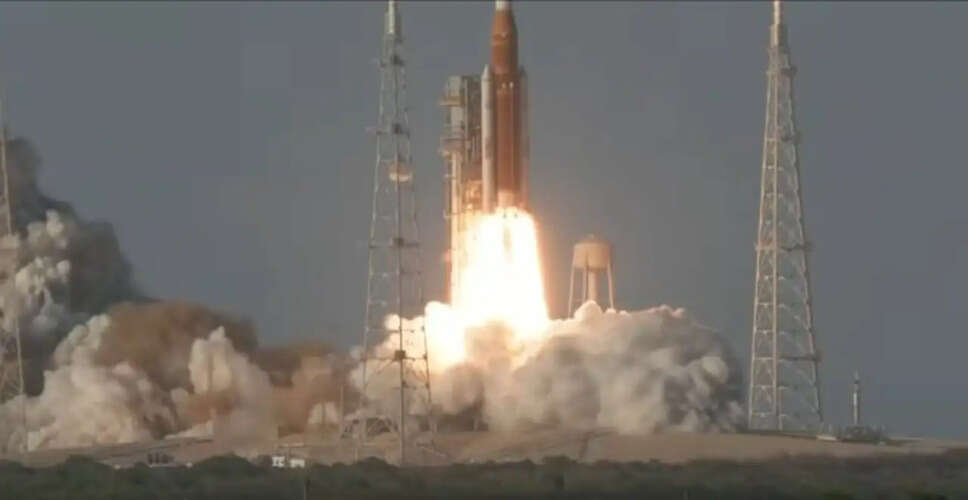
NASA Launches Artemis II Mission
After more than fifty years since humans ventured beyond Earth's orbit, NASA has successfully initiated the Artemis II mission, sending a crew of astronauts on a voyage around the Moon. The launch took place at Kennedy Space Center within the designated window from 6:24 PM to 8:24 PM ET. The mission features four astronauts: Reid Wiseman, Victor Glover, Christina Koch, and Jeremy Hansen, embarking on a ten-day journey that will circle the Moon before heading back to Earth.
Artemis II lifts off pic.twitter.com/RReiVlaM80
— Aaron Rupar (@atrupar) April 1, 2026
WATCH: Footage of Artemis II taking off pic.twitter.com/dJvzonC50k
— Faytuks Network (@FaytuksNetwork) April 1, 2026
Although the crew will not set foot on the Moon and will remain several thousand miles away at their closest point, this mission is crucial for laying the groundwork for future lunar landings. Artemis II aims to evaluate the Orion spacecraft's life support systems and other technologies essential for deep space missions.
This initiative builds upon decades of space exploration that began with Apollo 17 in December 1972, the last time astronauts walked on the lunar surface. Following that historic mission, NASA redirected its efforts towards missions closer to Earth, such as the space shuttle program and the International Space Station.
With aspirations to return astronauts to the Moon by 2028, NASA is collaborating with private companies like SpaceX and Blue Origin to leverage their expertise. The Artemis program, as it stands today, was revitalized during the Trump administration, continuing the legacy of the Artemis I mission, which successfully flew without a crew in 2022.