
Narendra Modi Sets New Milestone in Indian Political History
On July 25, 2025, Prime Minister Narendra Modi achieved a historic milestone by surpassing Indira Gandhi's record for the longest tenure as Prime Minister. With nearly 24 years of leadership, Modi has not only broken records but also established a new paradigm of stability and public trust in Indian politics. His tenure is marked by significant electoral successes and a transformative approach to governance, positioning India as a global leader. This article explores the implications of Modi's achievements and the new era he has ushered in for the nation.
| Jul 25, 2025, 11:18 IST
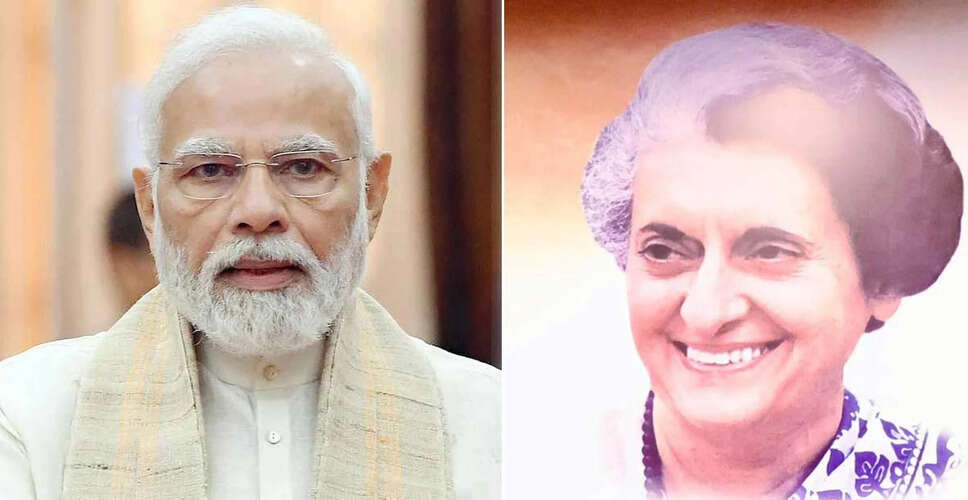
A Historic Achievement for Narendra Modi
On July 25, 2025, Prime Minister Narendra Modi marked a significant milestone in India's political landscape. Today, he has become the second individual to serve the longest tenure as Prime Minister, surpassing the record previously held by Indira Gandhi. While Indira Gandhi served for 4,077 days from January 24, 1966, to March 24, 1977, Modi is now on his 4,078th day in office.
This historic moment also signifies that Modi has led a democratically elected government for nearly 24 years, a record for any Prime Minister at both the central and state levels. This achievement is accompanied by several notable distinctions. Modi is the first Prime Minister born after India's independence in 1947 and the first non-Congress Prime Minister to complete such a lengthy tenure. Additionally, hailing from Gujarat, he has shattered the myth that national leadership can only emerge from Hindi-speaking regions. Modi has consistently led governments at both the state and central levels, achieving the longest tenure in this regard.
Significant Electoral Successes
Read More: PM Modi Forces Britain, Which Exploited India, into a Trade Agreement, Striking at Khalistanis and Fugitives from London
Moreover, Modi is the first non-Congress Prime Minister to successfully complete two consecutive full terms (five years each). The Bharatiya Janata Party, under his leadership, secured a clear majority in both the 2014 and 2019 Lok Sabha elections. Following Indira Gandhi, he is the first Prime Minister to achieve a full majority twice in succession. Additionally, after Pandit Nehru, Modi is the first Prime Minister to lead his party to victory in three Lok Sabha elections (2014, 2019, and 2024). Notably, he is the only leader among all Prime Ministers and Chief Ministers to have won six consecutive elections, having triumphed in the Gujarat Assembly elections of 2002, 2007, and 2012, followed by the Lok Sabha elections in 2014, 2019, and 2024.
A New Era in Indian Politics
Modi's tenure is not merely a series of achievements; it represents a new paradigm of leadership, continuity, and public support in Indian politics. In a landscape often characterized by coalition governments, instability in leadership, and temporary mandates, Modi's leadership has been robust, consistent, and decisive, positioning India as a global leader. His leadership style has ushered in numerous changes in Indian politics, such as the integration of development and nationalism, along with an emerging role in global diplomacy and a digital India. It is not an exaggeration to say that Modi's tenure has carved a unique place in history, both in terms of duration and its political, social, and global impact.
Today, Modi has not only broken a record but has also ushered India into a unique era of stability, leadership, and public trust in its political history. This moment is pivotal and inspiring in the context of stable leadership and long-term policy-making in the country.