
Nail House Controversy in Ghaziabad Halts Major Infrastructure Project

The Impact of Development on Historic Structures
As development accelerates, older buildings and lands often find themselves in the way. However, some structures are so firmly entrenched that they force the government and engineers to alter their plans. A recent case in Ghaziabad, Uttar Pradesh, mirrors the famous 'Nail House' phenomenon from China, obstructing a ₹13,000 crore dream project.
Understanding the 'Nail House' Issue in China
In Jiangxi province, a man named Yu Shou refused to vacate his home for a highway project. While the highway was constructed, his house remained intact, leading to a detour around it. This situation earned the title 'Nail House' as it resembled a nail sticking out amidst development. Eventually, Yu regretted his decision as the noise and pollution rendered his home unlivable, and he received no compensation.
Delhi-Dehradun Expressway Project Details
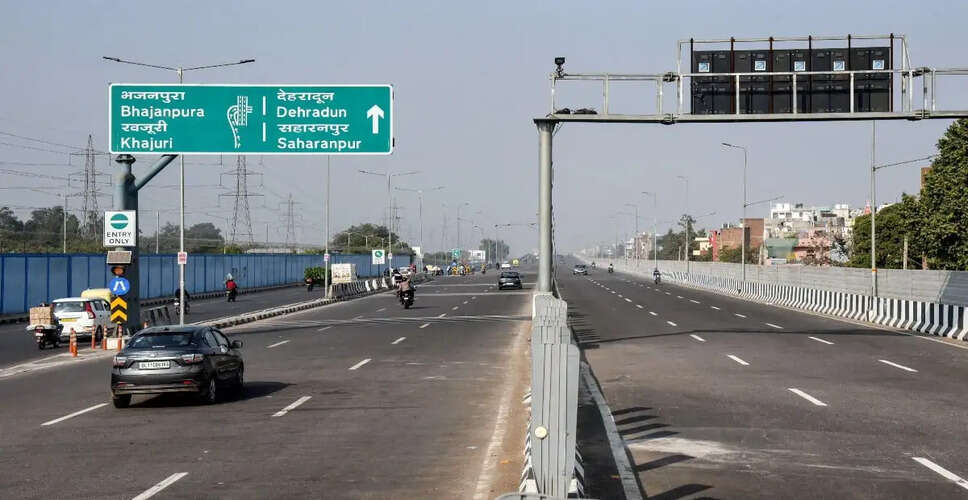
The 213-kilometer Delhi-Dehradun Expressway significantly reduces travel time from approximately six hours to just two to two and a half hours. The estimated cost of this project is around ₹12,000 to ₹13,000 crore. This six-lane, access-controlled corridor has a speed limit of 100 kilometers per hour and includes 14 facilities for travelers, multiple bridges, interchanges, and rail overbridges.
The Stubbornness of 'Swabhimaan'
Similar to the 'Nail House' in China, the 'Swabhimaan' house in Ghaziabad remains steadfast. Shivang Shukla from a Media House visited the site and found a two-story house spanning approximately 1,600 square meters. When he called out, a security guard emerged, revealing that the owner resides in Noida. The land dispute has been ongoing since 1998, initiated by the late Dr. Veersain Saroh, who challenged the Uttar Pradesh Housing Board's acquisition of his land for the Mandola Housing Scheme in the Allahabad High Court.
Current Ownership and Legal Proceedings
According to reports, the current owner is the grandson of Dr. Saroh, Lakshaveer Saroh. The housing scheme remains incomplete. In 2020, the National Highways Authority of India (NHAI) decided to construct an expressway from Akshardham in Delhi to Dehradun, requiring a portion of the Saroh family's land to create a service road for vehicles coming from Dehradun.
Supreme Court Intervention
While the dispute is still pending in the Allahabad High Court, Lakshaveer filed a petition in the Supreme Court in 2024, citing the risk of his home being demolished. The Supreme Court ordered that the status quo be maintained, prohibiting any demolition or new construction, and urged the High Court to expedite the hearing.
Regrets of the 'Nail House' Owner in China
One notable case related to the 'Nail House' in China involved Yu Shou, who became a symbol of resistance when he initially refused to sell his home for the highway. However, after the project was completed and the road was built around his house, he regretted his decision. Reports indicate that he rejected an initial compensation offer of 1.6 million yuan (approximately $220,000) and sought a better deal, ultimately feeling that he had lost a gamble as the authorities opted to build around his property instead.
Life Amidst Development
Yu's house now stands isolated amidst a busy highway, cut off from its surroundings and facing constant traffic, noise, and disruptions. Although the government created a special access route for the family, daily life has become challenging and uncomfortable. Unfortunately, Yu has little hope of receiving compensation now that the highway is operational, leaving him without financial gain or a livable environment.
The Situation in Mandola Village
In Mandola village, Shivang spoke with the landowner's mother to understand their demands. She stated, "Our demand is clear: officials must compensate us according to current land prices, or they should forget about our land." The security guard mentioned that the house is surrounded on all sides and remains mostly empty, with the guard responsible for its upkeep. He noted that since the expressway opened, enduring the noise from traffic has become increasingly difficult.
NHAI's Response to Ongoing Issues
An NHAI official overseeing the expressway construction acknowledged that they are aware of the situation since the corridor opened for trial. He stated that the ramp's construction should proceed as soon as possible, but due to the ongoing court case, they are unable to take action. Crash barriers have been installed at the site. The last hearing for this case took place in March at the Allahabad High Court, which set a date for the next hearing.
Conclusion: The Struggle Between Development and Individual Rights
The 'Nail House' in China symbolizes the tension between personal resistance and government-led infrastructure projects. It serves as a reminder of the isolation and regret faced by those who oppose development without compromise. The future of 'Swabhimaan' remains uncertain, and only time will reveal its fate.