
Muskhan and Sahil Challenge Death Sentence in High Court

Appeal Against Death Sentence
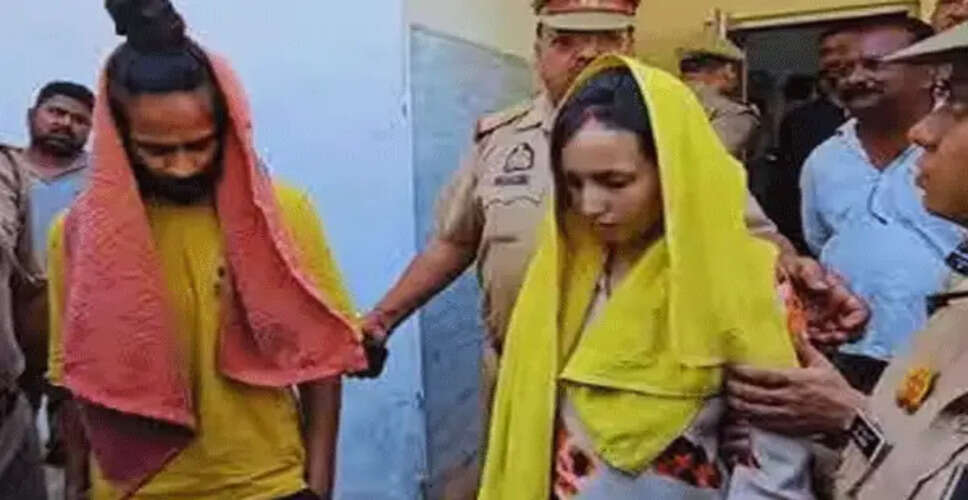
In Meerut, Muskhan and Sahil, who were sentenced to death by a lower court in the infamous blue drum murder case, have now approached the High Court. They have filed an appeal challenging the Meerut court's ruling regarding their capital punishment.
On October 14, the District Judge of Meerut, Arvind Kumar Mishra, sentenced both individuals to death for their involvement in the murder of Saurabh. Following this verdict, they began preparations to contest the decision in the higher court.
Legal Representation and Pleas for Mercy
According to prison authorities, Muskhan Rastogi and Sahil Shukla have completed the legal process to appoint a senior advocate for their representation in the High Court. After signing the power of attorney, a copy of the district court's judgment was also sent to their lawyer.
In the meantime, Muskhan has made a plea for mercy, citing concerns for the future and upbringing of her two daughters, while both aim to overturn the death sentence imposed by the lower court.
Background of the Case
The case revolves around the brutal murder of Saurabh Rajput, a merchant navy employee residing in Indiranagar, Brahmapuri, Meerut. On the night of March 3, 2025, Muskhan, in collusion with her lover Sahil, committed the heinous act.
As part of their plan, Muskhan drugged Saurabh's food to incapacitate him, then fatally stabbed him in the chest. Subsequently, they dismembered the body, separating the head and limbs from the torso, and concealed the remains in a blue drum sealed with cement.
After executing their plan, the couple fled to Himachal Pradesh by taxi, where they married in a temple and indulged in a lavish lifestyle. However, upon their return to Meerut on March 18, the shocking details of the murder came to light. The police arrested them and recovered Saurabh's body from the blue drum based on their confession. Following a lengthy trial, the court sentenced both to death and imposed a fine of 140,000 rupees, which they are now contesting in the High Court.