
Mohammed Shami's Ongoing Struggle for Recognition in Indian Cricket
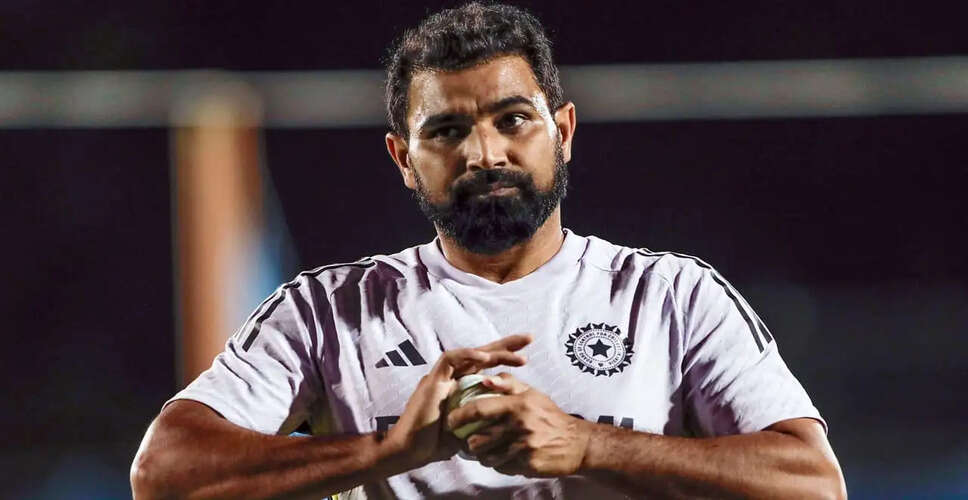

The Changing Landscape of Recognition in Cricket
In the past, hard work was the key to gaining respect and recognition in sports. However, this principle seems to have shifted in Indian cricket. Currently, several prominent players are being overlooked despite their significant contributions. As Team India engages in a three-format series in New Zealand, one name consistently emerges in discussions: Mohammed Shami. Let's delve into the implications of his recent statements and the frustration he is experiencing.
Shami's Echo of a Bollywood Classic
Years ago, Shah Rukh Khan starred in the blockbuster film 'My Name Is Khan,' where he famously emphasized his identity and innocence. Today, Shami seems to echo this sentiment at every stadium, asserting, 'My name is Shami, and I am a bowler.' His plea for acknowledgment resonates deeply, yet it appears to be falling on deaf ears. The pressing question remains: what has Shami done to warrant the selectors' disregard? This silence suggests that the management may no longer see a place for the seasoned pacer.
Is Age a Factor for Shami?
It's essential to recognize that Shami is currently 36 years old, and it's reasonable to question the fitness of a fast bowler at this stage in their career. The demands of bowling long spells and enduring the rigors of Test cricket are significant. Nevertheless, Shami recently showcased his skills by taking four wickets in the Ranji Trophy, demonstrating his readiness for the pressures of international cricket. Fans on social media are actively criticizing the selection committee, speculating that they may possess undisclosed information regarding his fitness and workload.
Shami's Impressive Recent Performances
In a recent match against Delhi in the Ranji Trophy, Shami bowled 17 overs, conceding only 30 runs while claiming four wickets, marking a remarkable comeback. Prior to this, he had an outstanding season, taking 37 wickets in just seven matches during the 2025-26 Ranji Trophy, with an impressive average of 16.72 and three five-wicket hauls. His performance in limited-overs cricket is equally commendable, with 16 wickets in the Syed Mushtaq Ali Trophy and 15 in the Vijay Hazare Trophy. Despite these stellar statistics, the selectors remain silent, raising questions about their decision-making.
Shami's Track Record Against New Zealand
Mohammed Shami has toured New Zealand three times between 2014 and 2020, participating in four Test matches and gaining valuable experience in those conditions. He took nine wickets during the 2019 ODI tour and delivered a memorable performance in the 2023 World Cup semi-final, where he claimed 7 wickets for 57 runs, propelling India to the finals. Shami concluded the tournament as the highest wicket-taker with 24 wickets. In contrast, he has played eight Test matches in Australia, taking 31 wickets, with a standout performance of 6/56 in the 2018 Perth Test. These statistics underscore Shami's ability to deliver crucial wickets for India.
The Debate Over Shami's Selection
The question of whether the board should select Shami is certainly contentious. While his recent IPL performance may not have been favorable, his current form in the Ranji Trophy and his impressive records from the 2025-26 season bolster his case for inclusion. Analyzing his entire career, including his wicket-taking prowess in Australia and his Test experience against New Zealand, highlights his extensive experience. However, cricket selections are not solely based on past achievements; selectors must also consider current form, fitness, and future potential. An honest evaluation of both Shami's past and present seems to be lacking, leaving uncertainty surrounding the selectors' decisions. Shami's voice is loud in the stadiums, but who is ignoring his call?