
Mohammed Shami's Omission: A Deep Dive into India's Bowling Strategy
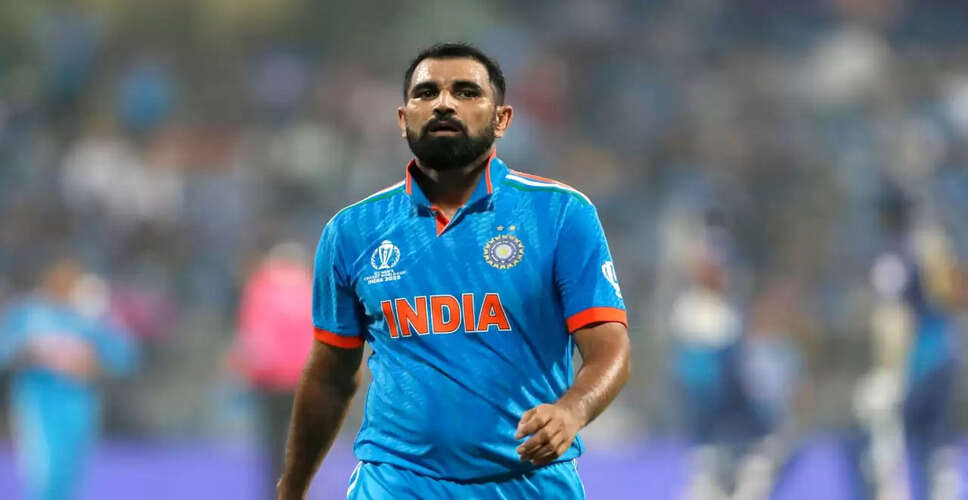
The Surprise Exclusion of Mohammed Shami
As the New Zealand series approaches, one name has been at the forefront of discussions among fans and analysts: Mohammed Shami. With a track record of being a reliable match-winner for India, expectations were understandably high. However, the announcement of the squad revealed a shocking detail—Shami was not included.
Questions Arise
This absence has led to numerous inquiries. Why is a bowler of Shami's caliber not receiving the same chances as prominent players like Rohit Sharma and Virat Kohli? Could the Champions Trophy have marked the end of his international career? Or is there a more complex reason behind his exclusion?
Shami's Impressive Career Statistics
Statistics often tell a compelling story. In ODI World Cups, Shami boasts more wickets for India than the legendary Glenn McGrath, with superior strike rates and averages. In 2023, he played a pivotal role in several matches, and during the last Champions Trophy, he ranked third in wickets taken, with nine to his name.
A Bowler of Exceptional Skill
Shami is arguably one of the most talented bowlers India has produced in recent years. His combination of speed, seam movement, and ability to perform under pressure makes him a formidable asset in any format. Yet, despite his impressive record, he finds himself sidelined.
Concerns Over Fitness
Ajit Agarkar, the chief selector, has previously indicated that Shami's fitness has raised concerns within the BCCI. He suggested that Shami needed to demonstrate his fitness through domestic performances, a challenge the bowler took seriously.
Shami's Domestic Performance
During the series against Australia, South Africa, and New Zealand, Shami played for Bengal in various tournaments, including the Ranji Trophy, Syed Mushtaq Ali T20 tournament, and the Vijay Hazare Trophy. His participation in these competitions was expected to showcase his fitness levels.
Shami not only participated but excelled in these tournaments:
- Ranji Trophy: 20 wickets in four matches, including a five-wicket haul.
- Syed Mushtaq Ali Trophy: 16 wickets in seven matches, with two four-wicket hauls.
- Vijay Hazare Trophy (ongoing): 11 wickets in five matches.
In his last ten matches, Shami has taken 24 wickets without a single wicketless game, indicating both fitness and form are in check.
The Bigger Picture
If fitness and form are not the issues, what could be the reason for Shami's exclusion? The answer may lie in India's long-term strategy and a shift in focus within the team.
In recent ODI series and the upcoming New Zealand series, India's leading pacer Jasprit Bumrah has been absent, allowing opportunities for others. The pace attack during the Australian tour featured Mohammed Siraj, Harshit Rana, Prasidh Krishna, and Arshdeep Singh. In the South Africa series, Siraj was rested, with Harshit Rana stepping up as the primary pacer and Prasidh Krishna as backup.
Youth Over Experience?
As the New Zealand series approaches, Siraj returns, Harshit Rana retains his position, and Prasidh remains as backup. The management seems to be testing younger bowlers, particularly Harshit and Prasidh, with an eye on the 2027 ODI World Cup. On pace-friendly pitches, the preference appears to be for 'hit-the-deck' bowlers, and management believes these two fit that mold.
The Experience Factor
While Harshit and Prasidh show promise, experience is crucial in a World Cup setting. Harshit has played only 11 ODIs, while Prasidh has 21. Both bowlers can take wickets but are also susceptible to conceding runs, each maintaining an economy rate exceeding six.
When the World Cup arrives, it is likely that Bumrah will lead the pace attack, with Siraj as the second choice. The third spot could go to either Harshit or Prasidh, but recent trends suggest Harshit may have the advantage.
The Ongoing Struggle
Mohammed Shami's journey is marked by talent, resilience, and occasional frustration. His contributions to Indian cricket, whether in World Cups or critical bilateral series, often go unnoticed compared to newer players or strategic shifts.
Unlike stars like Rohit Sharma or Virat Kohli, Shami's efforts rarely capture headlines beyond match summaries. However, his absence is palpable on the field, serving as a reminder that experience, skill, and determination do not always guarantee recognition in a rapidly evolving cricket landscape.
As fans speculate about his exclusion, one question lingers: can Mohammed Shami make a comeback, or has the BCCI shifted its focus to the next generation? For now, the seasoned pacer continues to excel in domestic cricket, awaiting the call to don the blue jersey once more.